This is one of the cooler Anole species I’ve seen. Tanda’s Anole (Anolis tandai), found in Peru in 2023.


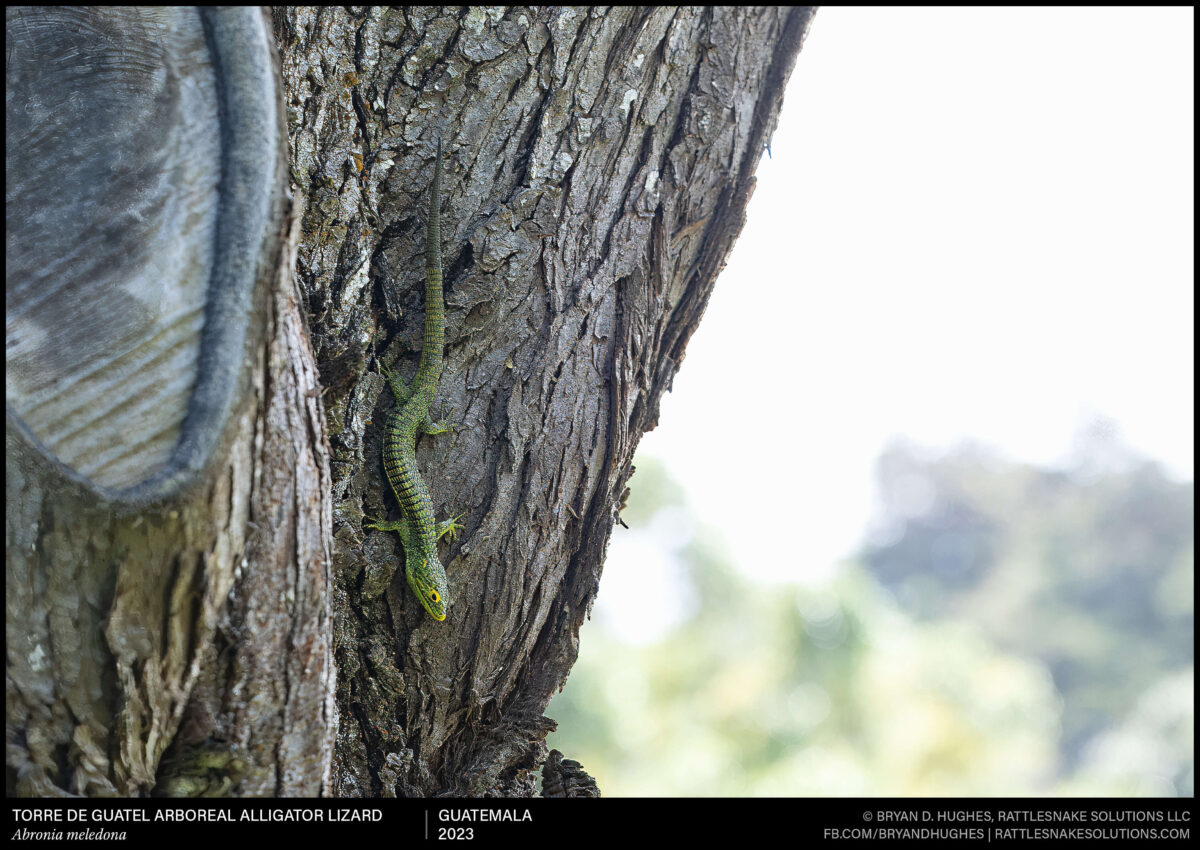
The least likely thing we could have seen in Guatemala – The Torre de Guatel Arboreal Alligator Lizard. Spotted by the laser eyes of Jake Scott, moments after a discussion about how impossible this search was going to be.
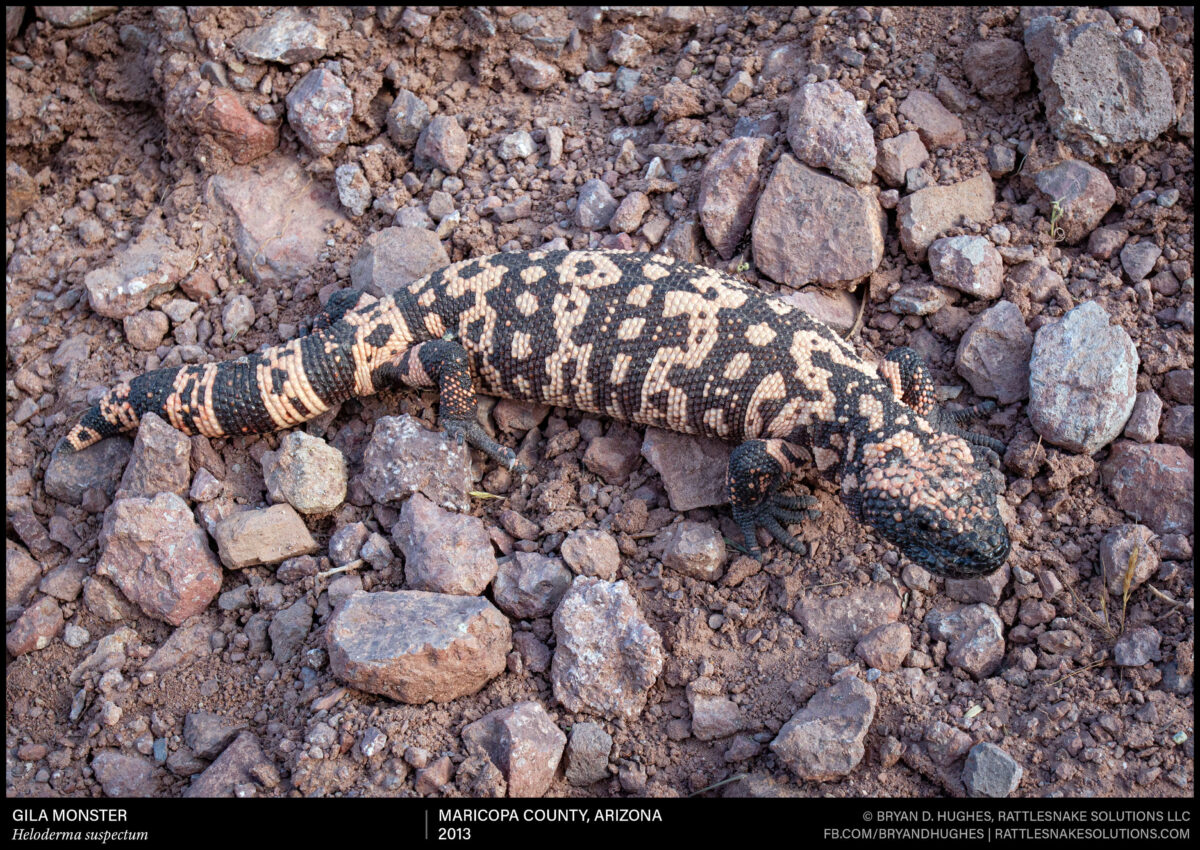
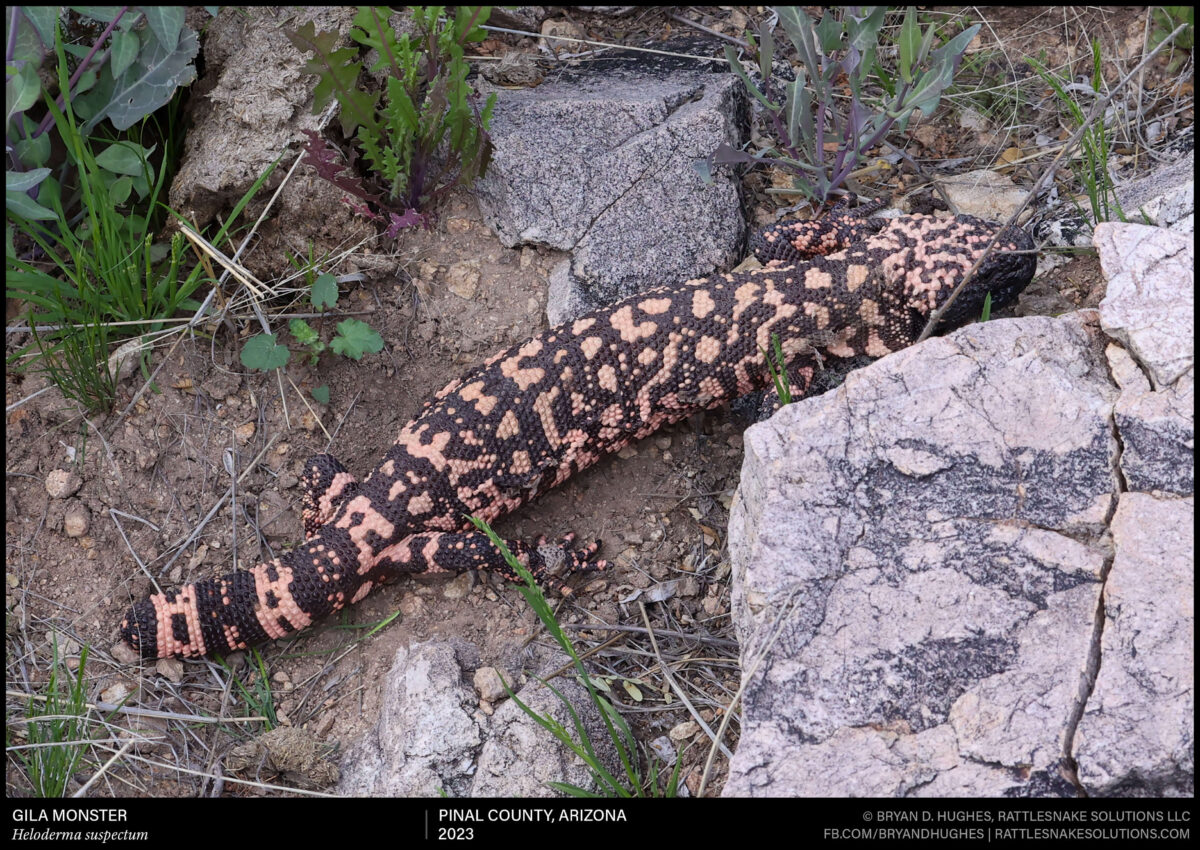
A Gila Monster out and about on a warm Spring day that I found a while back.
At that time, more than a decade ago, I knew relatively little about the day-to-day habits of these animals. Finding one was more a matter of luck than anything else. But, I’ve since learned a lot, and these are now often a higher observation count in a day than I’d had seen in an entire year.
Recommended reading, if you can find it:
Biology of Gila Monsters and Beaded Lizards — Daniel D. Beck (UC Press)
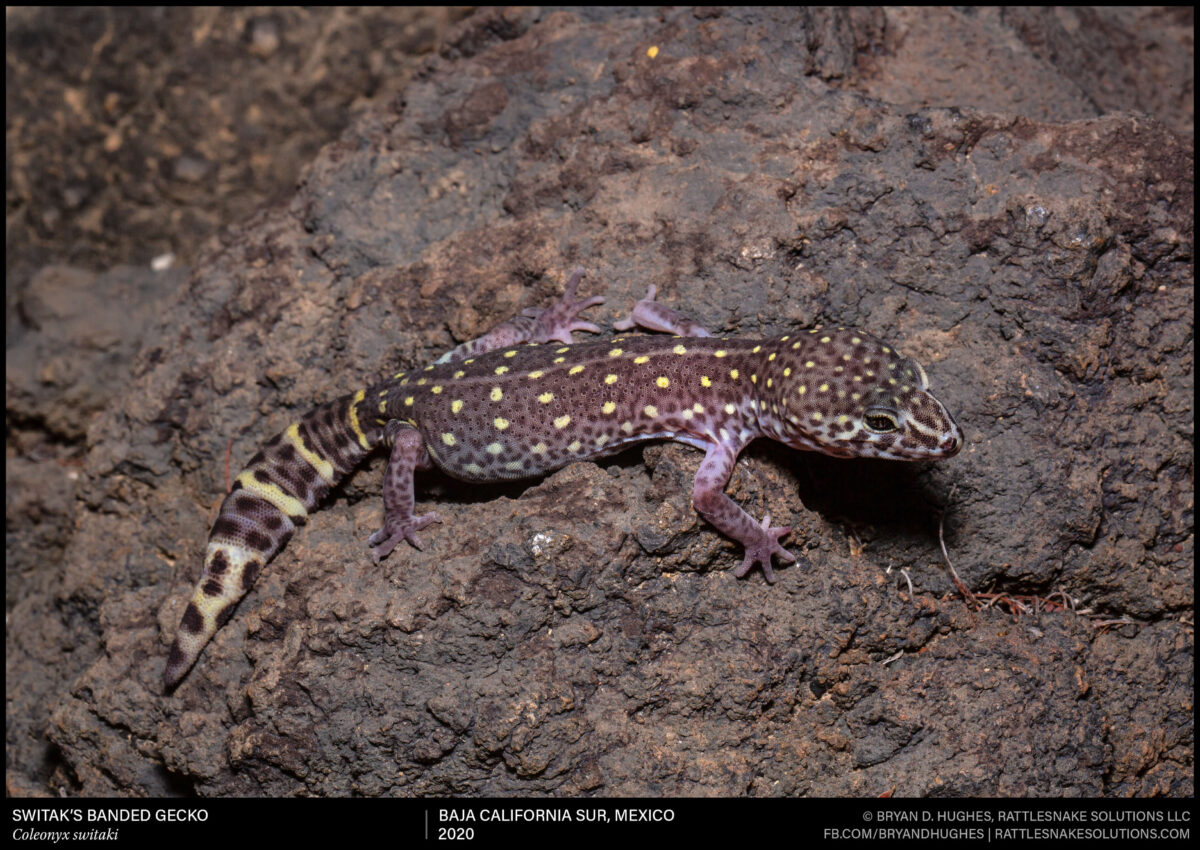
Switak’s Banded Gecko that we found in Baja California Sur, Mexico. These are closely related to the Western Banded Geckos we’re all familiar with here in Arizona, with some notable differences. The most obvious being its larger size, this one about the size of a small mouse. When seen in this boulder field, they hop from rock to rock and disappear (or try to, anyway) or wag their tails in a defensive display.
1. Murray, S. S., Dugan, E. A., Clause, A. G., & Mills, A. M. (2024). Maximum size and mass of Switak’s Banded Gecko, Coleonyx switaki (Murphy, 1974). Herpetology Notes.
2. Lovich, R. E., Grismer, L. L., & Danemann, G. (2009). Conservation status of the herpetofauna of Baja California, México and associated islands in the Sea of Cortez and Pacific Ocean. Herpetological Conservation and Biology, 4(3), 386–405.
3. Lemm, J. (2023). Field guide to amphibians and reptiles of the San Diego region. University of California Press.
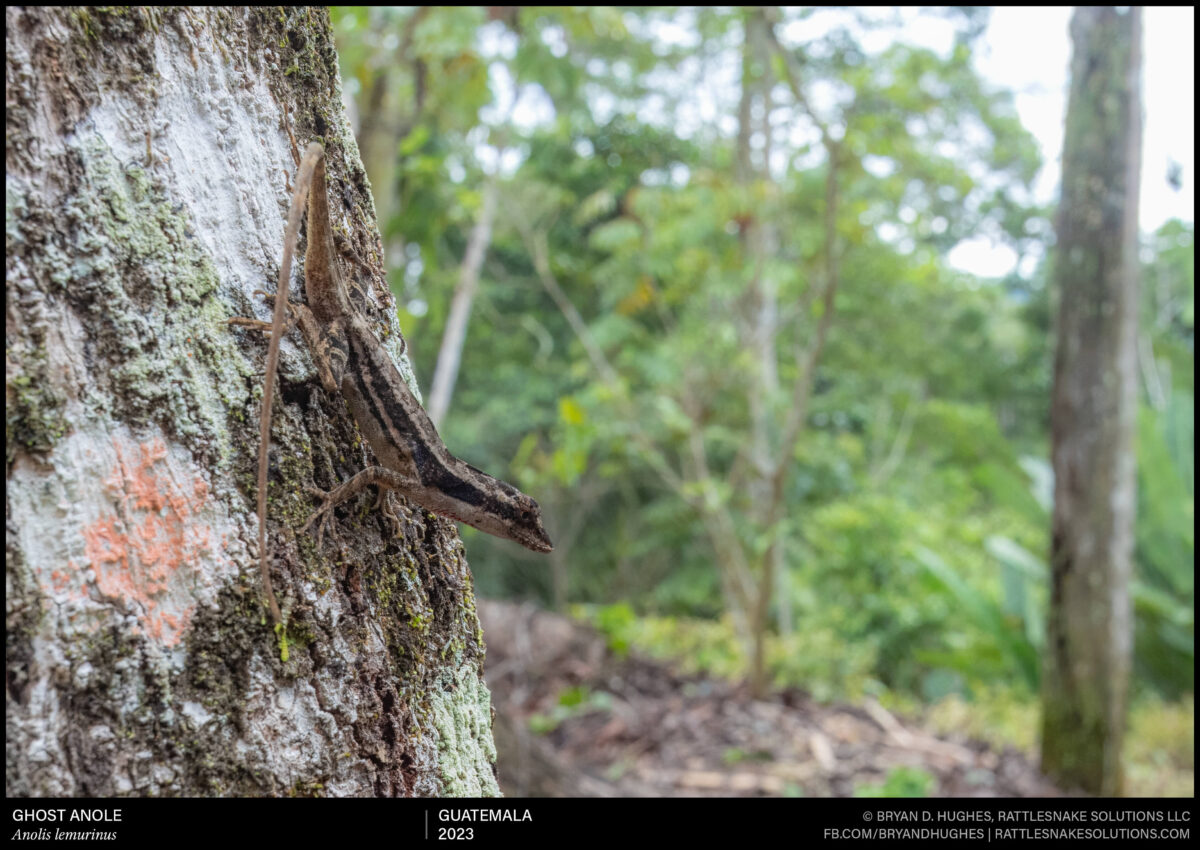
This Ghost Anole was one of many anoles seen on a trip to the high forests of Guatemala.
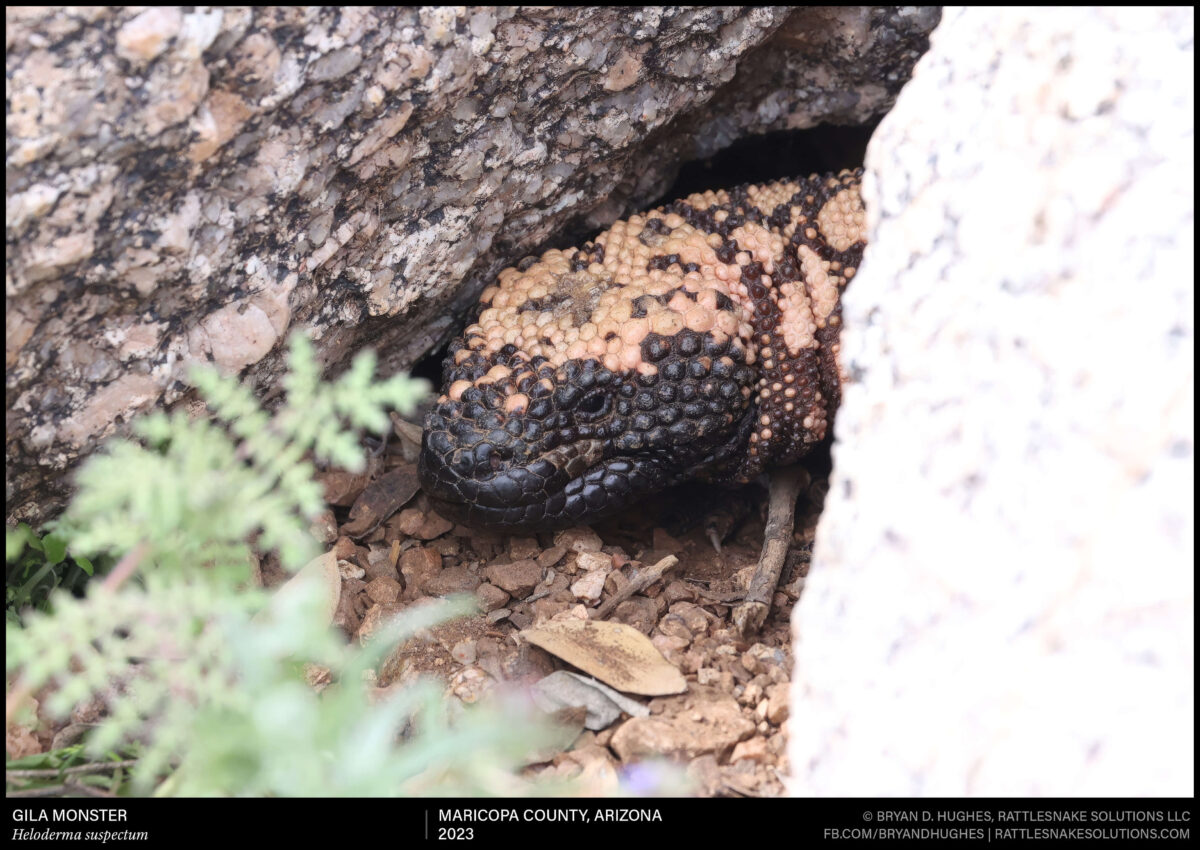
A Gila Monster peeking out of its spring staging spot, just down the hill from where it spent the winter. It shares this spot with several other Gila Monsters, a handful of Western Diamondback Rattlesnakes, and the occasional tortoise. It will spend the majority of each day during the early spring doing, basically, this. Resting in partial sun, disappearing if predators approach, and waiting to head out in nest-hunting mode as soon as the time is right.
A Gila Monster I followed to a nest of cottontails. It took a while, but it ate all three of them that were in there. Amazingly, they all fit, and the lizard ambled off to rest under an overhanging root in the drainage. It was a good example of how the venom of Gila Monsters is not necessary for predation, as the venom played no apparent role in the capture or consumption of its prey.
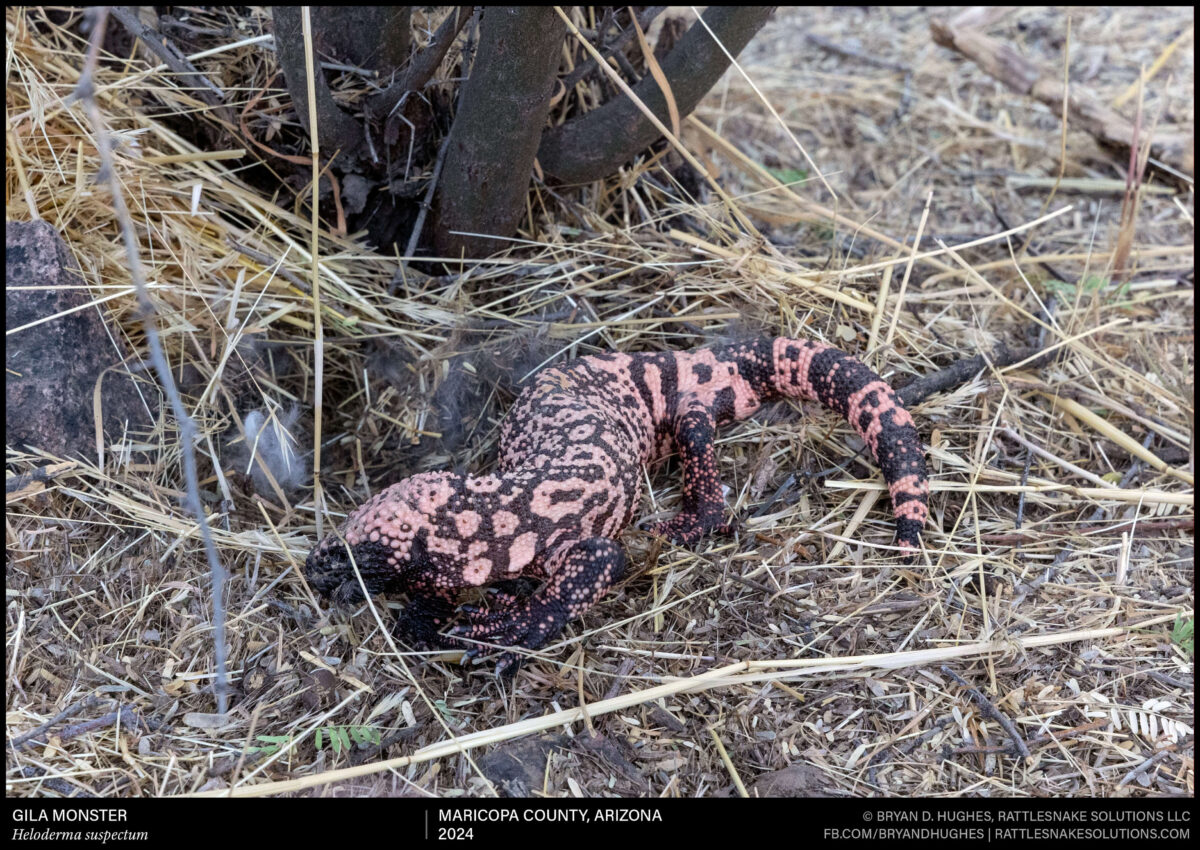
A Gila Monster out and about on a spring day a couple of years ago. On mild days, these animals start to move away from often communal dens to springtime staging areas. They may take daily patrols, searching for nesting mammals and quail eggs. It’s common for hikers to report them on social media frequently within a few days’ time, usually in late February or early March, which is a reliable signal that the process has begun each year.
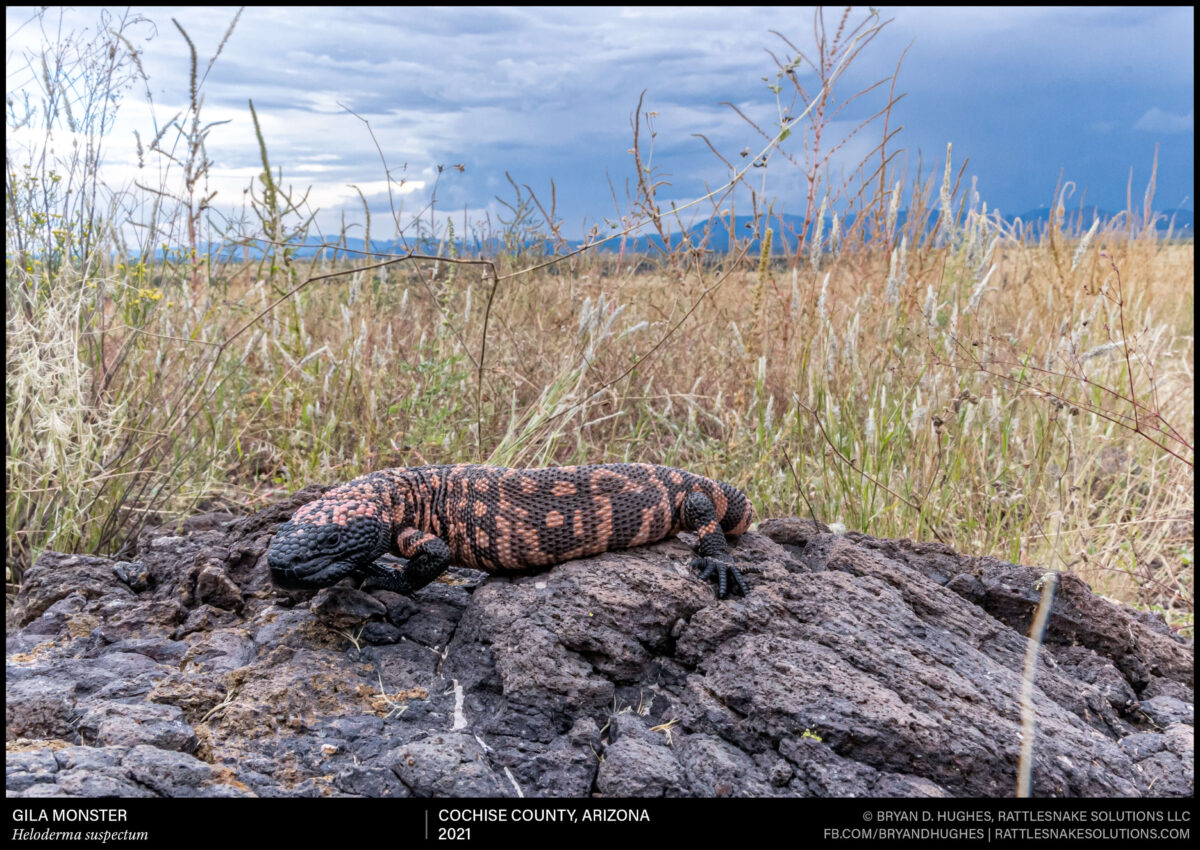
I spotted this young Gila Monster on an isolated rocky area surrounded by desert grassland. Gilas in this area can often have more black mottling than the banded version found elsewhere in the state. We took some photos briefly and let it be on its way.