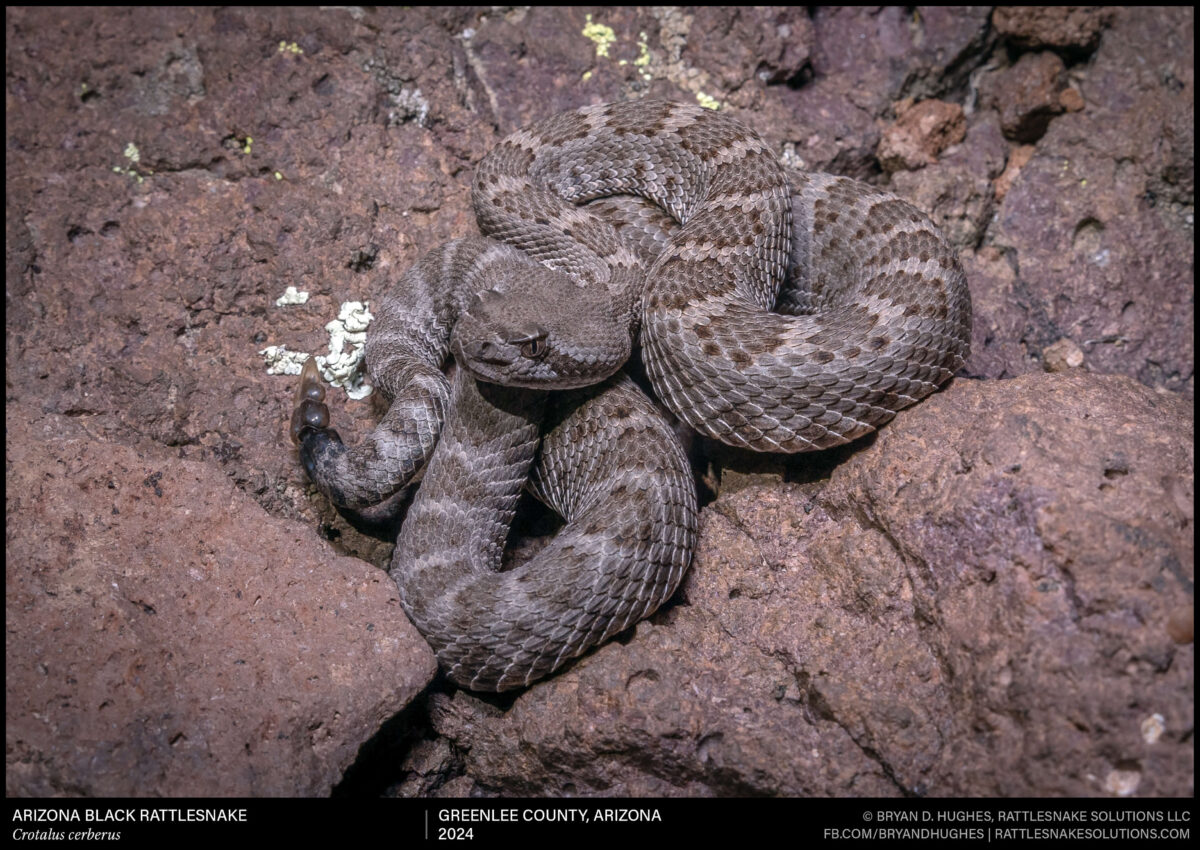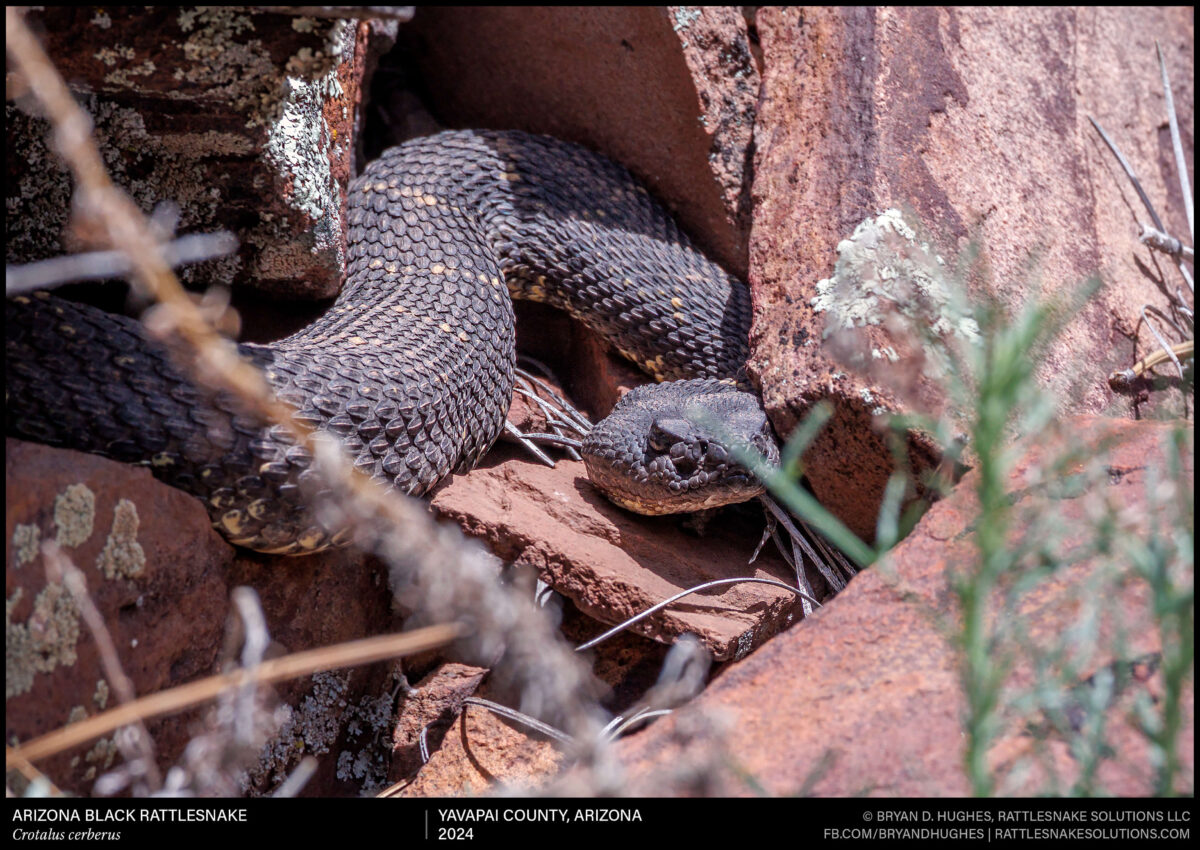
Red Speckled Rattlesnake In Ambush

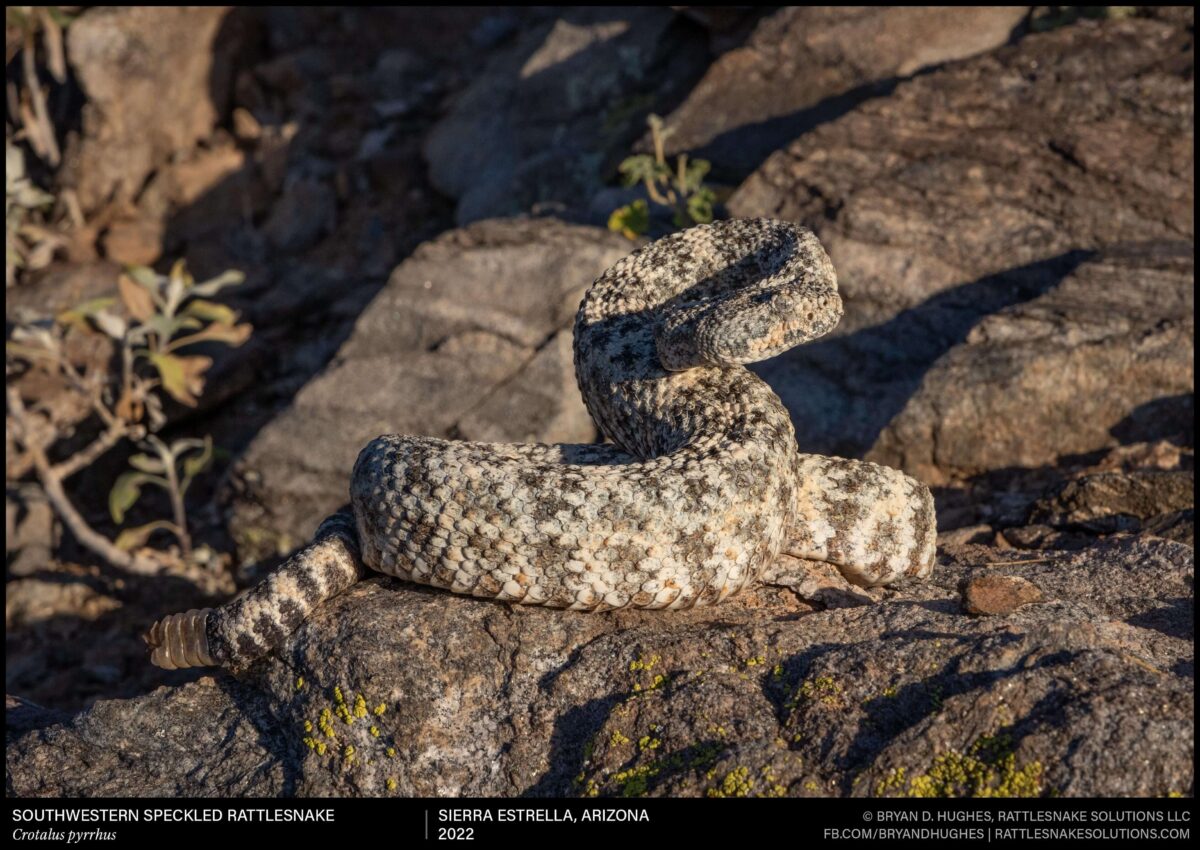
A Southwestern Speckled Rattlesnake in ambush on a humid night a couple of years back. Like many other desert reptiles, the monsoon and period after are the most active times of year. Humid air and cooler, stable temperatures make for safer activity, and a lot has to be done in a relatively short amount of time.

Southwestern Speckled Rattlesnake (Crotalus pyrrhus)

https://rattlesnakesolutions.com/SpeckledRattlesnake

Twin-Spotted Rattlesnake

A Twin-Spotted Rattlesnake with a relatively drab pattern, but not atypical for an older adult. These are small snakes, rarely seen by hikers, as their range within the U.S. consists of only a handful of mountains in southeastern Arizona. In addition to rodents, these rattlesnakes also specialize in lizards, often taking the colorful Yarrows Spiny Lizards also common to rocky outcrops in high pine forests. These are among the protected species within Arizona, but a good number of them still end up being taken from the mountains each year to enter the European black market.

Prival, D. B., Goode, M. J., Swann, D. E., & Schwalbe, C. R. (2002). Natural history of a northern population of twin-spotted rattlesnakes, Crotalus pricei. Journal of Herpetology, 36(4), 598–607. https://doi.org/10.1670/0022-1511(2002)036[0598:NHOANP]2.0.CO;2

Prival, D. B., & Schroff, M. J. (2012). A 13-year study of a northern population of twin-spotted rattlesnakes (Crotalus pricei): Growth, reproduction, survival, and conservation. Herpetological Monographs, 26(1), 1–18. https://doi.org/10.1655/HERPMONOGRAPHS-D-11-00002.1

Prival, D. B., Goode, M. J., Swann, D. E., & Schwalbe, C. R. (1999). A comparative study of hunted vs. unhunted populations of the twin-spotted rattlesnake. Unpublished report, University of Arizona. PDF link

Grabowsky, E. R., & Mackessy, S. P. (2019). Predator-prey interactions and venom composition in a high elevation lizard specialist, Crotalus pricei (Twin-spotted Rattlesnake). Toxicon, 170, 88–97. https://doi.org/10.1016/j.toxicon.2019.09.003

Grabowsky, E. (2018). Venom composition of little known mountain rattlesnakes and predator-prey interactions of Crotalus pricei pricei and its natural prey, Sceloporus jarrovii (Master’s thesis). University of Northern Colorado. https://digscholarship.unco.edu/theses/251/

Bezy, R. L. (2021). Biogeographic outliers in the Arizona herpetofauna. Sonoran Herpetologist, 34(2), 45–58. PDF

Pough, F. H. (1966). Ecological relationships of rattlesnakes in southeastern Arizona with notes on other species. Copeia, 1966(4), 649–658. https://doi.org/10.2307/1441401

Bezy, R. L., & Cole, C. J. (2014). Amphibians and reptiles of the Madrean Archipelago of Arizona and New Mexico. American Museum Novitates, 2014(3810), 1–24. https://doi.org/10.1206/3810.1

Kauffeld, C. F. (1943). Field notes on some Arizona reptiles and amphibians. The American Midland Naturalist, 29(2), 342–359. https://doi.org/10.2307/2420795

Gloyd, H. K. (1937). A herpetological consideration of faunal areas in southern Arizona. Bulletin of the Chicago Academy of Sciences, 5(6), 79–136.

Chihuahuan Hooknosed Snake

A Chihuahuan Hooknosed Snake we found in Cochise County, Arizona. These small snakes have a specialized scale on its face that it can use to help it uncover its prey: arachnids and centipedes. Of the snakes that can be found in Arizona, this is one of the least often seen, even by snake enthusiasts.

This one became defensive as it was being photographed, striking repeatedly at the camera with a closed mouth. This is a good example of why the popular saying “if it has a mouth, it can bite” is missing a critical component to be relevant: not just can it bite, but WILL it bite. This little snake says no.

Sonoran Whipsnake

A Sonoran Whipsnake from near Phoenix, Arizona. These fast, diurnal animals can be seen on occasion darting across trails or roads, even in the peak heat of the day. Large, forward-facing eyes and a body style made for speed mean that any lizard that ends up in its sight isn’t going to have a good day.

They show up from time to time at homes at the very edges of the city. Based on our records of snake encounters at homes over the last 16 years, they are not as good at adapting to semi-developed areas as other, similar species, like coachwhips.

A few years ago, I saw what would be the only known record of one in the Piestewa Peak preserve area. It was in the middle of the night, resting in loose rocks in front of a spot where several Southwestern Speckled Rattlesnakes were about to give birth. Sonoran Whipsnakes include rattlesnakes in their diet, and I assumed it was waiting for that opportunity. Unfortunately, I chose to slowly reach for my camera rather than dive into to rocks to grab it, and it escaped without a photo record. So, an observation went into the notes for the night’s field session, but the preserve is still without an official record.

da Frota JG, Sawaya RJ, Spina F. Masticophis bilineatus (Sonoran Whipsnake). Prey. Herpetol Rev. 2003;34(2):149. Available from: https://search.proquest.com/openview/44f1b08a1f0af1087379c71528a42f09/1?pq-origsite=gscholar&cbl=3345

Hibbitts TJ. Masticophis bilineatus. Herpetol Rev. 2023;54(1):128. Available from: https://search.ebscohost.com/login.aspx?direct=true&profile=ehost&scope=site&authtype=crawler&asa=N&AN=171889940