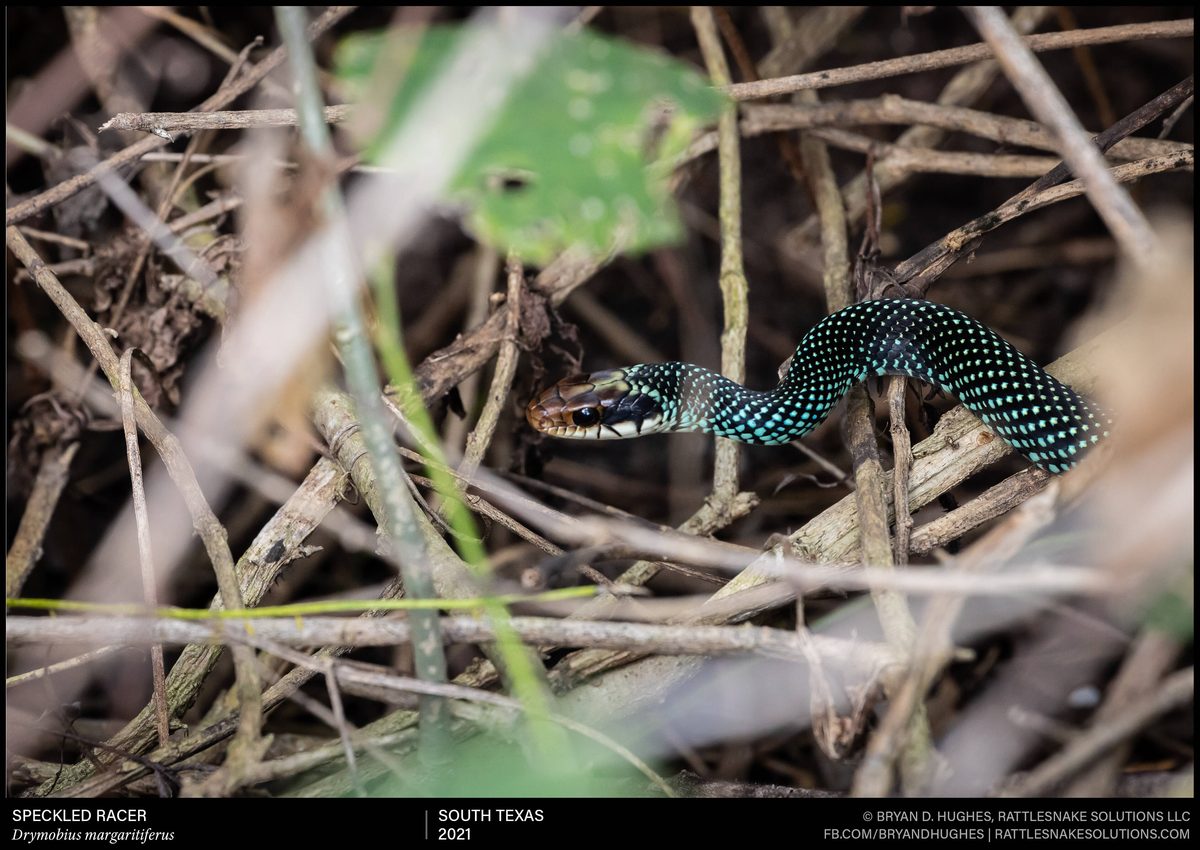
A Speckled Racer cruising through the undergrowth in extreme southern Texas. These snakes just barely enter the United States at this point, and can be found throughout tropical Central America and northern South America.
Prior-Magee, J. S., & McKerrow, A. (2018). Speckled Racer (Drymobius margaritiferus) rSPRAx_CONUS_2001v1 Habitat Map. U.S. Geological Survey.
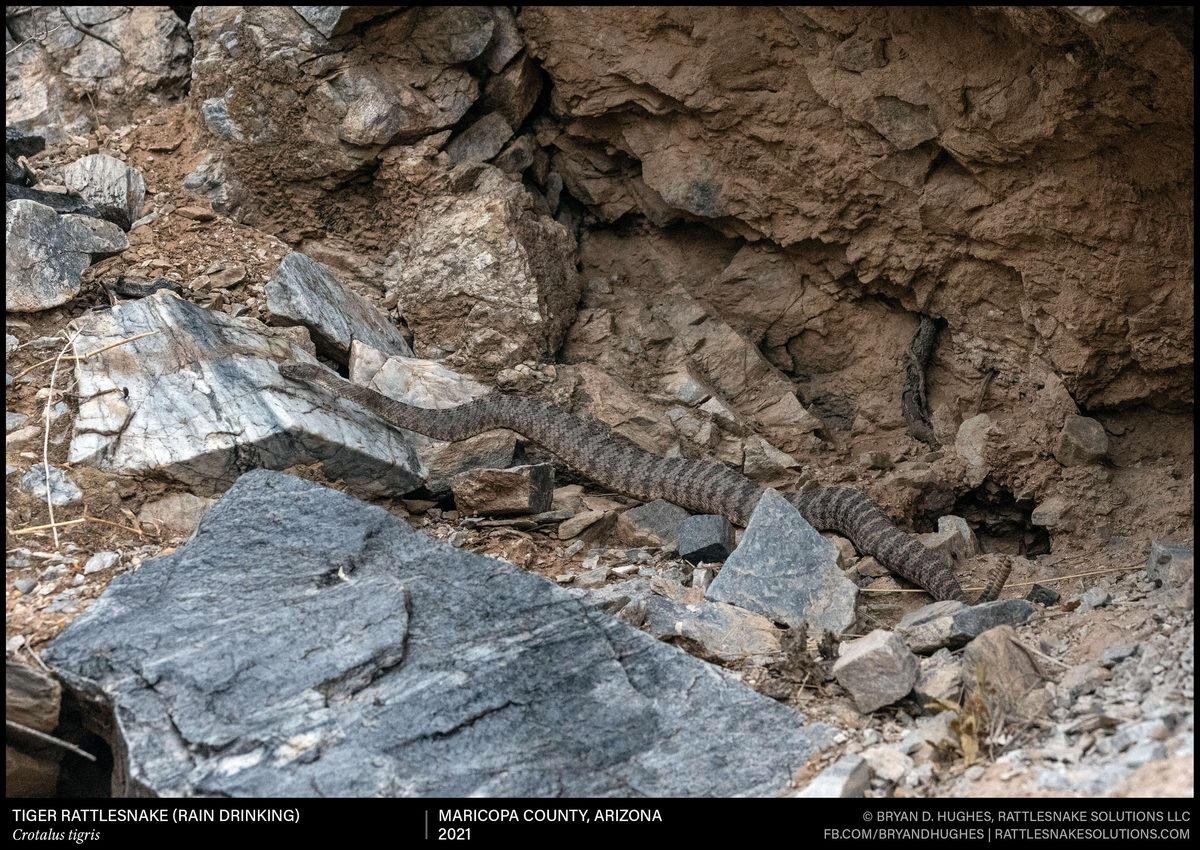
I saw this Tiger Rattlesnake moving along a rocky drainage on a hot summer morning. The wash was full of deep caves and access to cooler temperatures that it needed to survive the hottest time of year. She was also gravid, and in time she gave birth in these same caves.
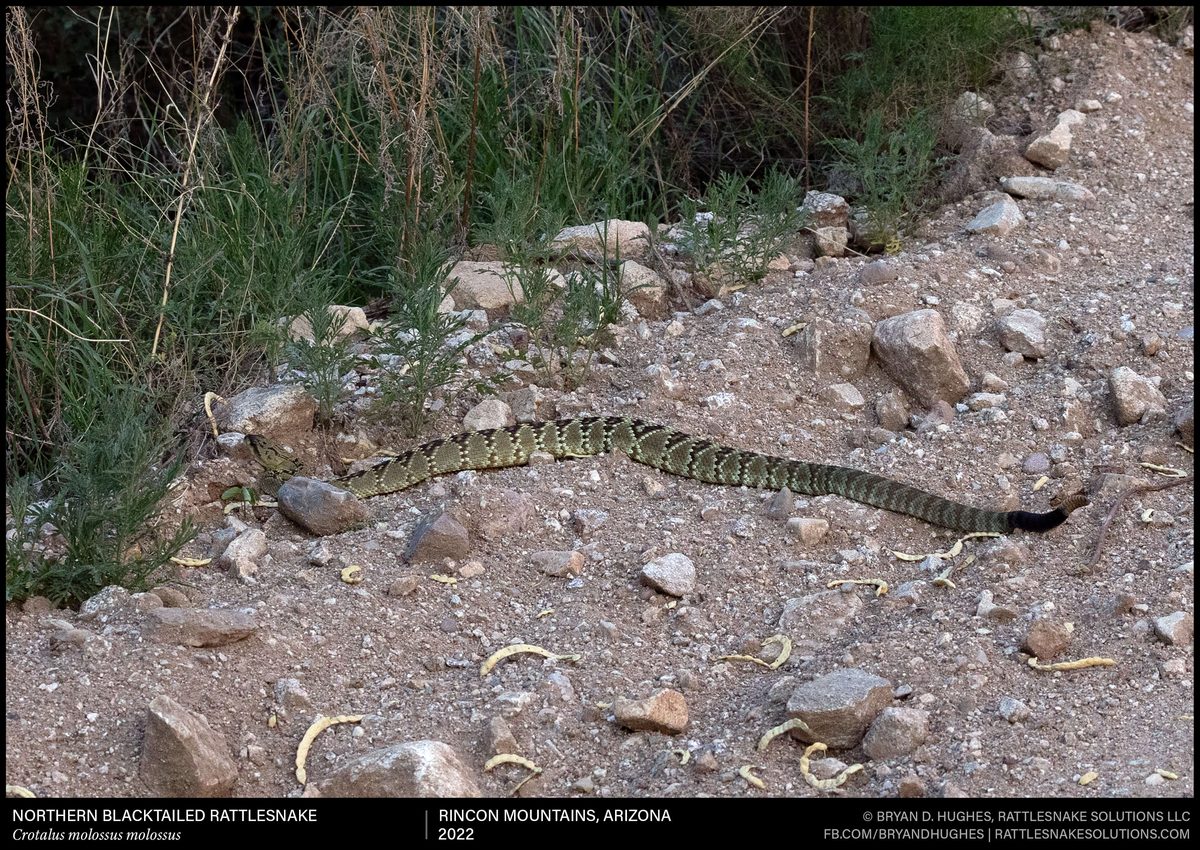
I saw this big Blacktailed Rattlesnake crossing a roadway in the mountains southeast of Tucson. It had made most of its way across, and then did what cost many snakes their lives … it froze.
These animals’ primary defense is not the famous rattle or a venomous bite, but camouflage. In most cases, that pattern and color do a great job to hide by simply stopping in place until the threat goes away. But, roads aren’t part of that plan. This can get them run over, often intentionally, or otherwise killed by people passing by.
This is the same behavior that people often misinterpret as “sunning on the trail” or “soaking up the heat from the road” on a hot summer night. It’s not that snakes may not bask in the open like this, but that’s usually not what that is.
As there were quite a few side-by-sides cruising around that weekend, I got out to help this one off the road so it wouldn’t end up as too many of them do, losing their head and rattles to some excitable dope.
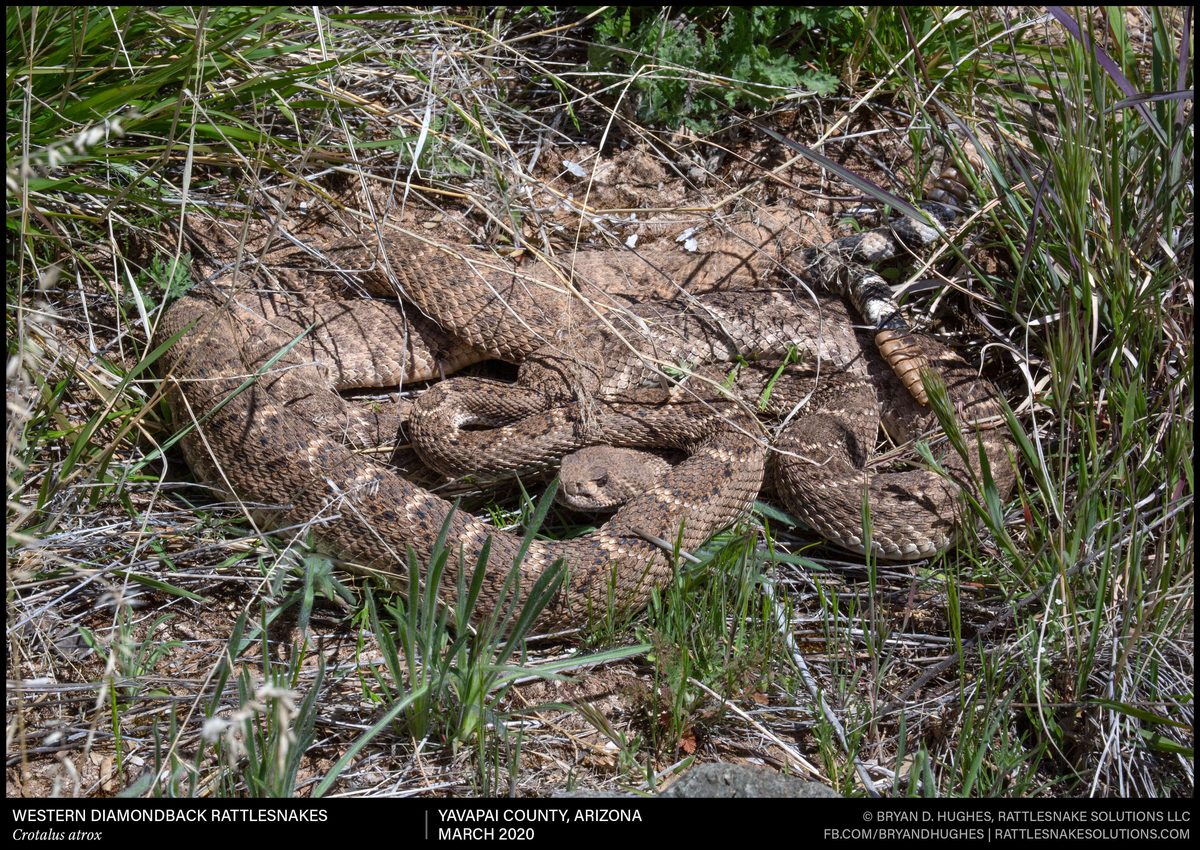
This pair of Western Diamondback Rattlesnakes were found at a den in central Arizona near the edge of the species range in the area. With at least fifty observable individuals, this is a large den for these snakes in the state, which is also shares with Blacktailed Rattlesnakes and Arizona Black Rattlesnakes. With multiple large males roving around, I was watching hoping for combat, but it didn’t happen this day. This photo was taken right after the snakes eventually moved from courtship to mating, with tails elevated. They remained in this location for at least the rest of the day.
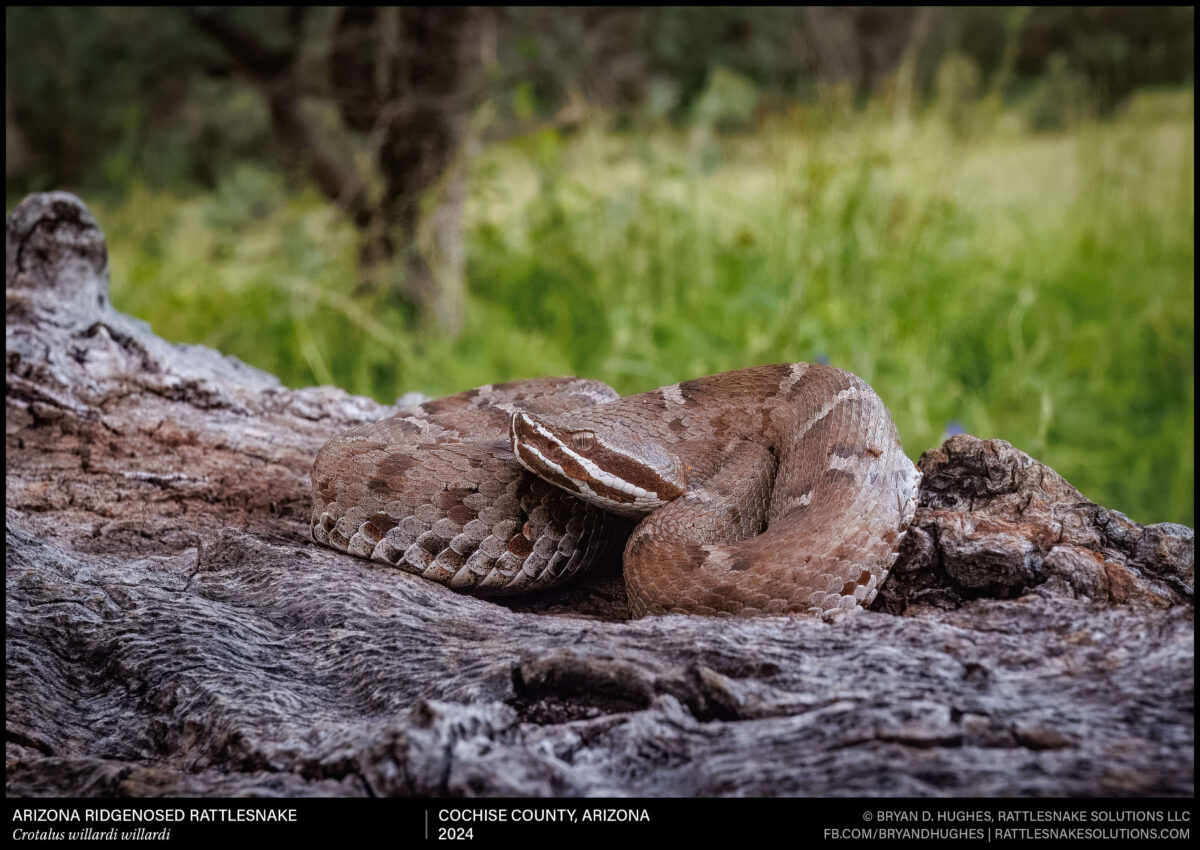
An Arizona Ridgnosed Rattlesnake from Cochise County, Arizona. This is a small rattlesnake that is found in a handful of mountainous areas in the southeastern corner of the state. A hiker may encounter one if they are in the Santa Rita, Patagonia, Huachuca, Canelo, or Whetstone ranges.
Interestingly, every rancher and long-term resident of those areas that I’ve personally spoken to about this species has no idea what I’m talking about. This mirrors many other instances that have taught me one thing: living in an area for a long time, even being born and raised there, does not grant any particular expertise of the animals that live there.
This snake has relatively weak venom for a rattlesnake, but it is still an emergency situation where antivenom should be sought after. It would be hard to find a situation where one would envenomate a person without actually picking it up.
Holzman, S. D., Massey, D. J., Clements, A., Boesen, K. J., & Shirazi, F. M. (2018). Arizona Ridge-nosed rattlesnake envenomation: Case report of a personal encounter with the official state reptile of Arizona, Crotalus willardi willardi. Toxicon, 151, 84–88. https://doi.org/10.1016/j.toxicon.2018.07.001
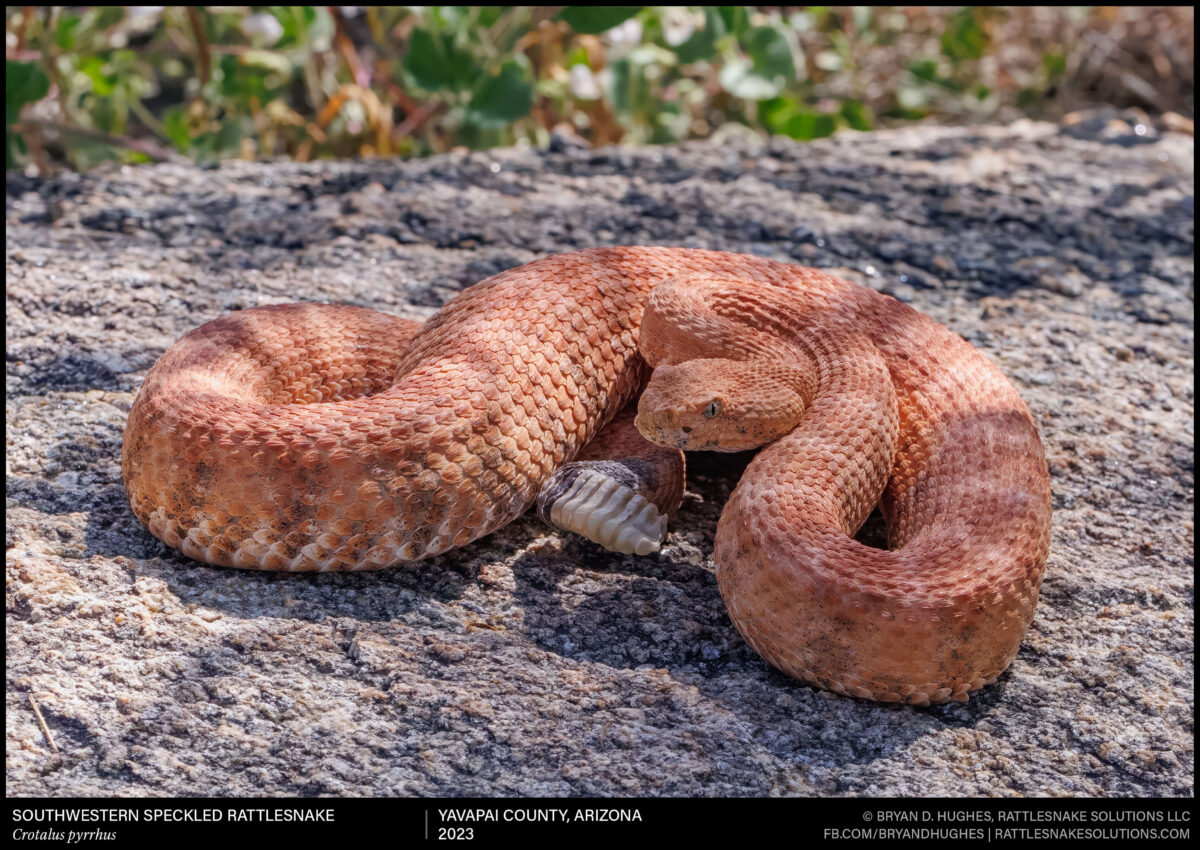
A brilliantly colored Speckled Rattlesnake from central Arizona. The rock in this particular spot doesn’t look very much like the snakes, but the occasional oxidized rock breaks off from higher and tumbles to the ground. When that orange rock sits under a bush or random location against the other grey and browns, it’s just part of the landscape. This snake, though, was hard to miss.
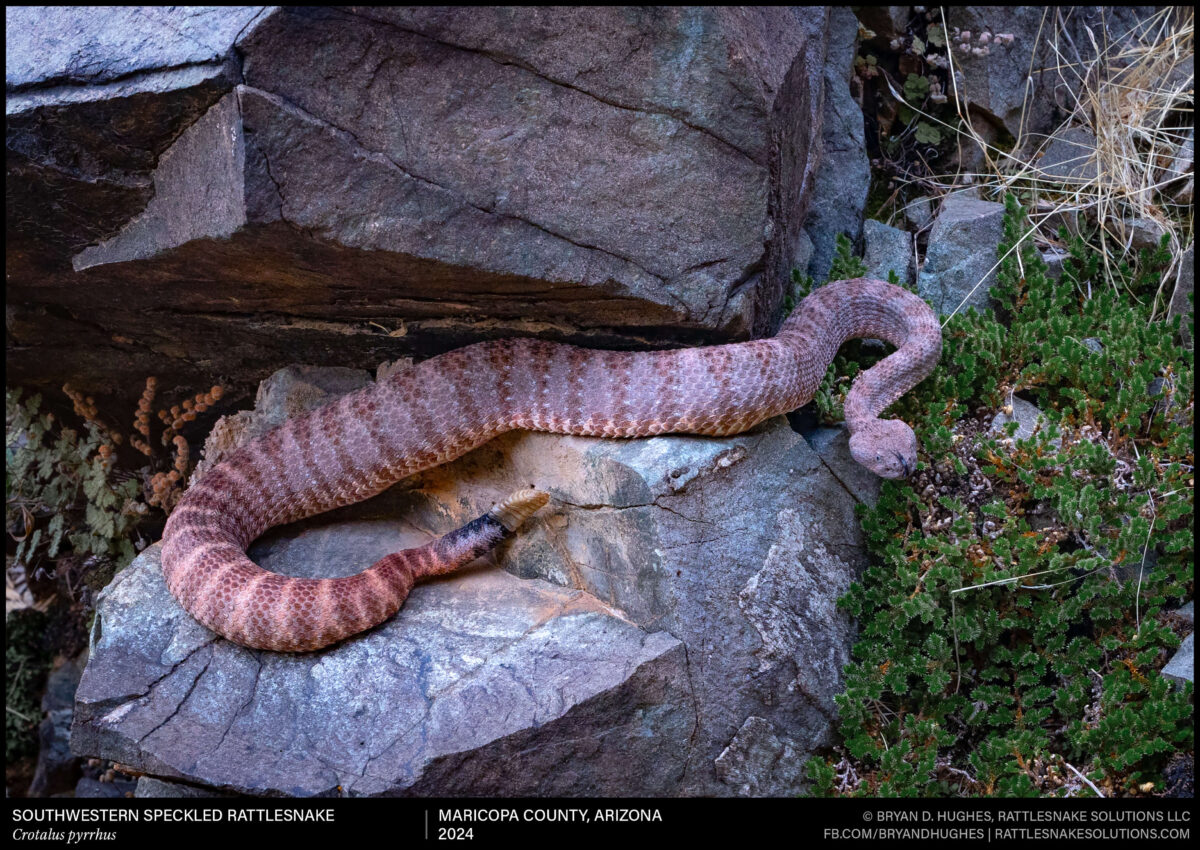
This Southwestern Speckled Rattlesnake, at the time this photo was taken, was very gravid (pregnant). She was in a cool area with higher ambient moisture, which is a special place during the heat of the summer in Arizona. She’s still there this year, though at the time I saw her, she was not notably gravid.
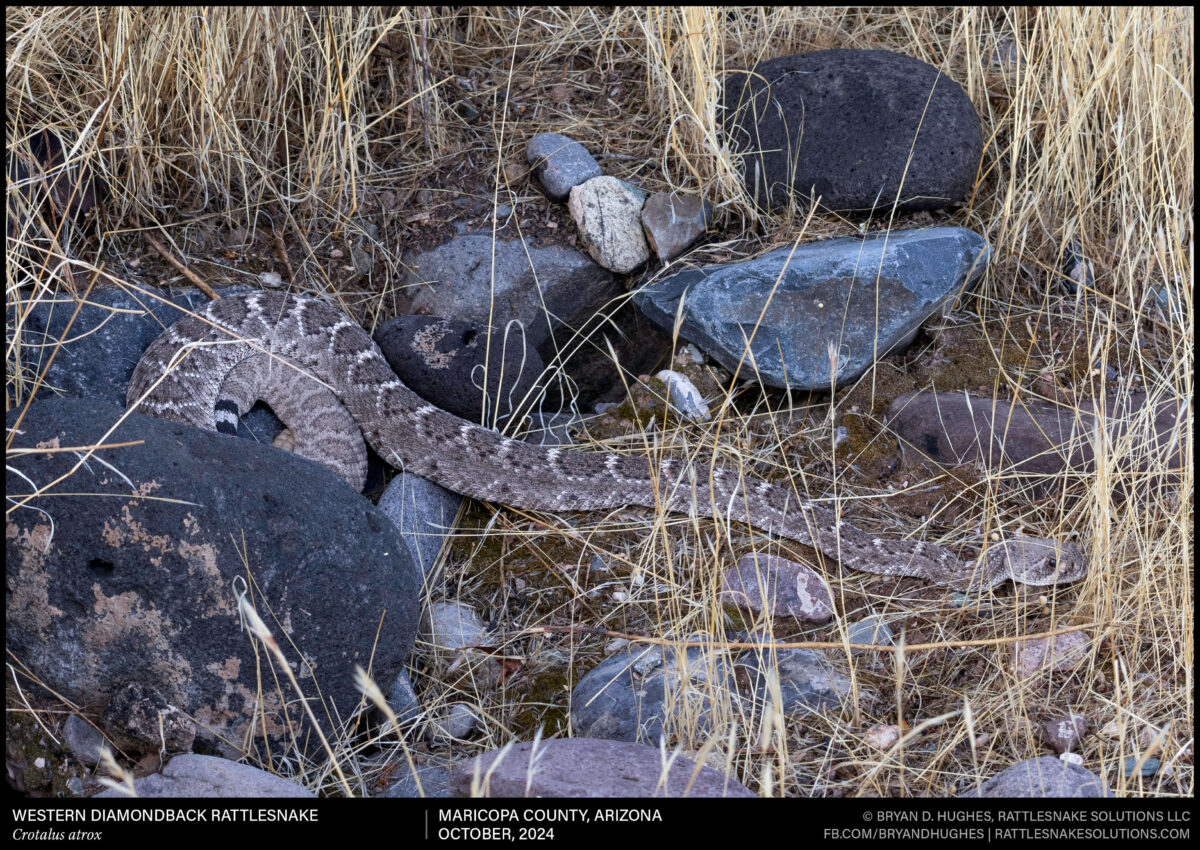
A Western Diamondback Rattlesnake caught after breaking coil in a hurry. Sometimes, a situation like this is the result of a strike at passing prey. Afterward, if they succeeded in connecting, they’ll wait a few moments and then go off in search of the prey as it succumbs to the venom elsewhere. Or, if it missed … back to the coil to try again.
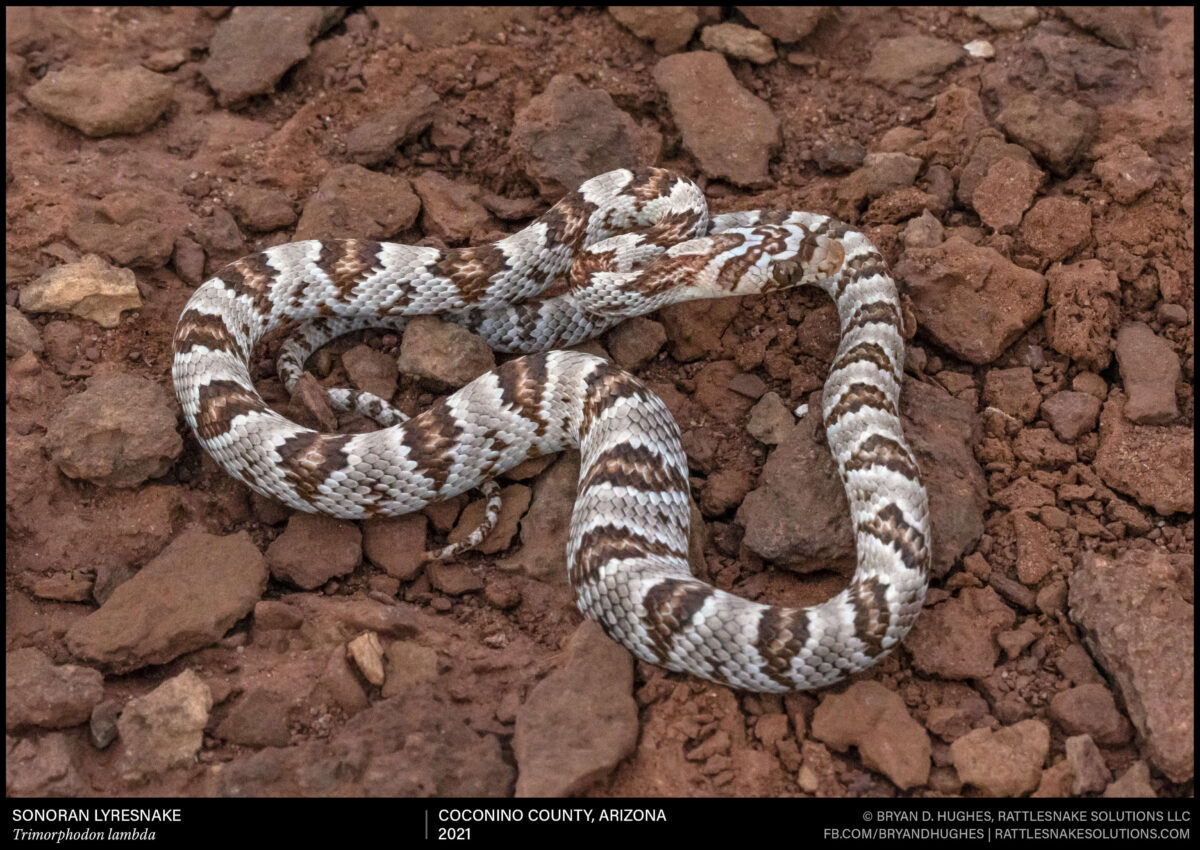
A Sonoran Lyresnake from just south of the Utah border in northern Arizona. I like their appearance in this area along the Colorado River. They’ll often have this high-contrast pattern, sometimes flecked with golds and maroon scales. This one is relatively young, and may take on some of these other colors as it matures.
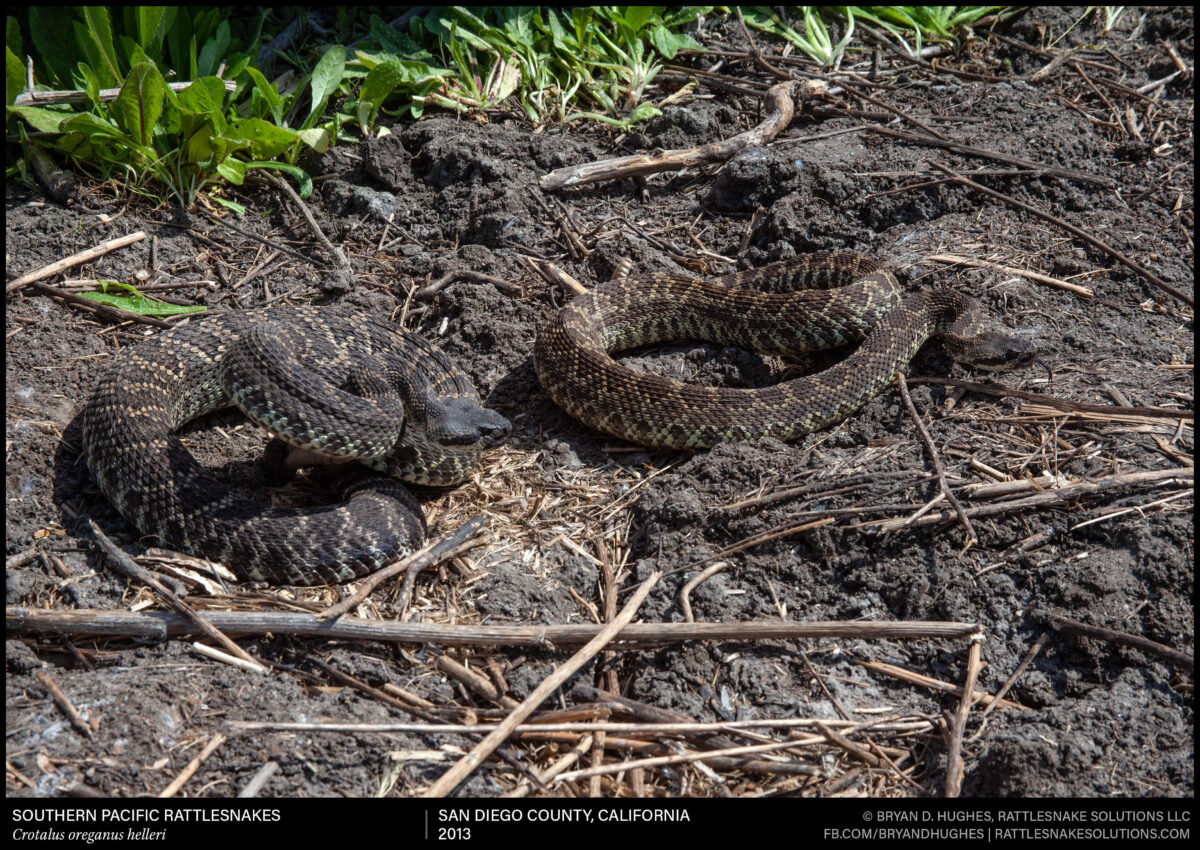
This is an old photo of how most of the Southern Pacific Rattlesnakes I’ve seen are found. They were under trash in a heavily populated area. These are what I most wanted to see while visiting friends in the area, though are considered “trash snakes” by some of the locals because of how common they are, and the fact that they add a dangerous element to collecting kingsnakes and boas. I have regrettably few good photographs of these animals, partly for this reason.