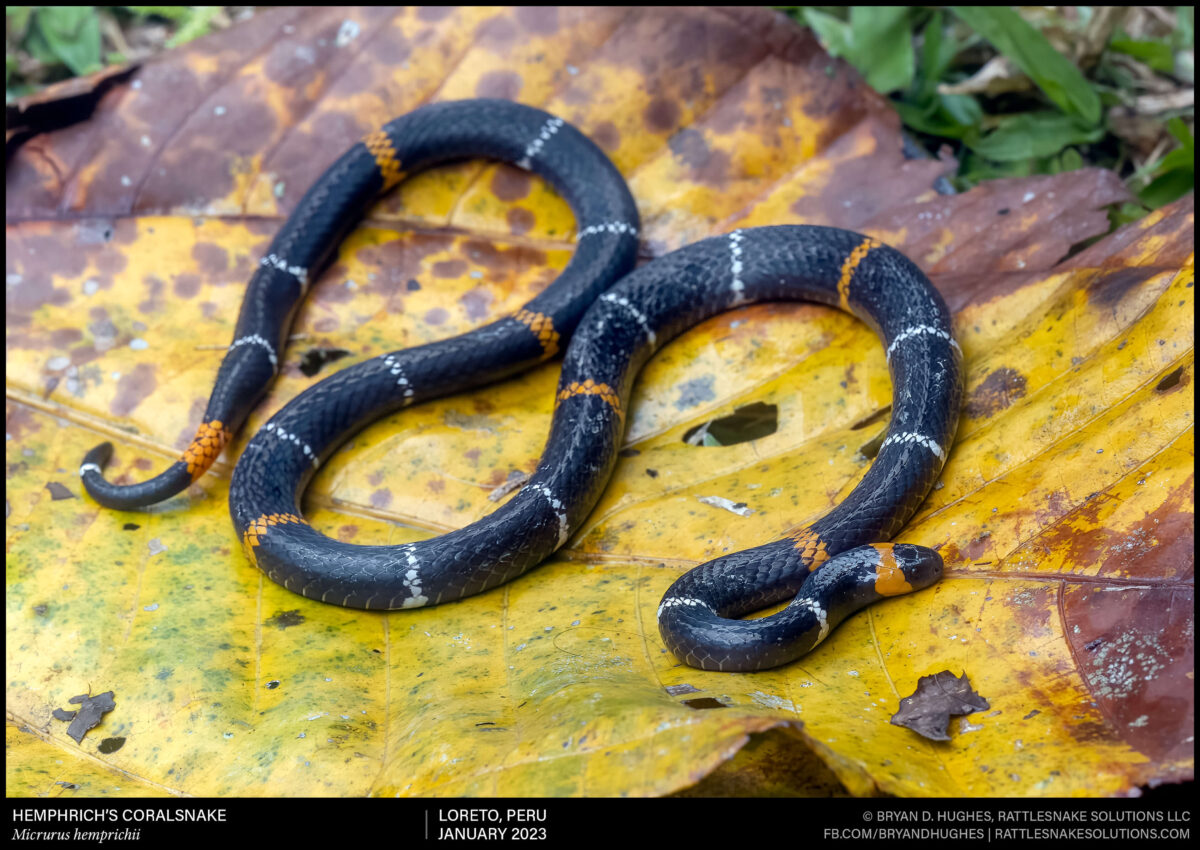
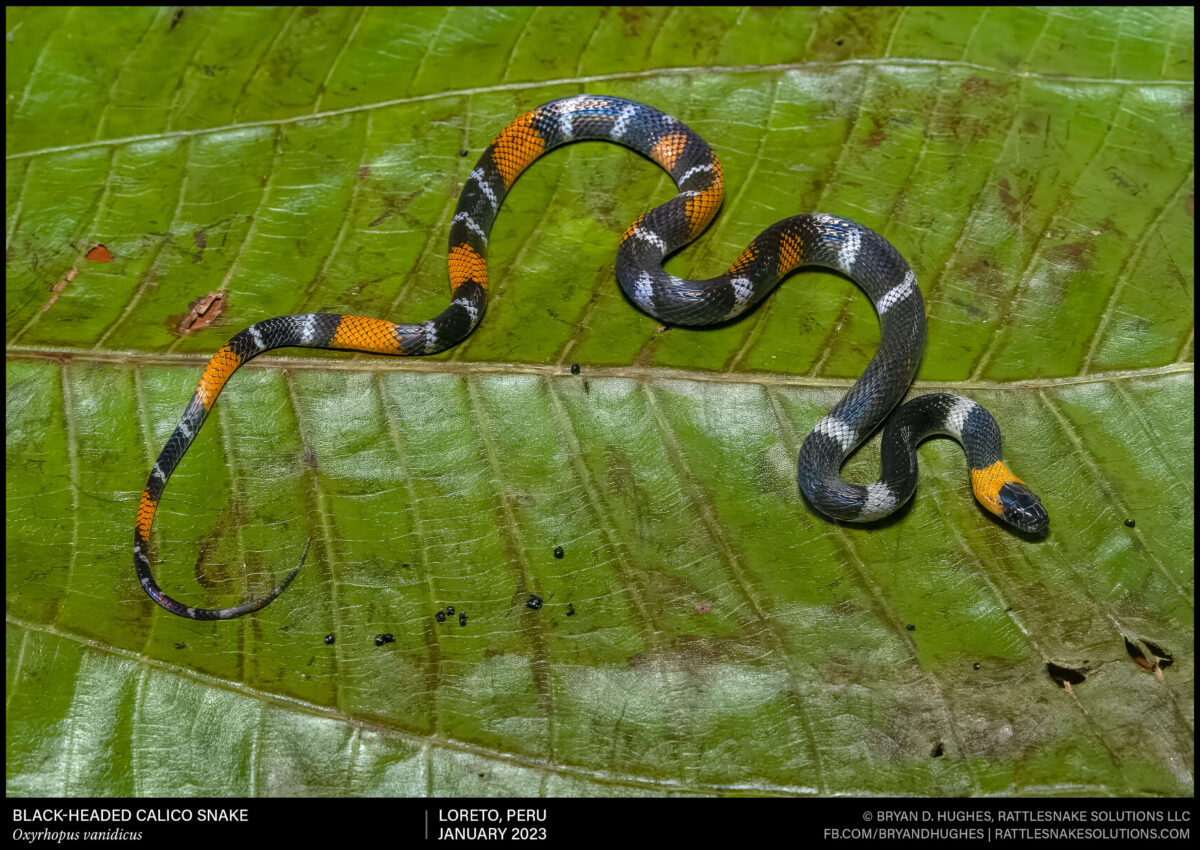
One of the many species of coralsnakes that can be found in the matrix of materials that make up the floor of the Amazon rainforest. This is a Hemprich’s Coralsnake. Also, its mimic, a harmless Black-headed Calico Snake. The body and head shape, as well as details of the pattern, are pretty different in a lot of ways, but it’s more than enough to make you think twice about reaching for one on a late night jungle hike when you see a black and orange flash in the leaves.
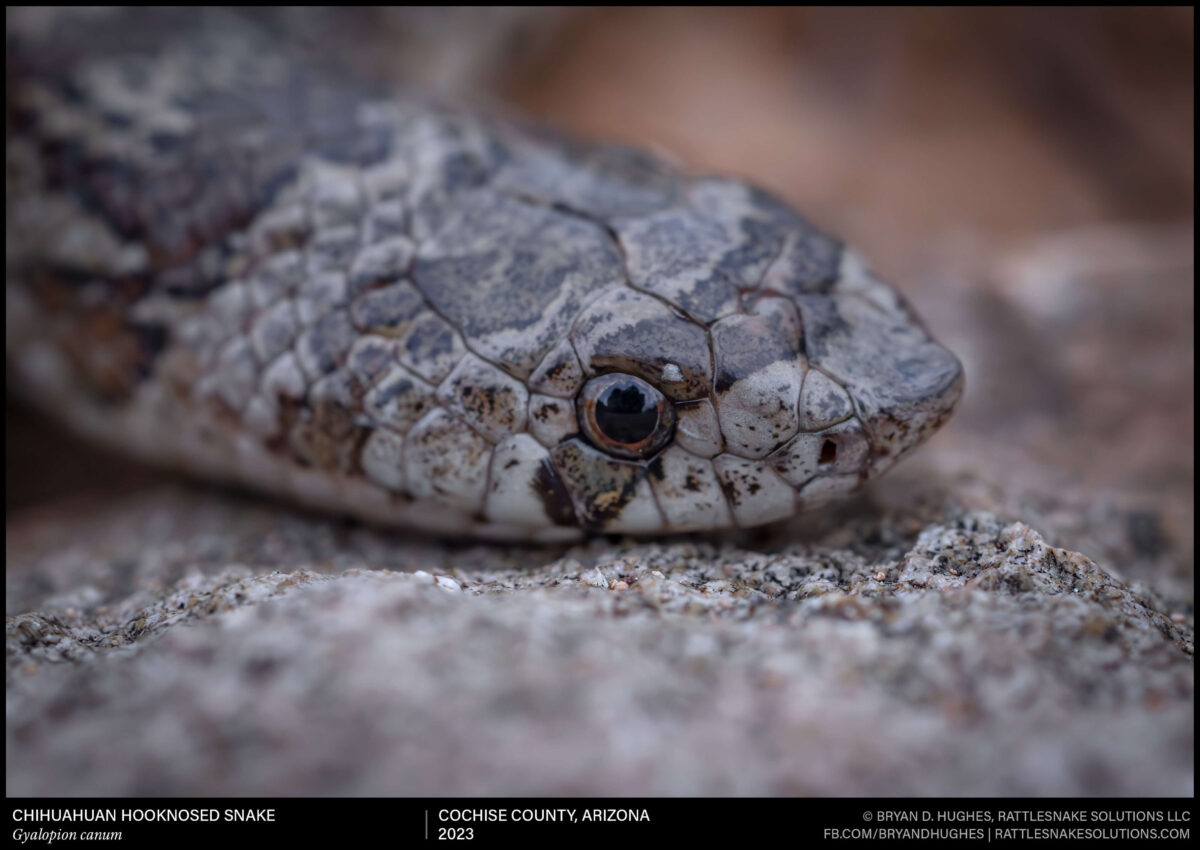
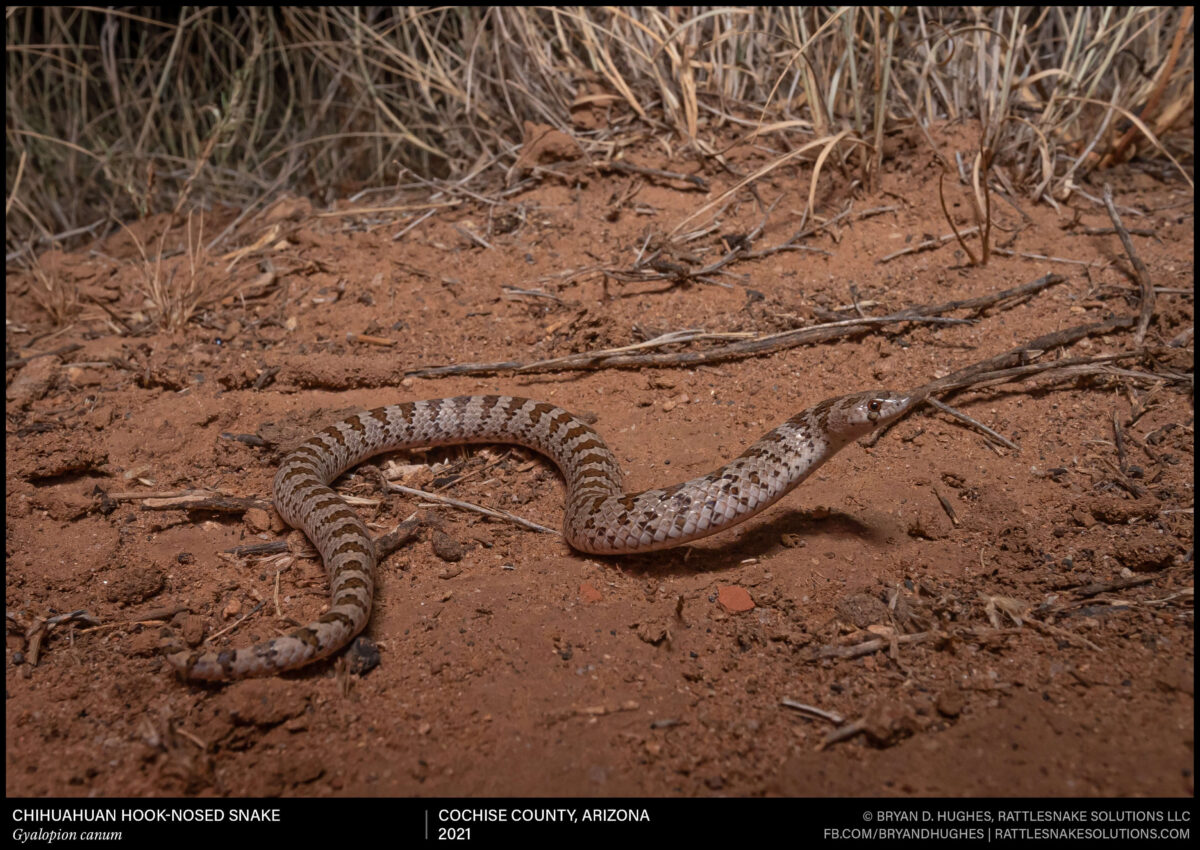
The face of a Chihuahuan Hook-nosed Snake. These are small eaters of invertebrates. The subtle scoop on the end of the nose is helpful for finding prey in the sandy, grassland soil where they live.
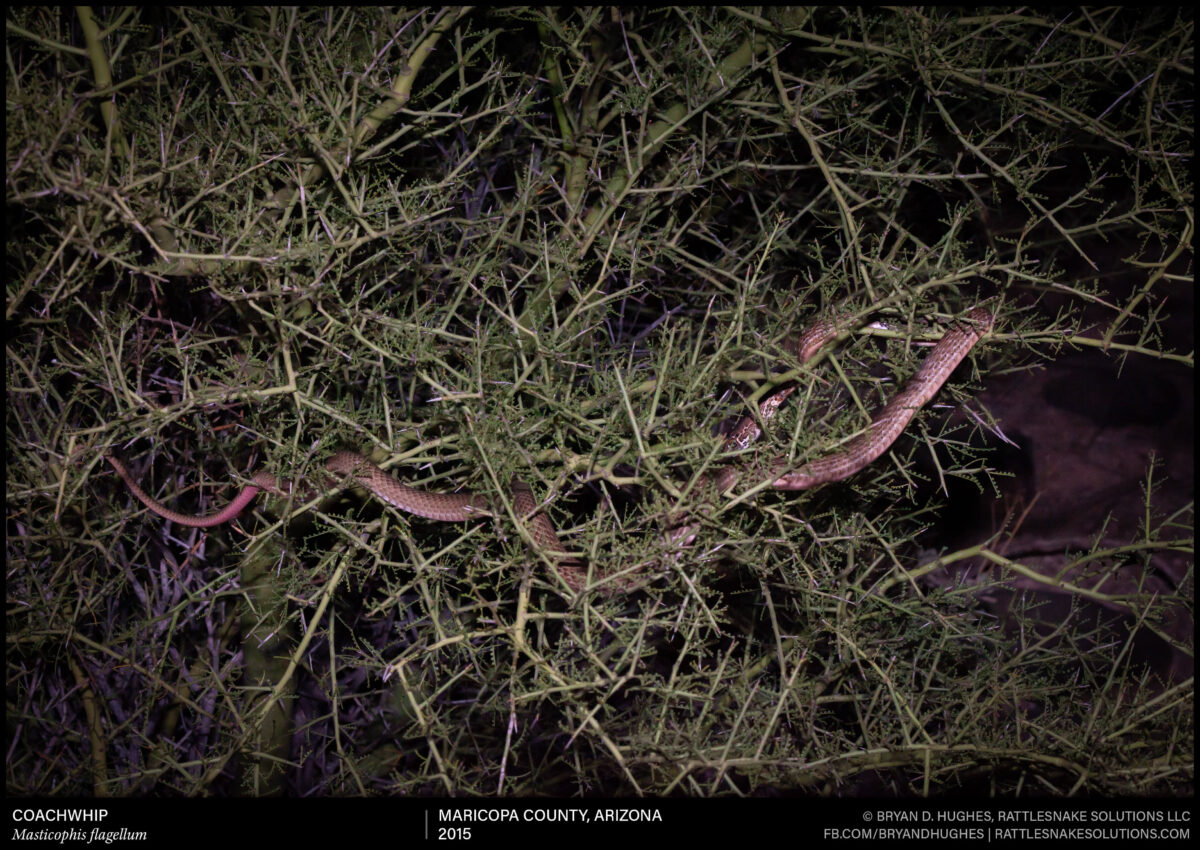
Coachwhips are out and about on even the hottest days, rarely active at night. But they can still be found where they sleep, which is often up in trees high off the ground. We spotted this one doing just that just above eye level on a late night hike. These long, slender snakes are great climbers, and this is a reasonably safe spot for such an animal to evade predators and get off the hot ground.
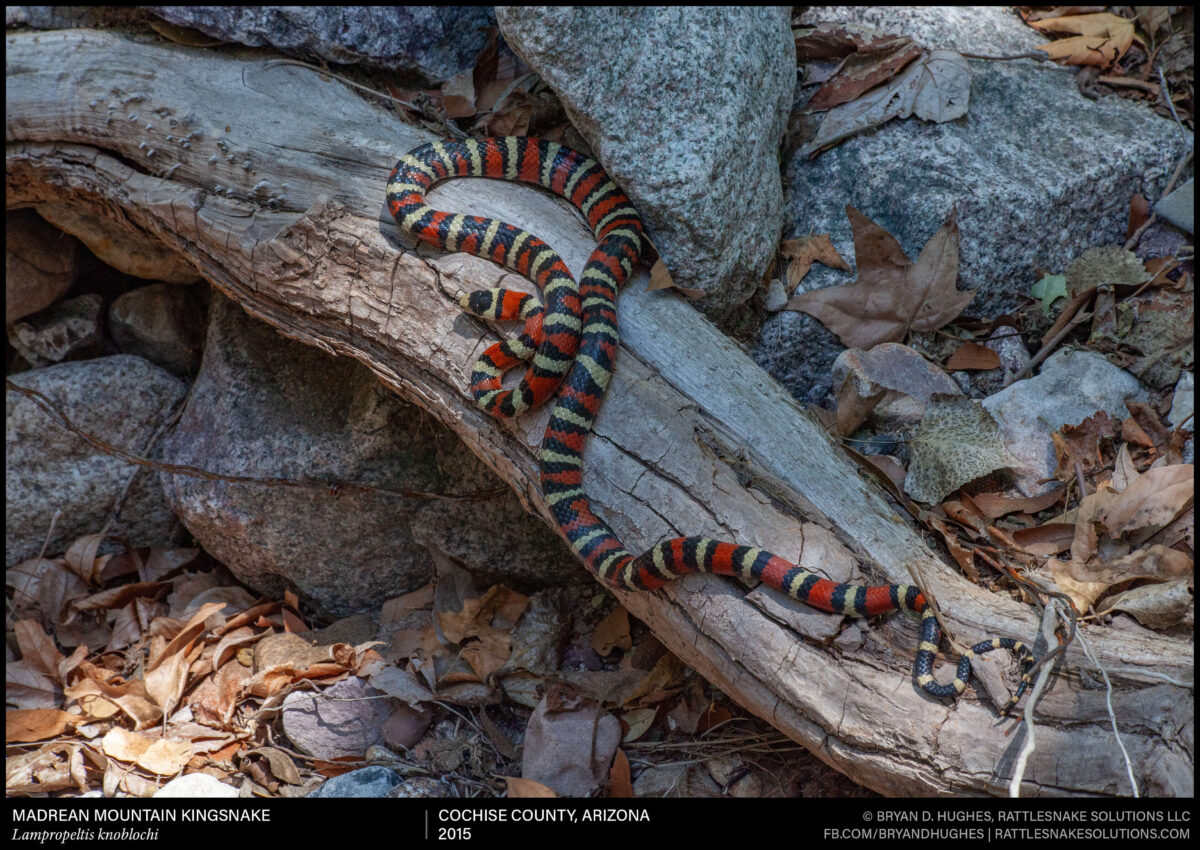
A Madrean Mountain Kingsnake from the southeastern corner of the state. These colorful snakes can be surprisingly difficult to spot, despite their bright coloration. In the low, dappled light and noisy background of their woodland environment, there’s not a “snake shape” to see, and they’re easy to walk right by.
A Chihuahuan Hooknosed Snake we found in Cochise County, Arizona. These small snakes have a specialized scale on its face that it can use to help it uncover its prey: arachnids and centipedes. Of the snakes that can be found in Arizona, this is one of the least often seen, even by snake enthusiasts.
This one became defensive as it was being photographed, striking repeatedly at the camera with a closed mouth. This is a good example of why the popular saying “if it has a mouth, it can bite” is missing a critical component to be relevant: not just can it bite, but WILL it bite. This little snake says no.
Camping and fishing along any waterway along the rim in Arizona, it’s common to see gartersnakes cruising around the vegetation. There are several species of gartersnakes in Arizona, but this may be the most commonly encountered. Wandering Gartersnakes are a subspecies of Western Terrestrial Gartersnake that inhabit a variety of habitat, though are most often spotted in shallow water going after tadpoles and small fish.
A Sonoran Whipsnake from near Phoenix, Arizona. These fast, diurnal animals can be seen on occasion darting across trails or roads, even in the peak heat of the day. Large, forward-facing eyes and a body style made for speed mean that any lizard that ends up in its sight isn’t going to have a good day.
They show up from time to time at homes at the very edges of the city. Based on our records of snake encounters at homes over the last 16 years, they are not as good at adapting to semi-developed areas as other, similar species, like coachwhips.
A few years ago, I saw what would be the only known record of one in the Piestewa Peak preserve area. It was in the middle of the night, resting in loose rocks in front of a spot where several Southwestern Speckled Rattlesnakes were about to give birth. Sonoran Whipsnakes include rattlesnakes in their diet, and I assumed it was waiting for that opportunity. Unfortunately, I chose to slowly reach for my camera rather than dive into to rocks to grab it, and it escaped without a photo record. So, an observation went into the notes for the night’s field session, but the preserve is still without an official record.