A Southwestern Speckled Rattlesnake found in the lower foothills of the Cerbat Mountains of Mohave County, Arizona.


A Southwestern Speckled Rattlesnake found in the lower foothills of the Cerbat Mountains of Mohave County, Arizona.
Rattlesnakes live in the highest areas of Arizona, often taking forms that defy what most residents would think possible. This one, an adult Twin-Spotted Rattlesnake (Crotalus pricei), is only about 20″ long as a mature adult, with a narrow head, tiny rattle, and body pattern that convergently looks just like a harmless nightsnake.
These are one of the four species of rattlesnakes in Arizona that are protected by law from any kind of disturbance, thankfully.

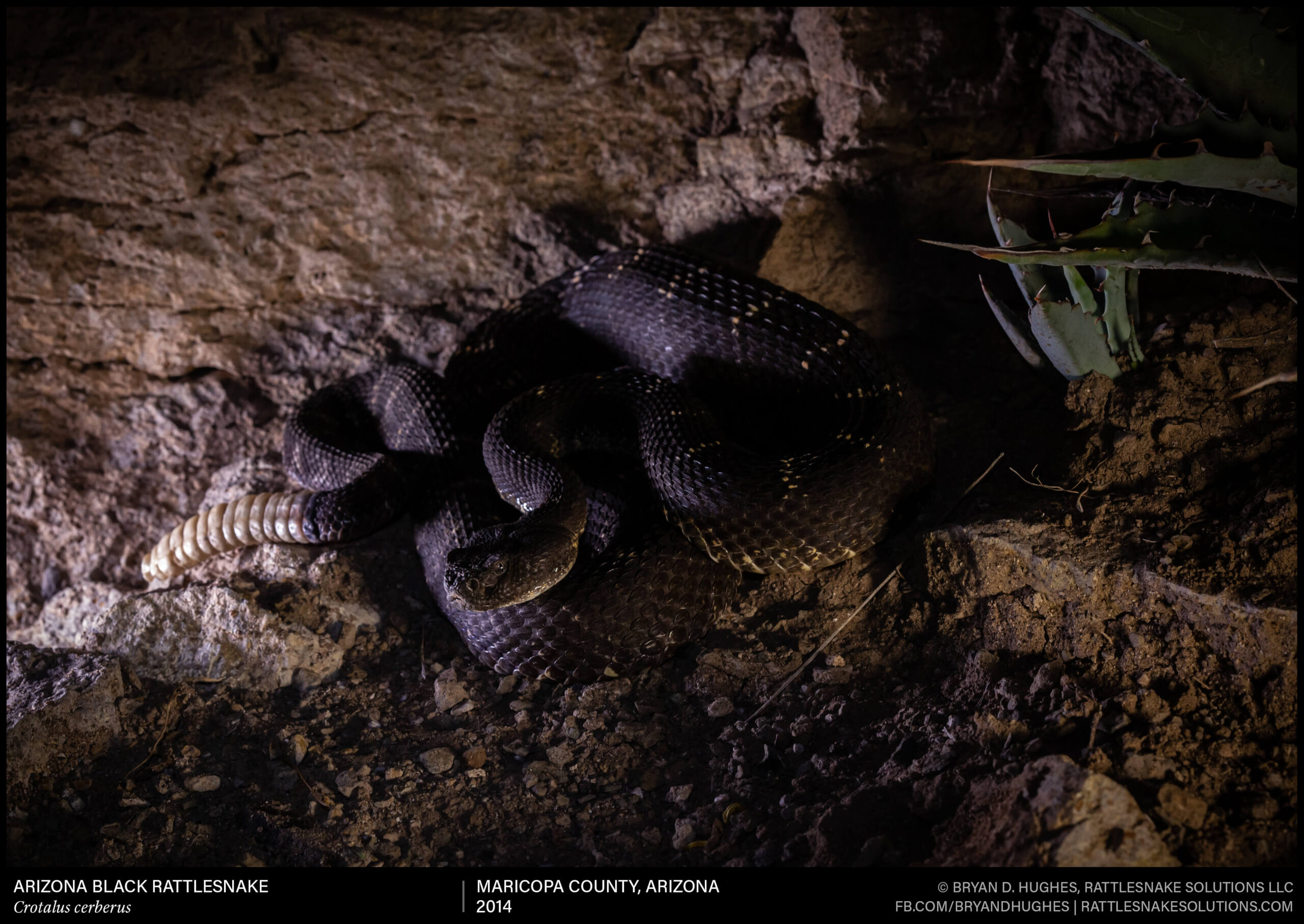
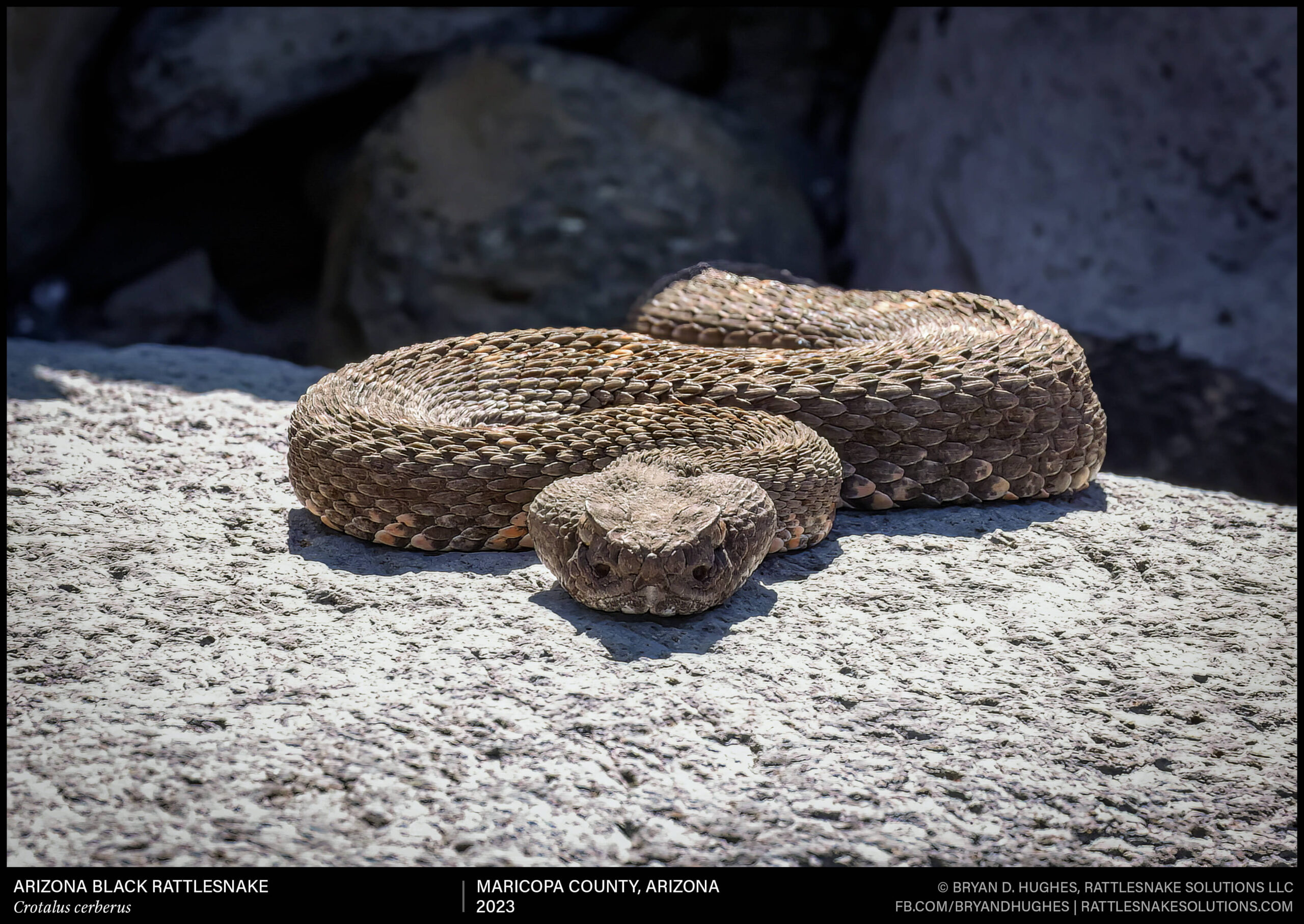
An Arizona Black Rattlesnake in ambush in the first sun of the day. The flat rock is on the only, narrow path to a natural water hole – the only water in the region. Any small mammal wanting to visit it would have to jump across this rock. This is likely something this snake knows very well by now, an example of how much can go into the selection of a hunting position. If I may anthropomorphize a bit, I’d call it strategic.
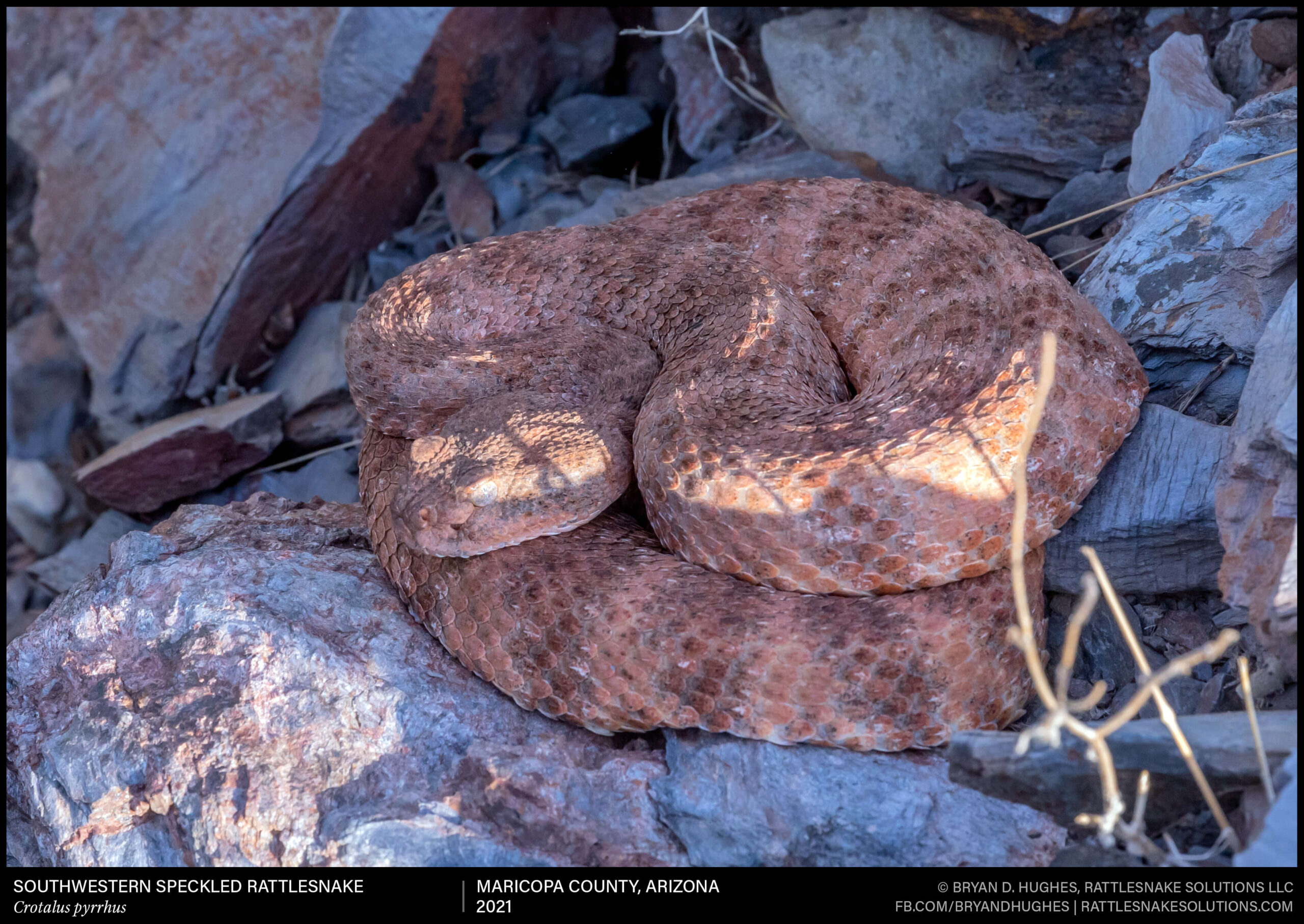
Southwestern Speckled Rattlesnake sitting out in the early morning after a long night waiting for a mouse. It will have another chance for prey, as birds and lizards visit the hillside, possibly not noticing this orange “rock” perfectly situated in the landscape.
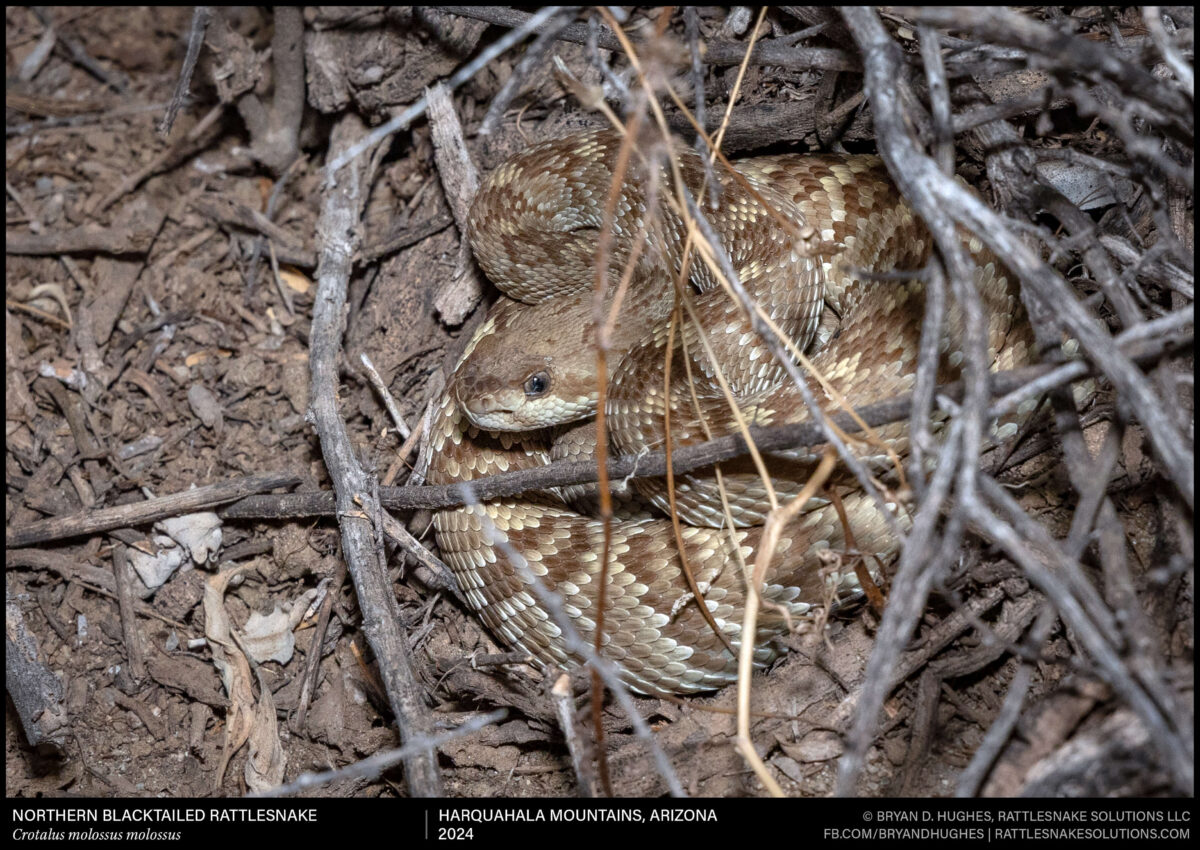
This tan Blacktailed Rattlesnake was spotted on a night hike in the Harquahala mountains of western Arizona. In the low desert, they look quite different than the typical yellow and black Blacktails we often post photos of. This is a very adaptable species, thriving in mountainous habitat from sea level to high mountains, in hot, dry deserts to relatively cool pine forest and all in between.
A Southwestern Speckled Rattlesnake hiding away on a dry May day. A site nearby will serve as an aestivation den a few weeks later, once temperatures were firmly in the triple digits each day.

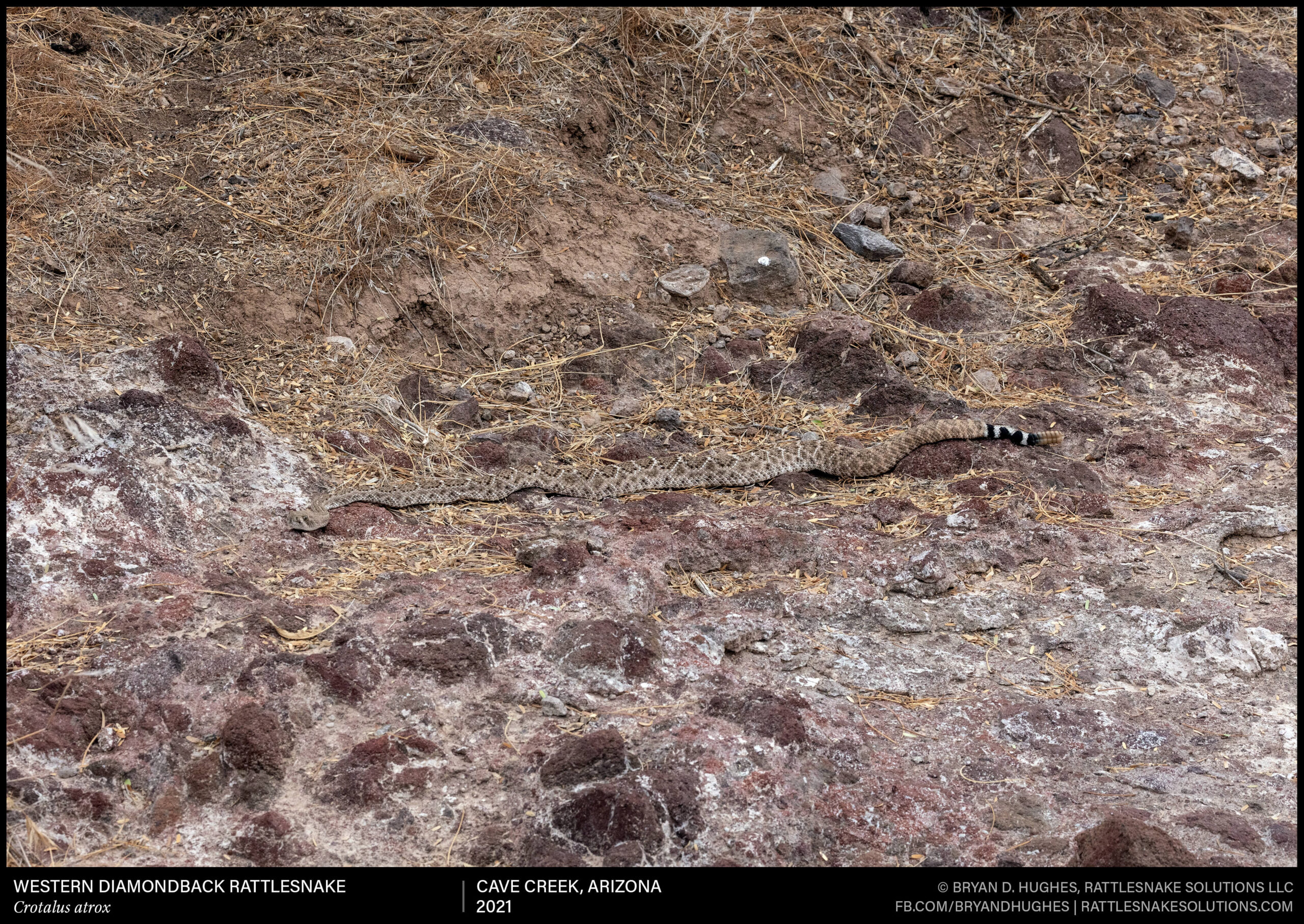
A Western Diamondback Rattlesnake cruising along a dry wash on a hot summer evening. Nearby water means a higher number of rattlesnakes in the area, and they can be found each evening moving to and from the spring. Not only good for a drink; these situations are ideal hunting opportunities for prey who also need it.
A young Sonoran Sidewinder I found in central Arizona near the edge of their range. These small specialists can be found in relatively flat, sandy and grassy desert areas in the region, but their presence ends abruptly at the edges of mountains.
Sidewinder (Crotalus cerastes ssp.) https://rattlesnakesolutions.com/Sidewinder

Banded Sandsnakes are common, found in sandy drainages and often spotted on the surface in the summer. They’re often mistaken for superficially similar groundsnakes and shovelnosed snakes – one way to tell them apart is the relatively wide body, and the gradual transition of the dorsal stripe to the tan base color along its back. They also have kind of silly puppy faces, which can’t be unseen once you do. This one was found near our office in Cave Creek.

Arizona Black Rattlesnake found at night in a wooded area of central Arizona.