There are at least five Arizona Black Rattlesnakes in this photo. It’s a winter den site, where multiple generations live together through the cool part of the year.


There are at least five Arizona Black Rattlesnakes in this photo. It’s a winter den site, where multiple generations live together through the cool part of the year.
One of several baby Arizona Black Rattlesnakes laying around outside a winter den earlier in the year. As this snake matures, it will likely darken to mute the contrast shown here and be nearly entirely black, like the other females present in the rocks behind it.

I’ve been watching this old Arizona Black Rattlesnake for more than 10 years now, each year returning to the same location to hunt for small animals looking to get a drink at an isolated water hole. The rock wall built by ranchers long ago serves as perfect daytime refugia.
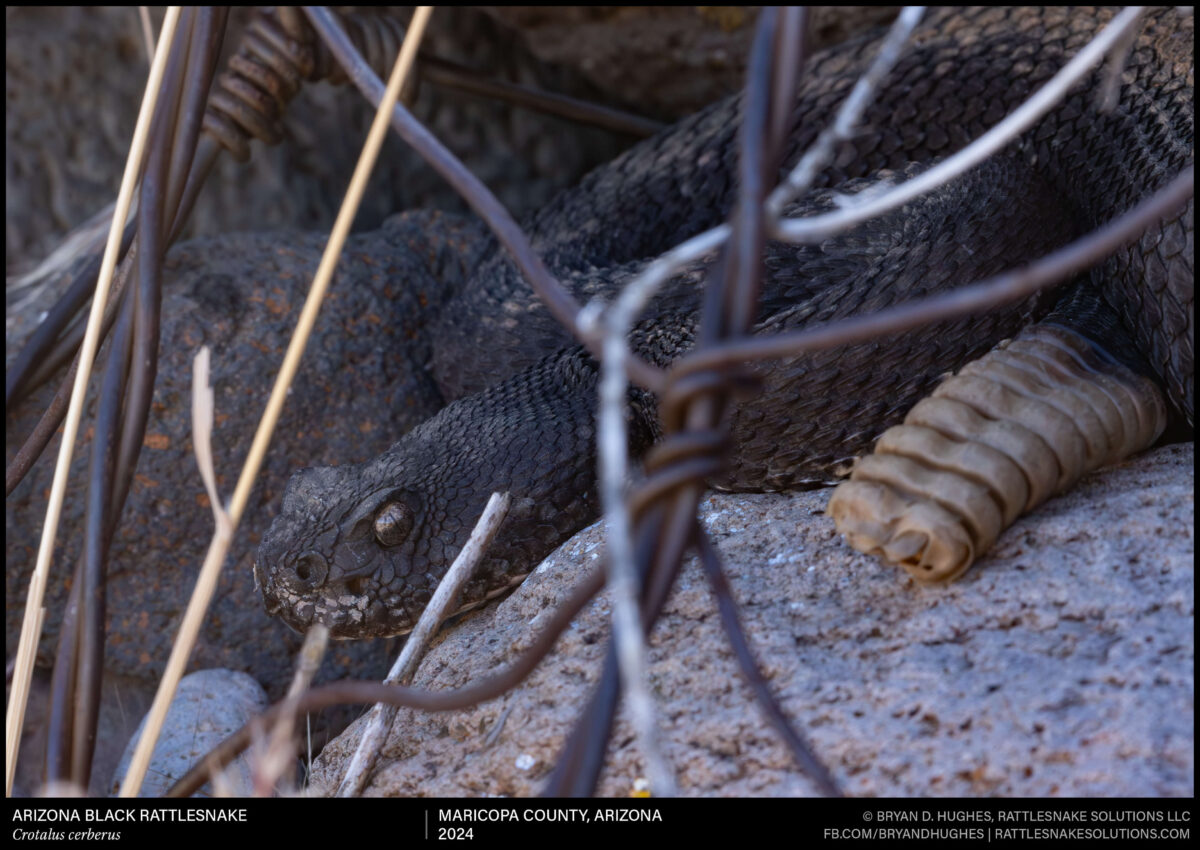
Arizona Black Rattlesnake giving me a reminder to keep my distance and leave it alone. I spotted this one crawling from a small drainage back to tangled debris at the base of a sycamore in southern Arizona.
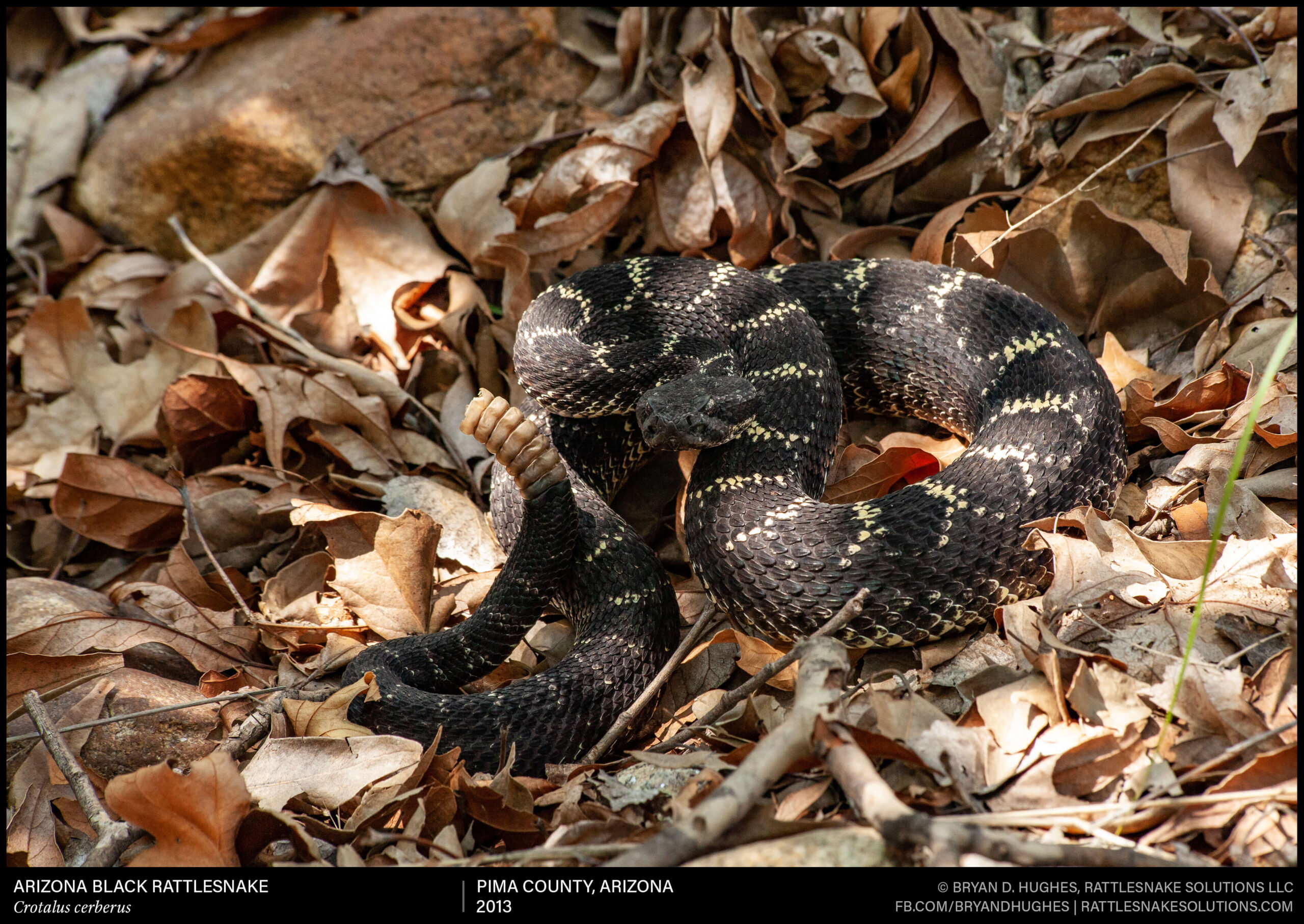
Arizona Black Rattlesnake from a desert population. Many of the snakes here are all black, missing the white or yellow scales that are typical in the more often photographed locations. This one has just a hint of yellow in some dorsal scales, but is otherwise all black or grey, including the belly.
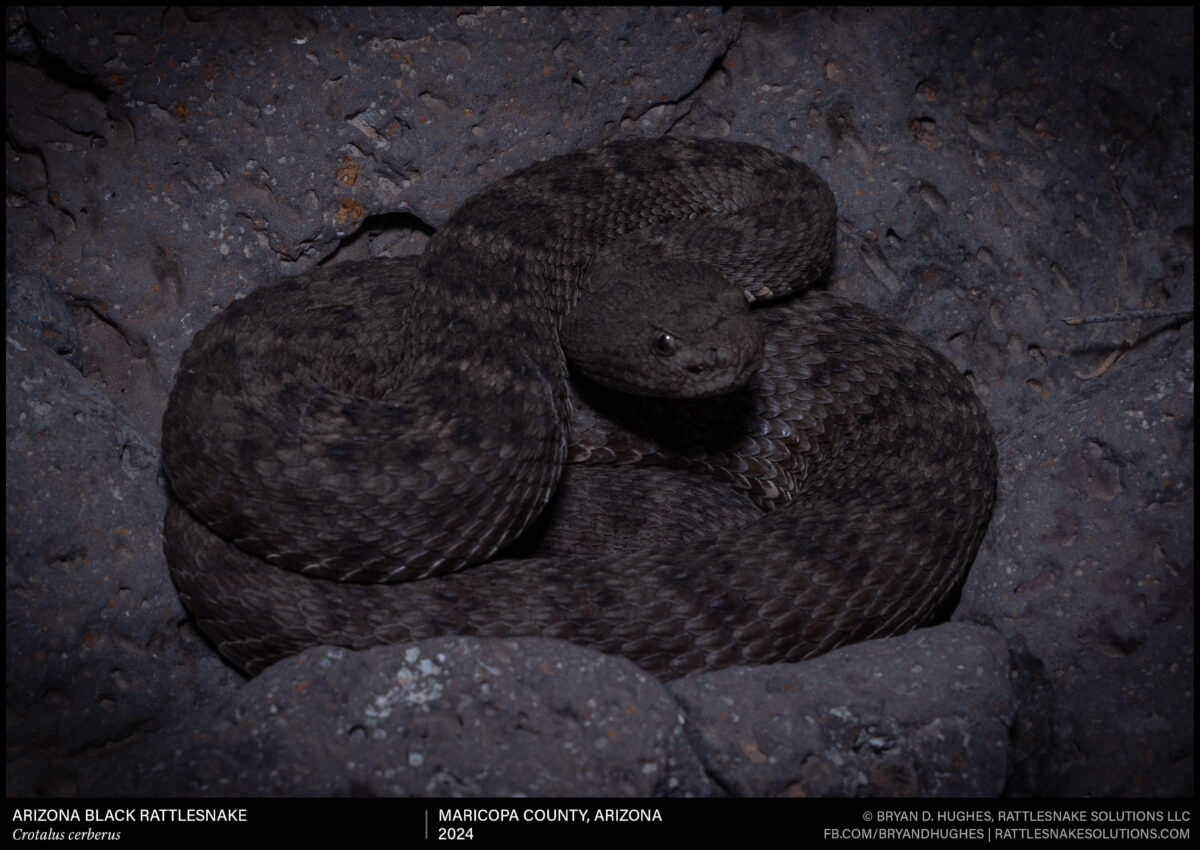
Arizona Black Rattlesnake lying in ambush nearly vertically against a boulder near an isolated water hole on a hot summer night.

An Arizona Black Rattlesnake in ambush in the first sun of the day. The flat rock is on the only, narrow path to a natural water hole – the only water in the region. Any small mammal wanting to visit it would have to jump across this rock. This is likely something this snake knows very well by now, an example of how much can go into the selection of a hunting position. If I may anthropomorphize a bit, I’d call it strategic.
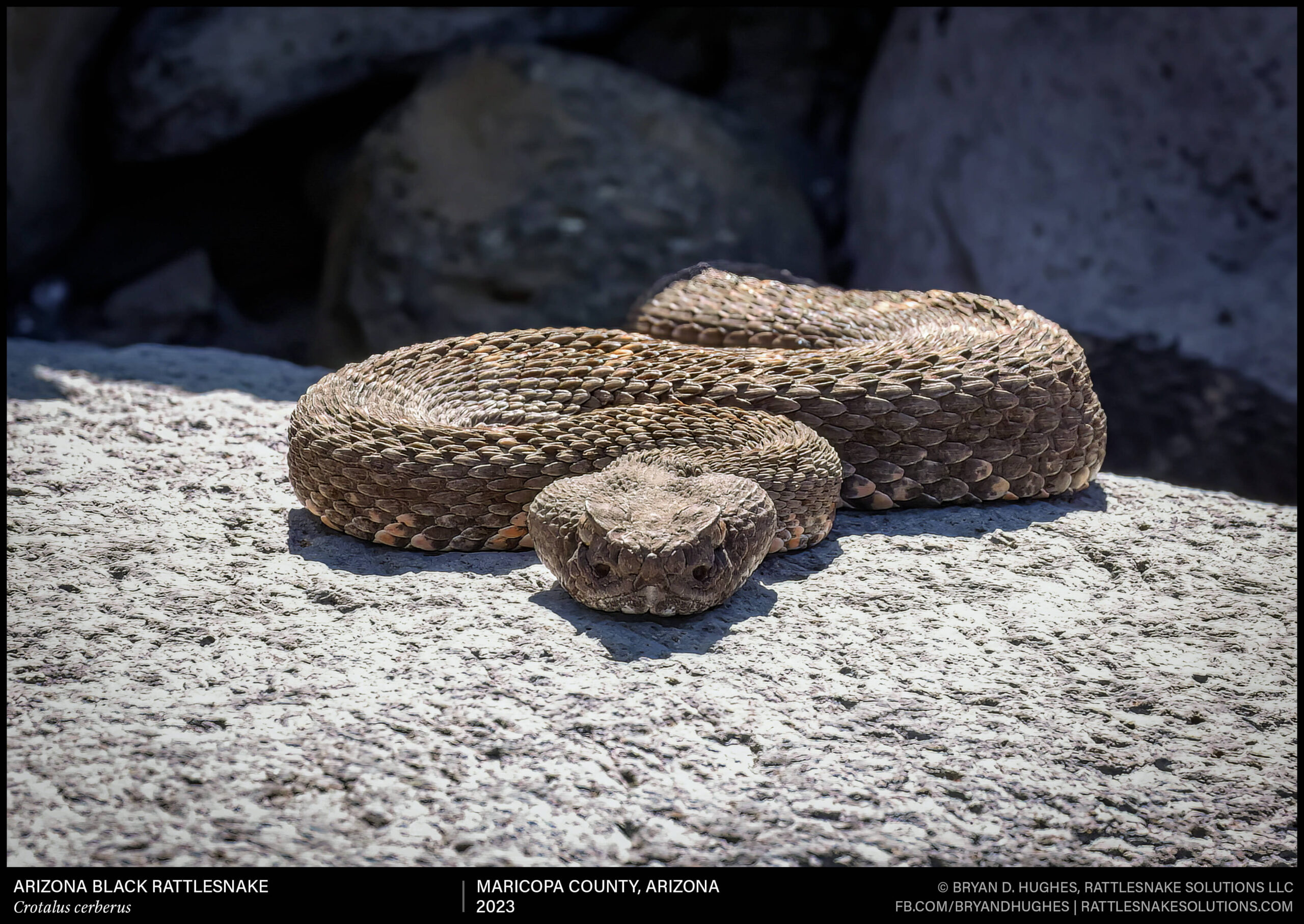
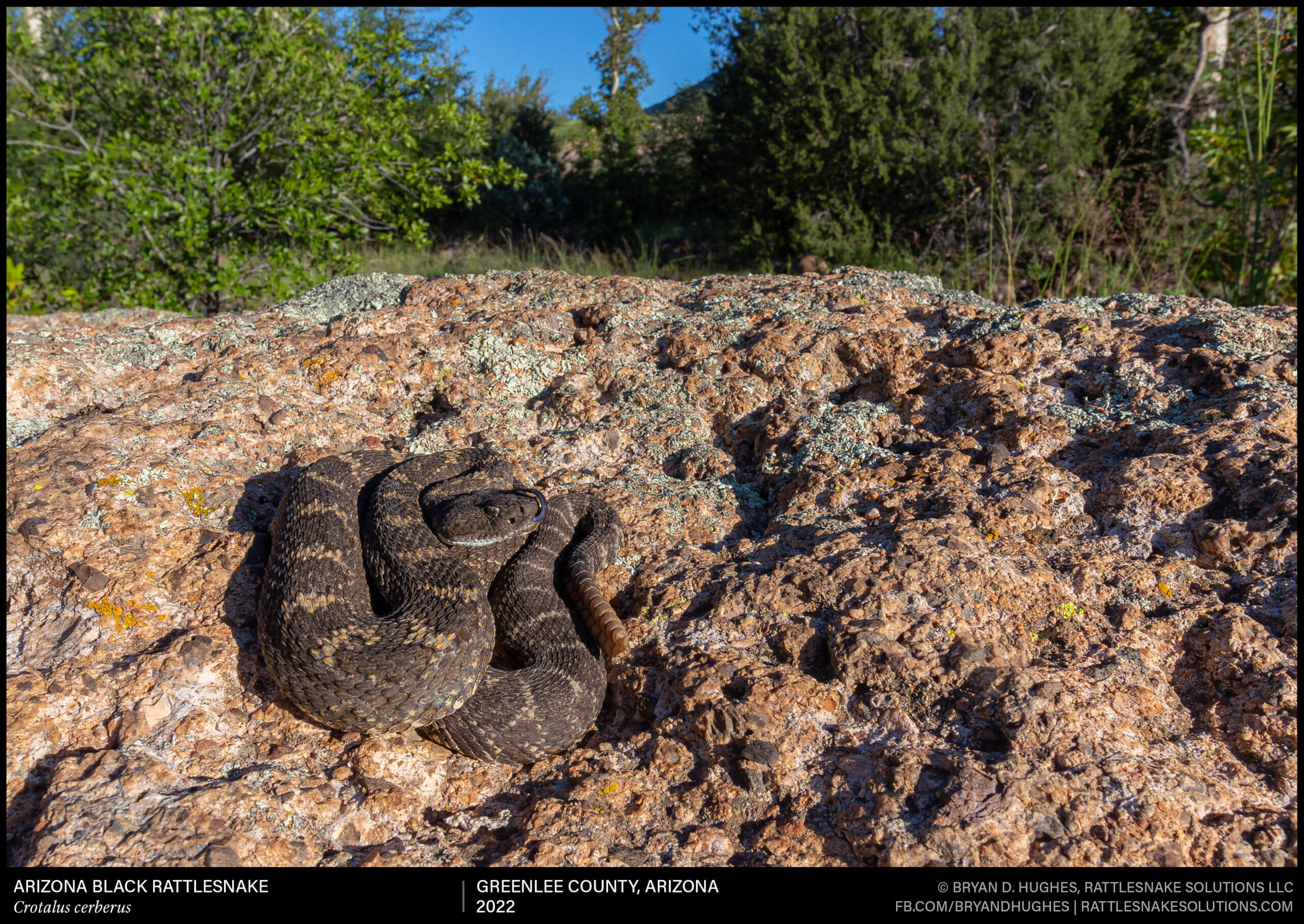
Arizona Black Rattlesnake from the far eastern end of its range in the state, found at high elevation in Greenlee County. These rattlesnakes in th is region can look different than those more familiar from the central rim region, where most of the animals you’ve likely seen in photographs are from.
Arizona Black Rattlesnake found at night in a wooded area of central Arizona.
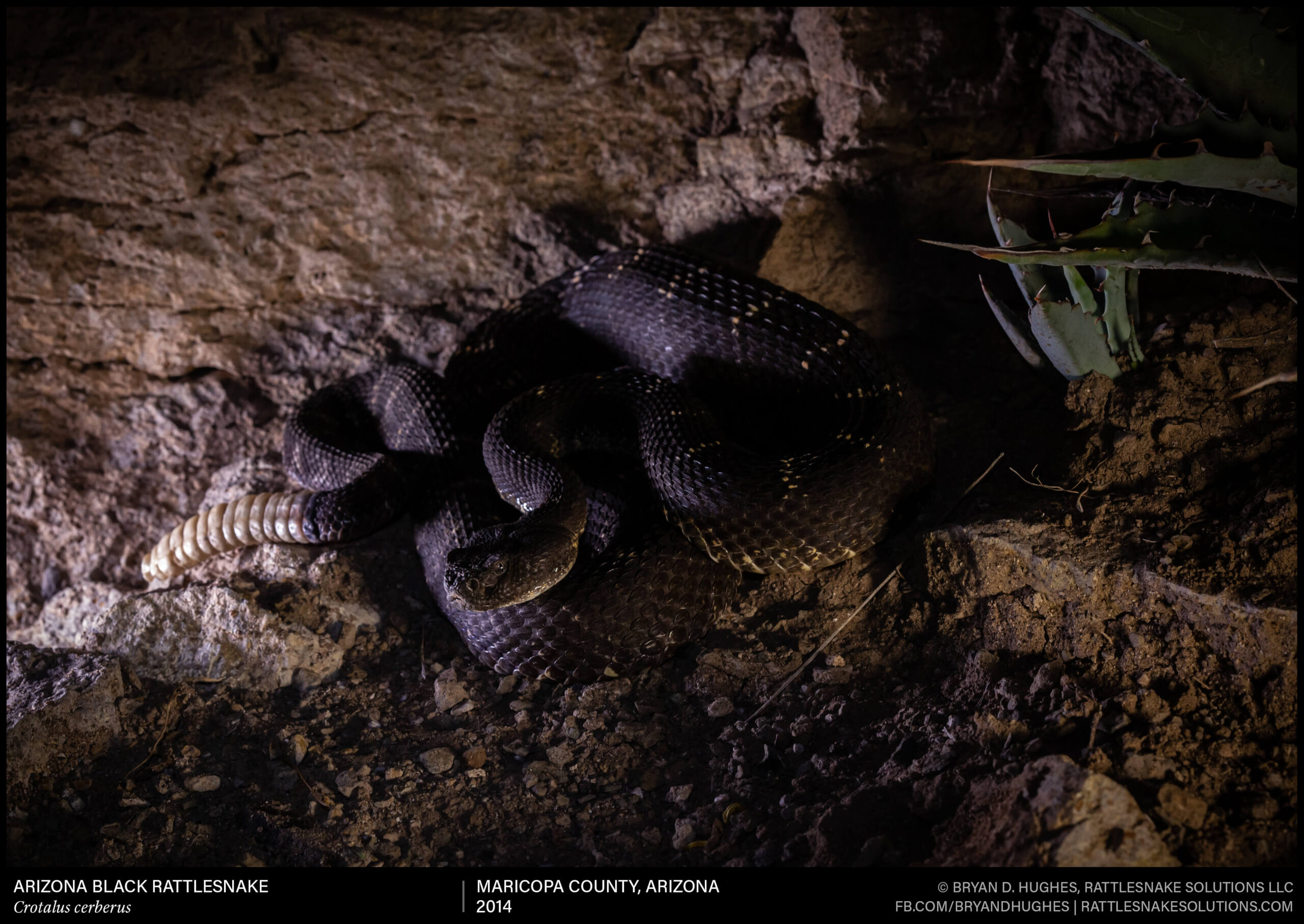
Arizona Black Rattlesnake watching us as we watch her from a basking spot near her winter den. She is one of a group of females that will stay here all year, eventually giving birth late in the summer.
