A female Western Diamondback Rattlesnake pausing on a bit near a large bush where she likely lives. These are the most common rattlesnake, if not snake, seen by hikers and homeowners in the Phoenix area.

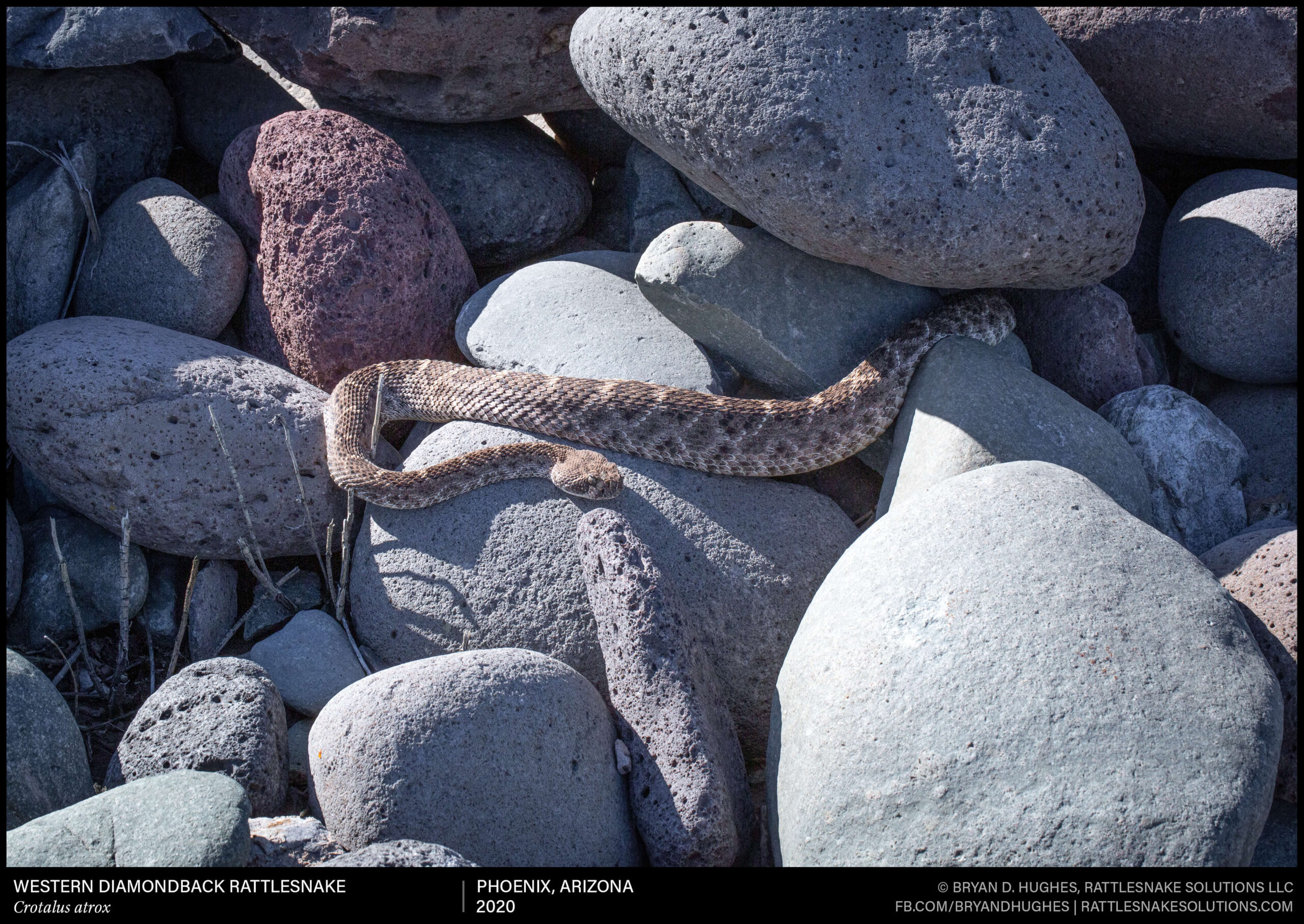
A female Western Diamondback Rattlesnake pausing on a bit near a large bush where she likely lives. These are the most common rattlesnake, if not snake, seen by hikers and homeowners in the Phoenix area.

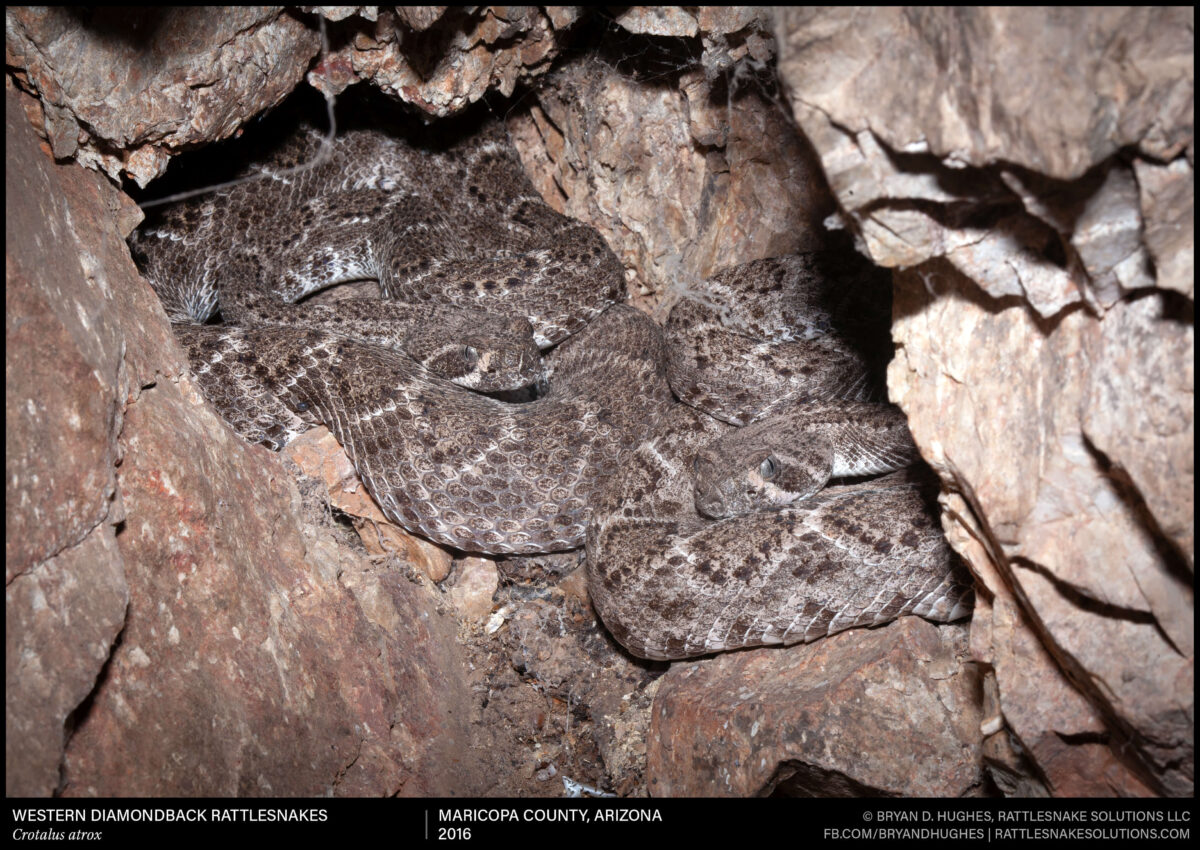
A group of Western Diamondback Rattlesnakes aestivating during the lethal Arizona summer heat in the summer of 2016. In this cave, they can stay consistently cooler than the 115˚F+ daily temperatures outside and survive until monsoon rain brings relief.

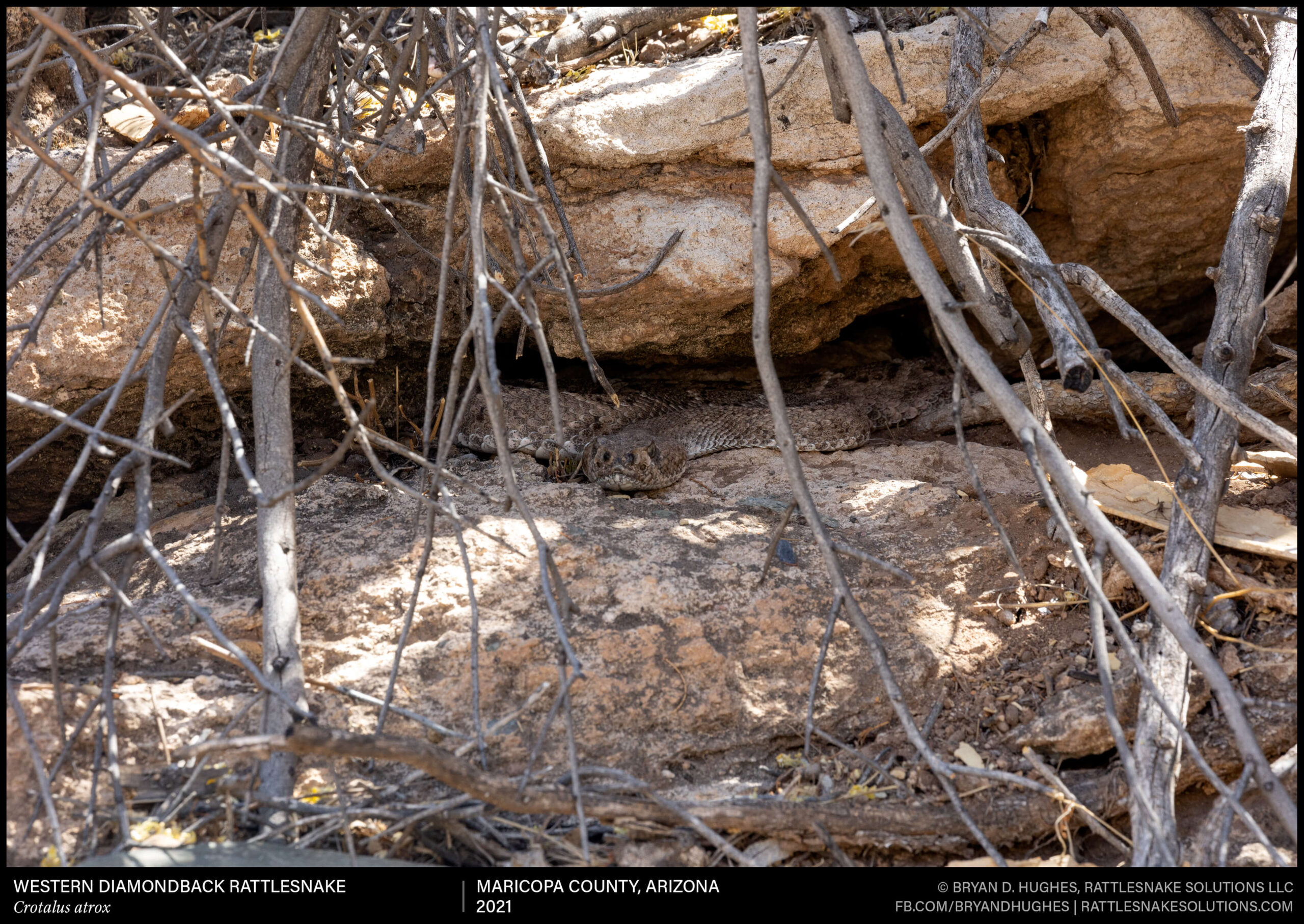
This Western Diamondback Rattlesnake was aestivating on a cool, extremely dry May morning. This drainage used to be rich with life, but recent fires fueled by invasive grasses have changed it into a charred, open oven. A few animals remain – the most abundant life to spring up after the event: globe chamomile. Hopefully this snake found a way to survive.

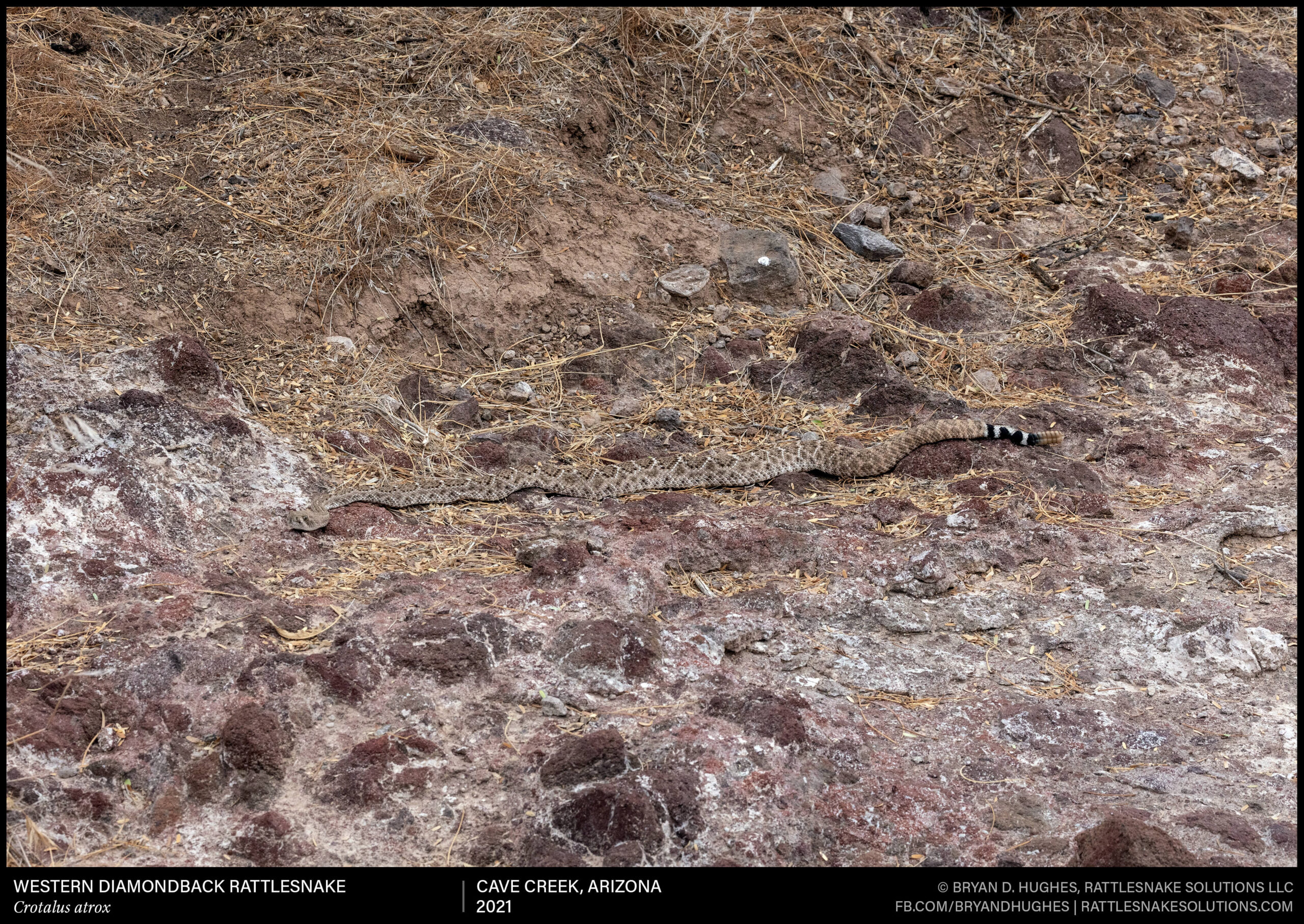
A Western Diamondback Rattlesnake cruising along a dry wash on a hot summer evening. Nearby water means a higher number of rattlesnakes in the area, and they can be found each evening moving to and from the spring. Not only good for a drink; these situations are ideal hunting opportunities for prey who also need it.

Western Diamondback Rattlesnakes getting some sun just outside their winter den several springs ago in central Arizona.

A Western Diamondback Rattlesnake out basking in early Spring at its den. An hour later, this animal was out on the crawl looking for females to court, and make sure rival males stick to their own rocks.

Several Western Diamondback Rattlesnakes moving around their winter den on a cloudy, warm Spring day near Tucson. These snakes move daily on the surface like this, mostly avoiding detection, for a few weeks during their transition from hibernation to spring hunting. During that time, a lot of social activity takes place.