A Blunt-headed Tree Snake from Guatemala a few years back. These are extremely thin snakes that can be very difficult to photograph, as they just never stop moving. This one took awhile, but eventually let me get this subpar shot.
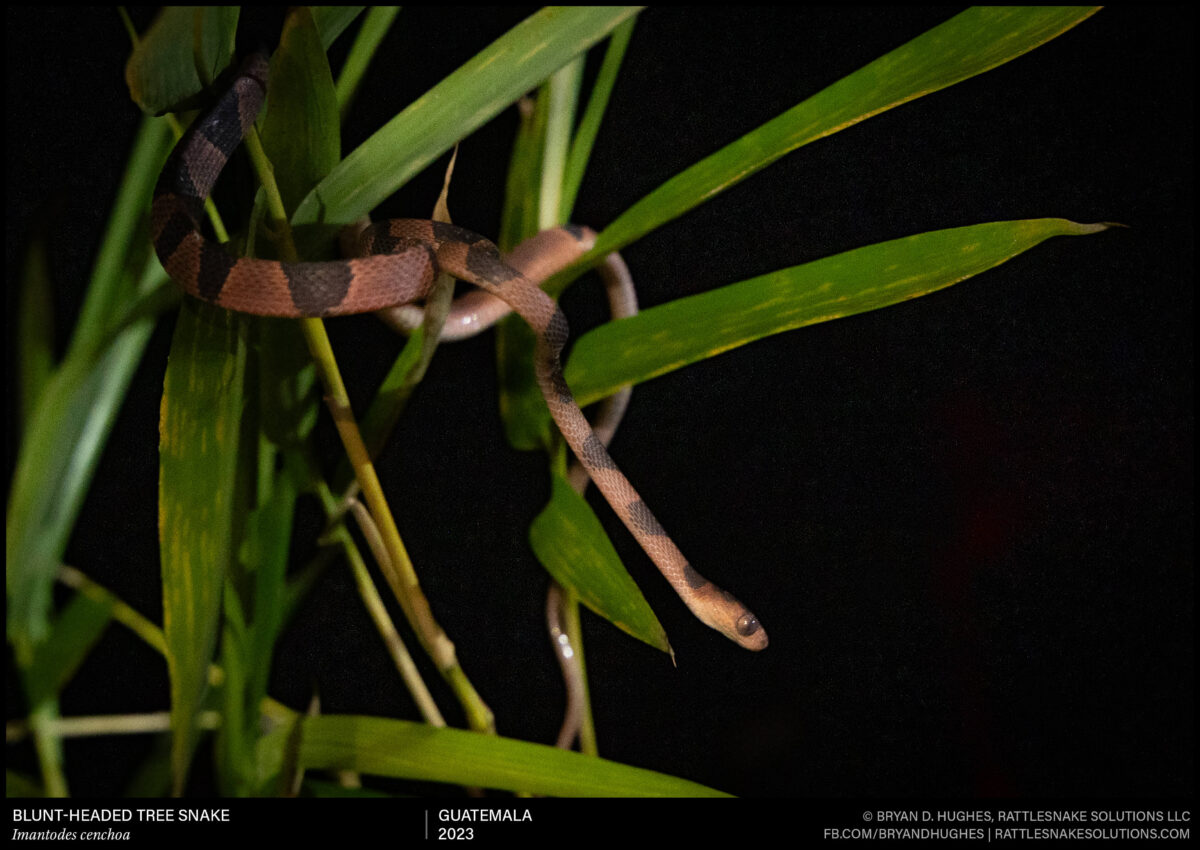

A Blunt-headed Tree Snake from Guatemala a few years back. These are extremely thin snakes that can be very difficult to photograph, as they just never stop moving. This one took awhile, but eventually let me get this subpar shot.
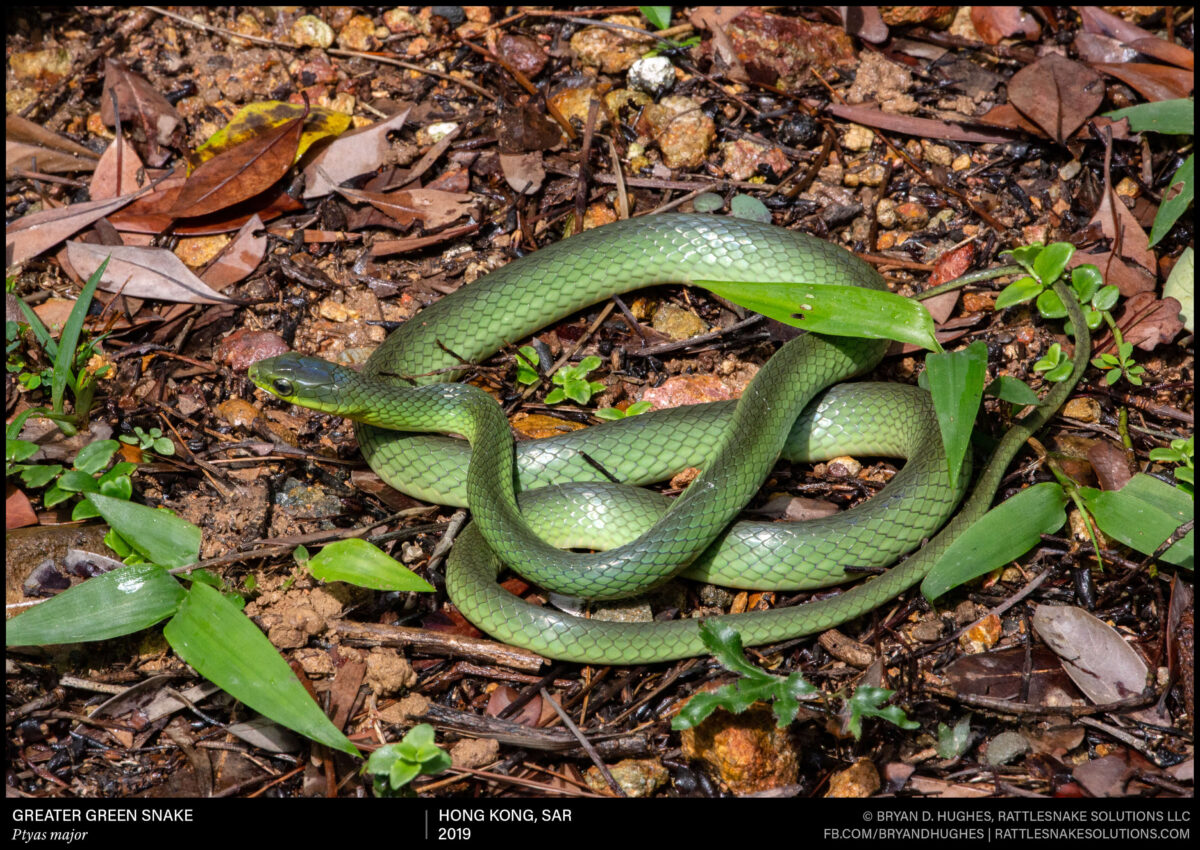
A Greater Green Snake (Ptyas major) we saw in Hong Kong several years ago.
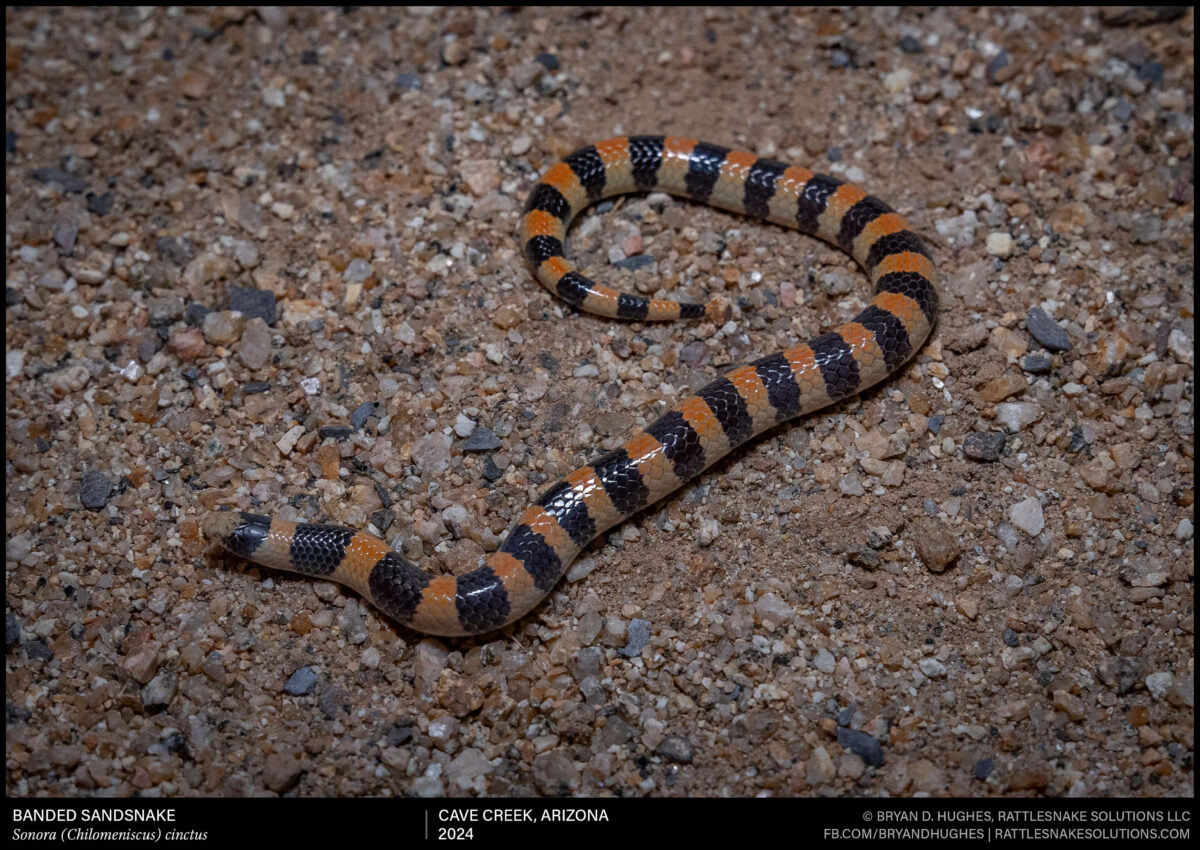
A Banded Sandsnake from my own backyard. These are tiny, even as adults. This one is a bit shorter than a pencil, and likely won’t get any bigger. They eat invertebrates, don’t bite, and are completely harmless to people and pets. They’re also very often mistaken for Western Groundsnakes, which look superficially similar.
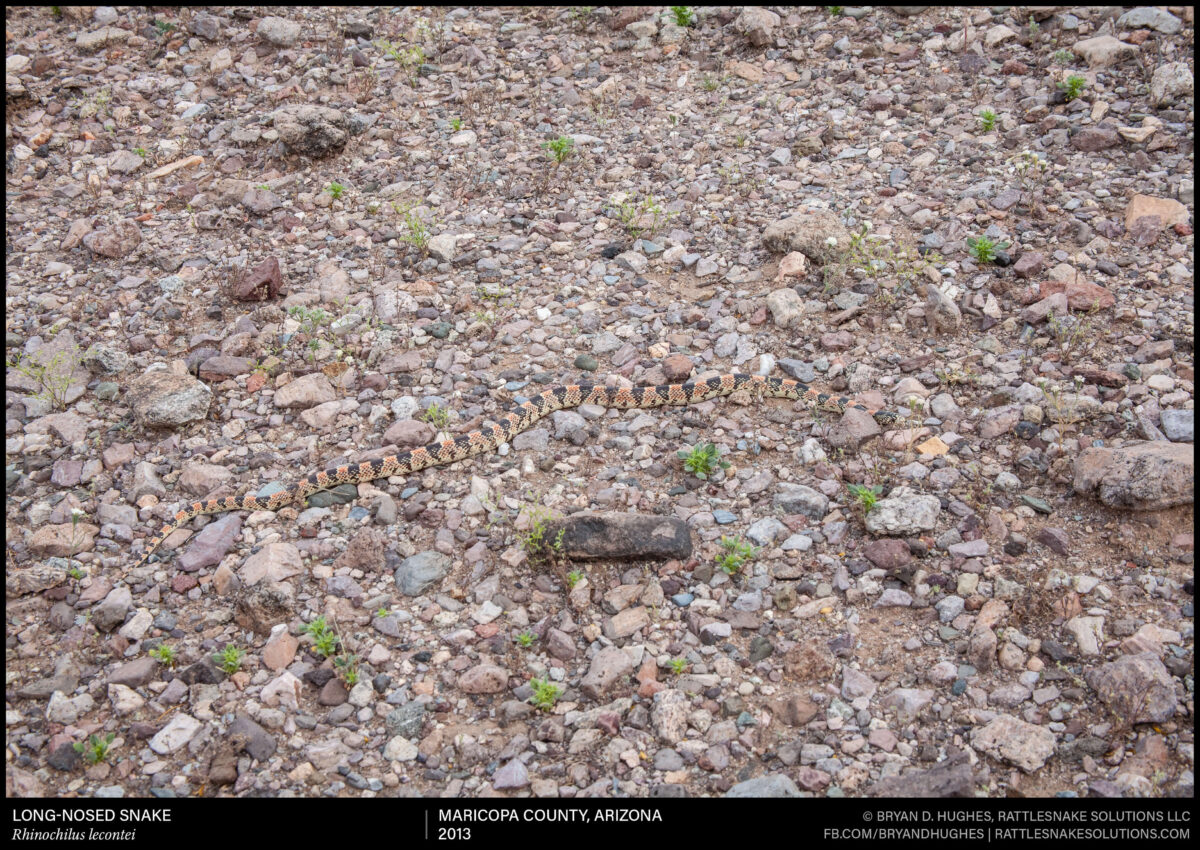
A Longnosed Snake cruising around in the low light at the end of the day. These snakes are most often nocturnal, but may be found in the early morning or late afternoon, especially in the Spring. Against the chaotic, rocky backdrop of desert pavement between sandy plains, its shape breaks up, and spotting it can be difficult.
These snakes are commonly found in backyards, even a decent distance into the city, where they are usually misidentified as kingsnakes.
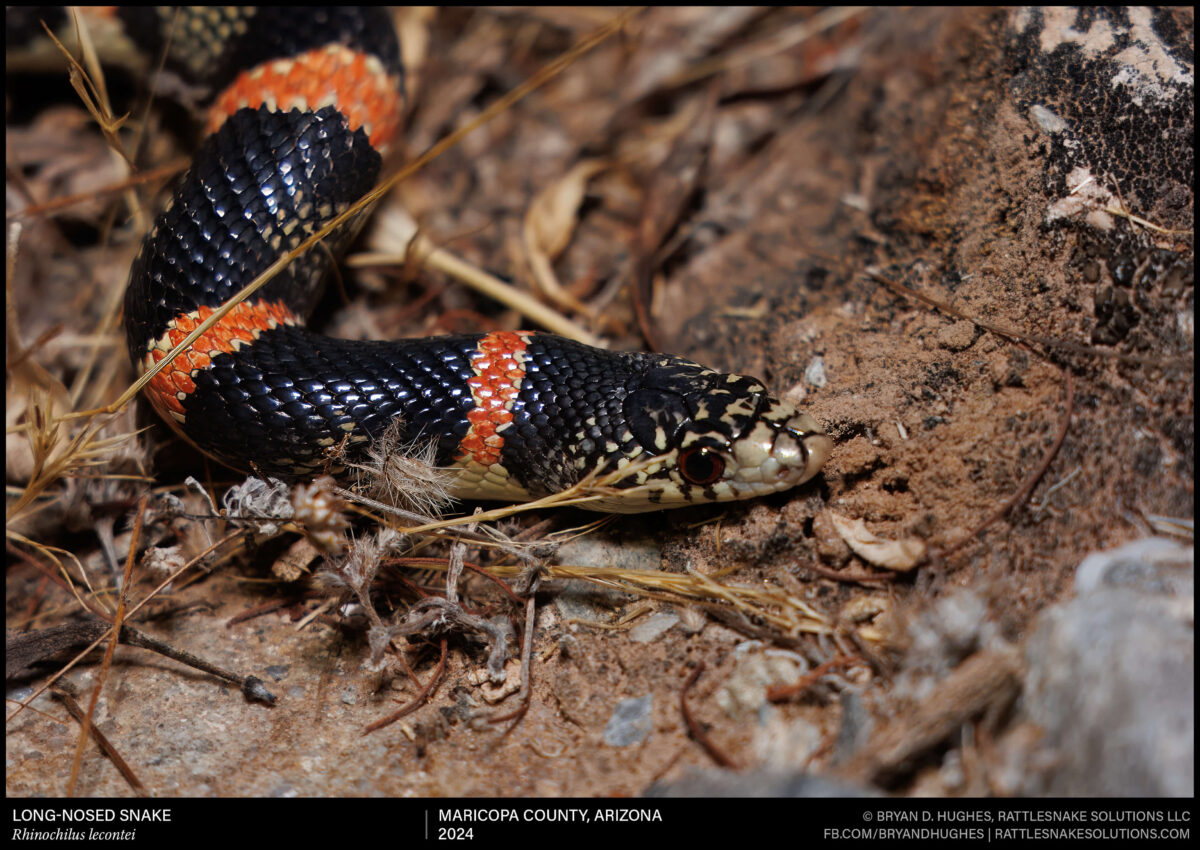
A close of of a Longnosed Snake’s namesake. These snakes are commonly mistaken as kingsnakes, even by (especially by!) the born and raised locals. There is a superficial resemblance, especially when they are in the purely black and white form. However, these red eyes, pointed snout, and red/orange bands are their own thing entirely. Longnosed Snakes are, compared to many other snake species, able to tolerate urbanization to a large degree. As a result, they can be found in backyards relatively far from the nearest native desert, often being reported by homeowners as the “first snake we’ve ever seen here”. They are harmless, of course, even being reluctant to bite at all.
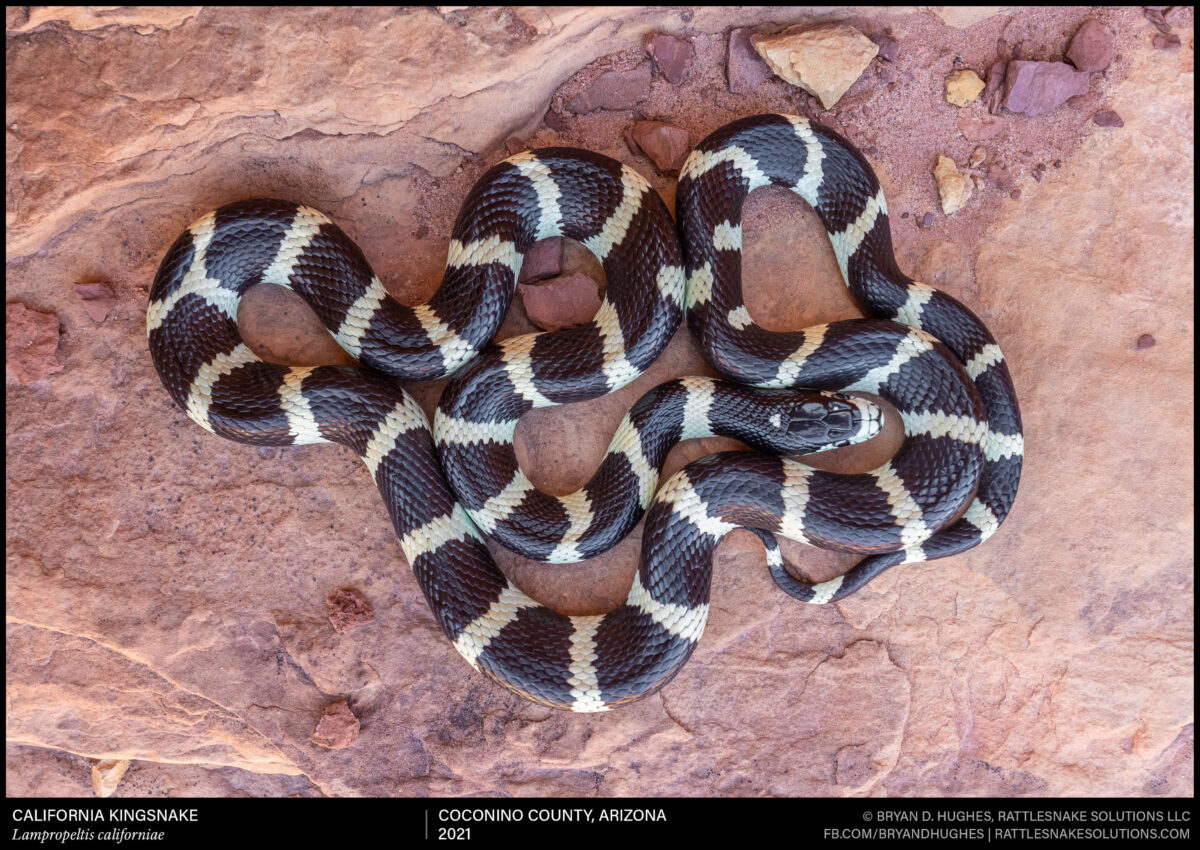
A California Kingsnake from an interesting pocket of Sonoran Desert influence near the Arizona/Utah border.
“kingsnakes keep rattlers away!!!” – a common, and incorrect, myth of the desert.
Kingsnakes do eat rattlesnakes, but that’s far from all that they eat. In a dietary study examining the stomach contents of 2,662 kingsnakes, rattlesnakes made up just 7% of prey items. While rattlesnakes are an ideal prey item for these animals, they are far from their only, or even primary, target. (Wiseman et al 2019)
In reality, the presence of a kingsnake does not indicate that there are fewer rattlesnakes in an area. If anything, a lot of kingsnakes may be an indicator of abundant prey! The places we often find kingsnakes regularly are also places with a large amount of rattlesnakes.
Why does this matter? Kingsnakes are routinely collected or purchased by homeowners to release on their property with the belief that it is going to control the rattlesnakes that may be there. But, the likely result is going to be a dead kingsnake … with no apparent effect to the local rattlesnake population.
So yes, kingsnakes do eat rattlesnakes. But no, it’s not all they eat, and moving kingsnakes around randomly will not provide the protection most people believe it will.
Wiseman, K. D., Greene, H. W., Koo, M. S., & Long, D. J. (2019). Feeding ecology of a generalist predator, the California Kingsnake (Lampropeltis californiae): Why rare prey matter. Herpetological Conservation and Biology, 14(1), 1–30.
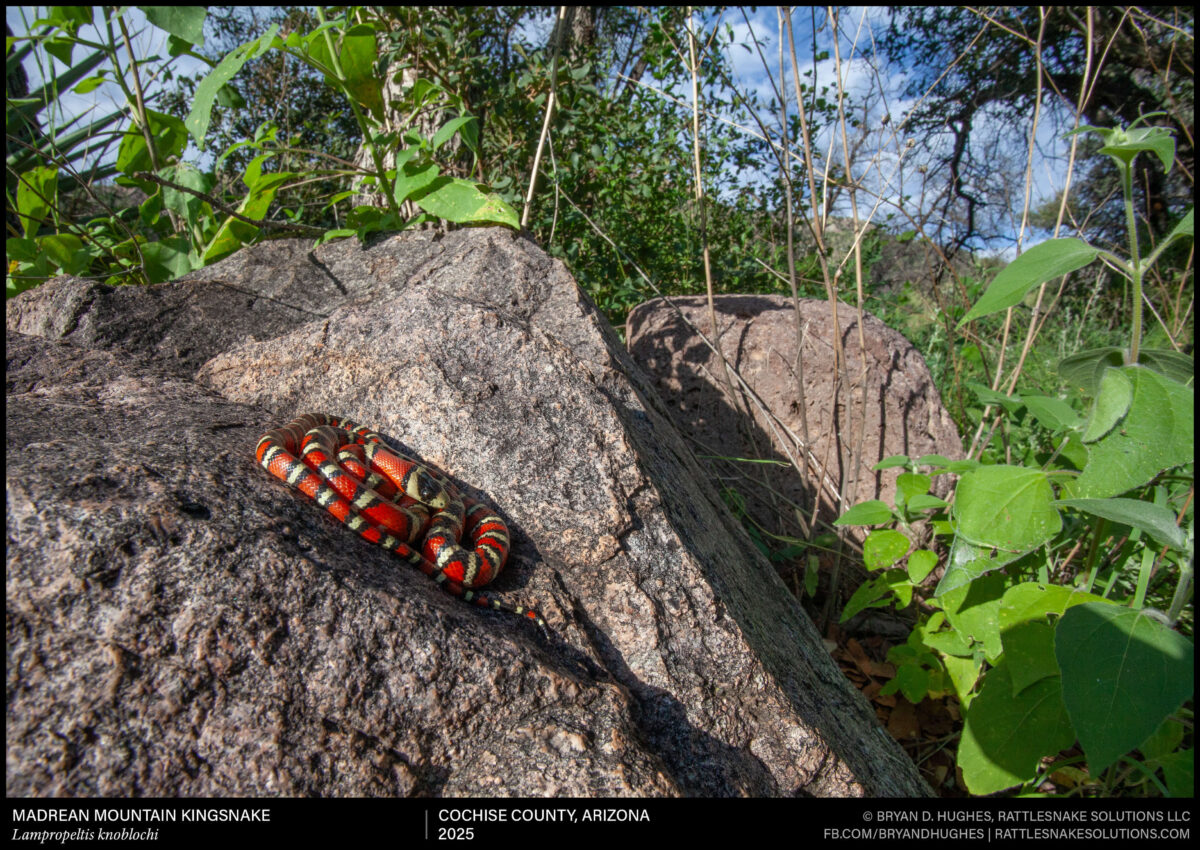
A beautiful young Madrean Mountain Kingsnake (Lampropeltis knoblochi) from the southeastern corner of Arizona. These colorful snakes harmless, and often seen by hikers on stream-side mountain trails in the Sky Islands region of the state.
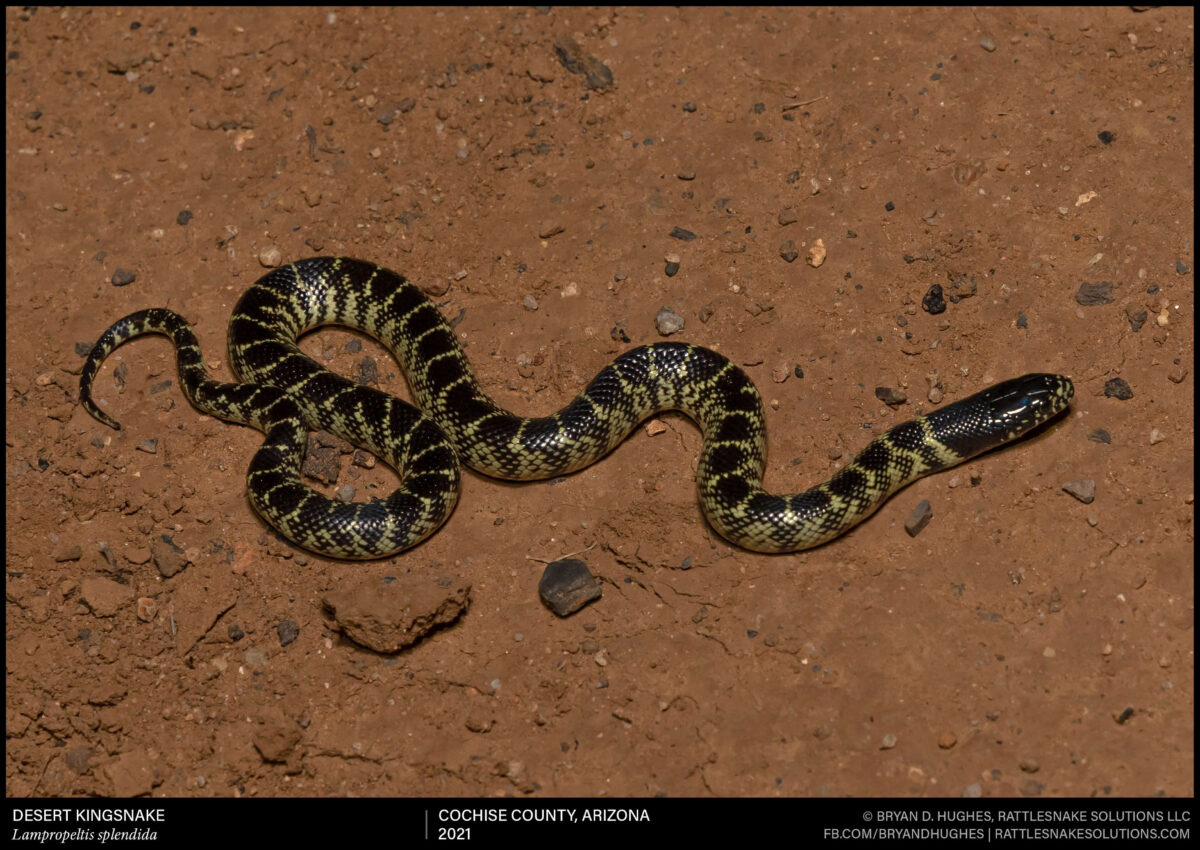
A young Desert Kingsnake (Lampropeltis spendida) from the southeastern corner of Arizona.
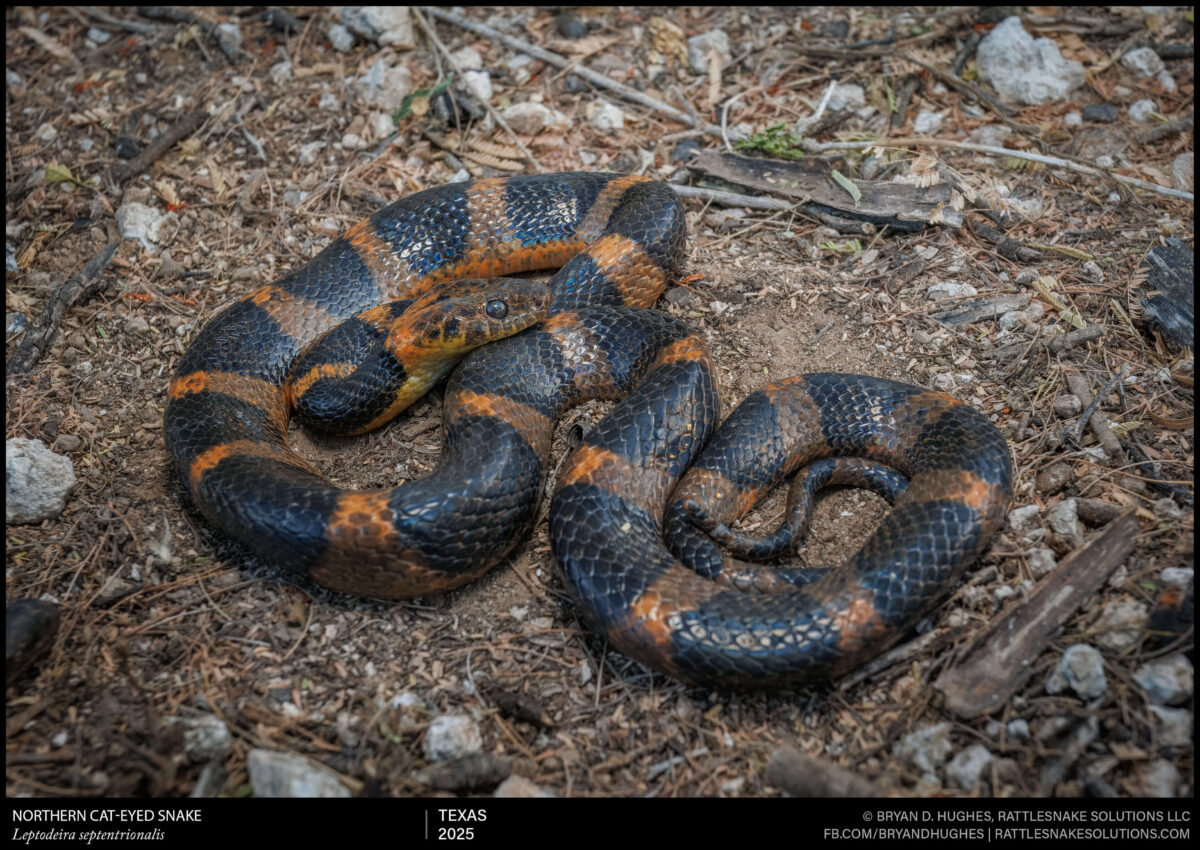
Northern Cat-eyed Snake from late last year. This animal is found in thornscrub and tropical forest habitat throughout much of Central America, and just barely makes it into the United States, in south Texas.
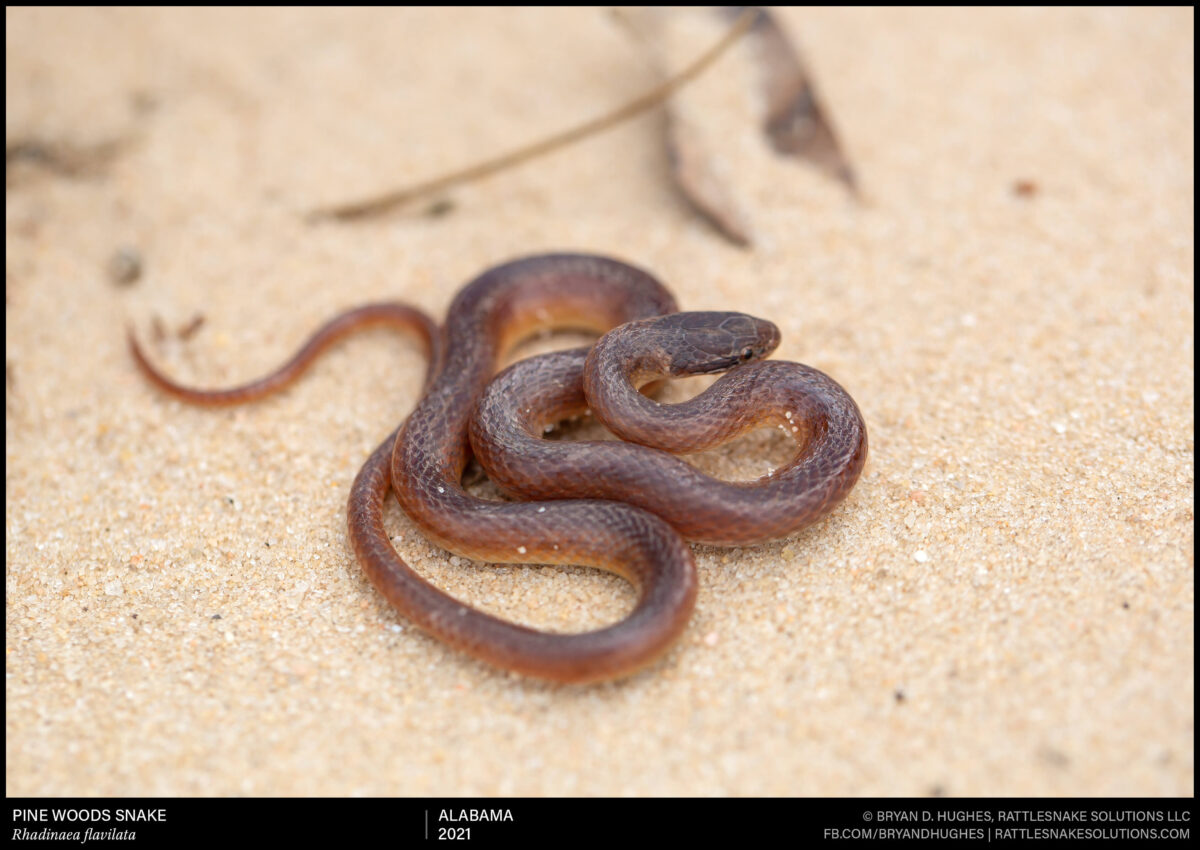
A tiny Pine Woods Snake from Alabama a few years back.