A Sonoran Lyresnake found in central Arizona on a night hike.
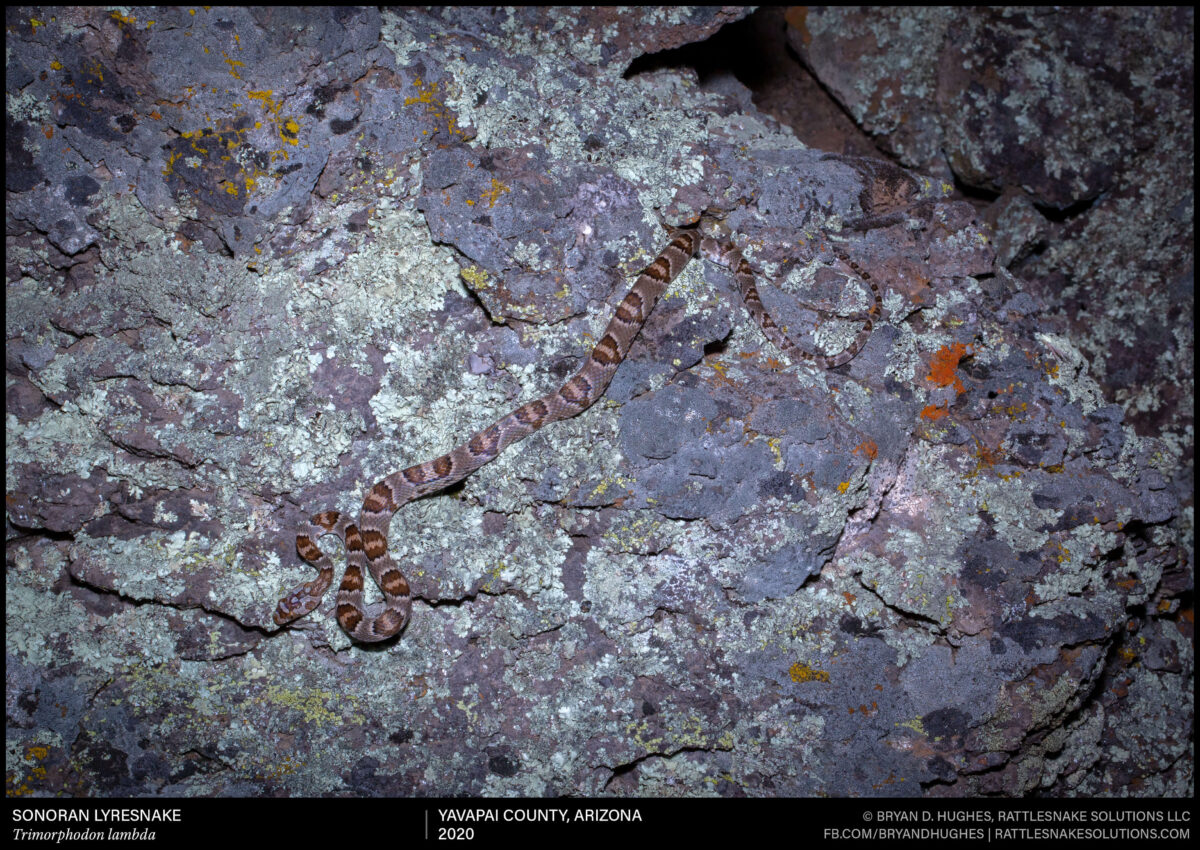

A Sonoran Lyresnake found in central Arizona on a night hike.
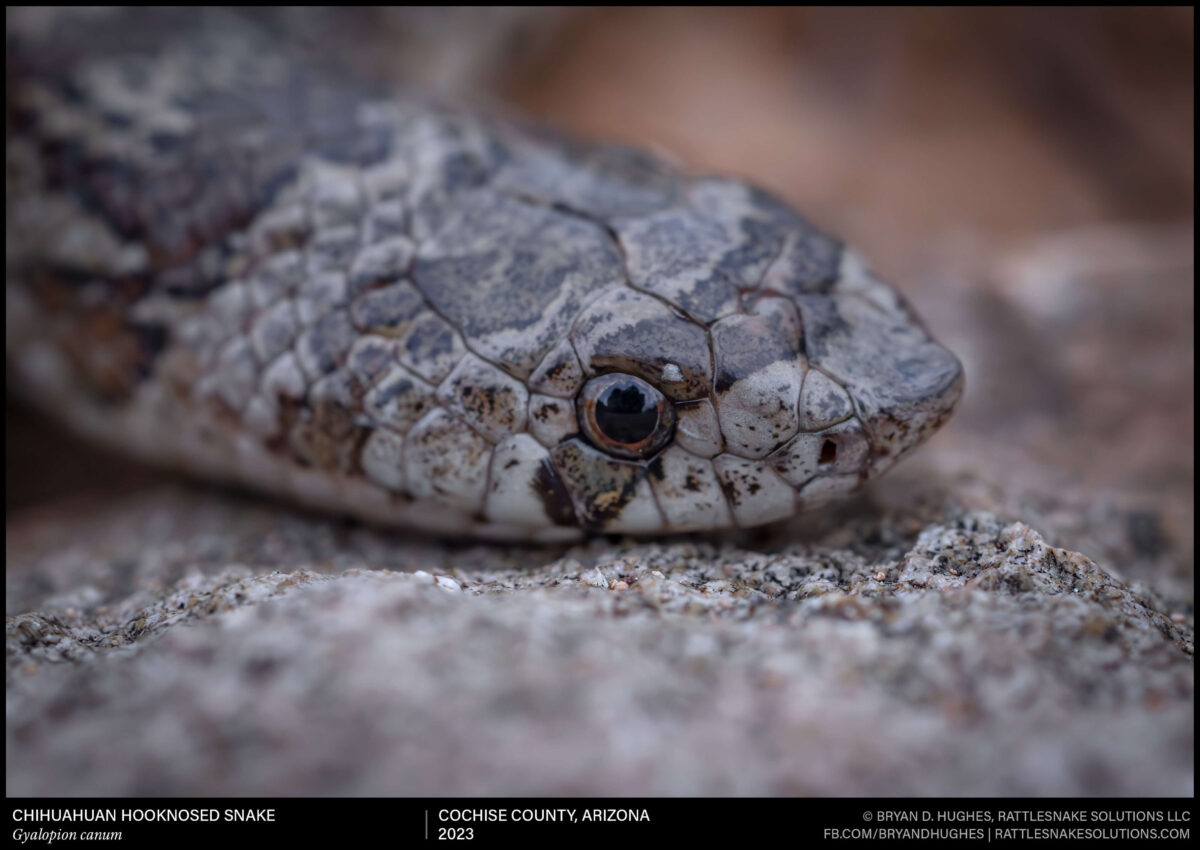
The face of a Chihuahuan Hook-nosed Snake. These are small eaters of invertebrates. The subtle scoop on the end of the nose is helpful for finding prey in the sandy, grassland soil where they live.
Hardy, L. M. (1976). Gyalopion, G. canum, G. quadrangularis (Unpublished manuscript). University of Texas. Retrieved from https://repositories.lib.utexas.edu/bitstreams/7425e5d2-4c40-4129-b736-a067e0a8d23b/download
Parga, V. M. (2018). Arthropod diets in Chihuahuan Desert snakes (Unpublished master’s thesis). University of Texas at El Paso.
A Sonoran Gophersnake out moving across a roadway in the last sun of the day. Pinal County, AZ.
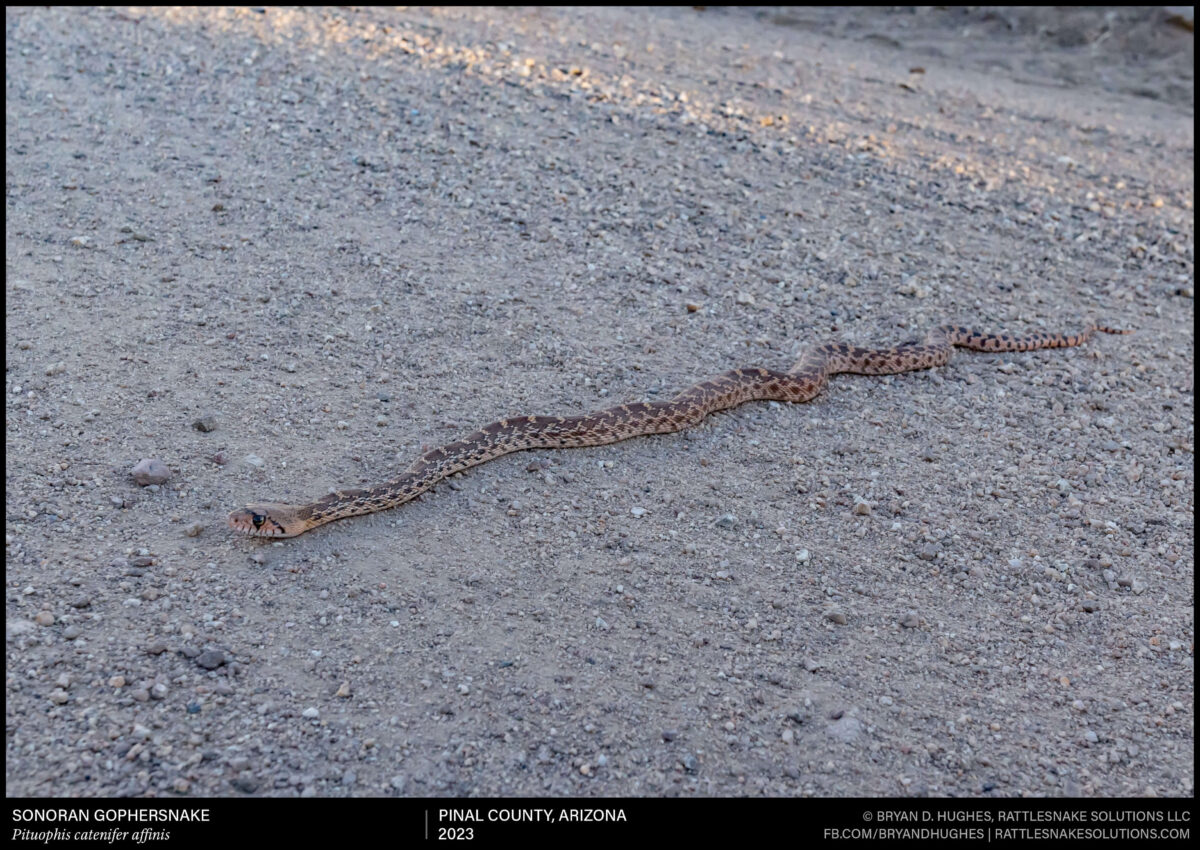
More about the Sonoran Gophersnake (Pituophis catenifer affinis.) https://rattlesnakesolutions.com/Gophersnake
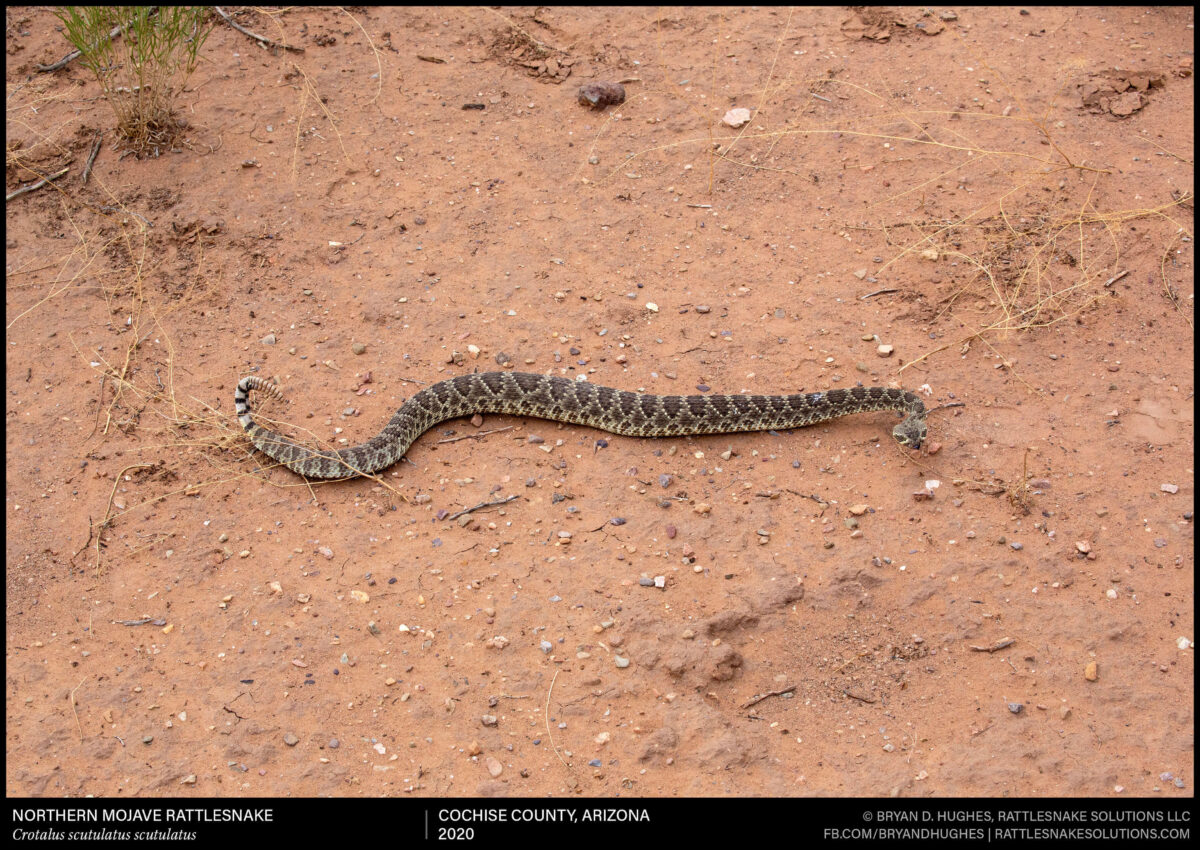
A Mojave Rattlesnake on the crawl after a wet night in southeastern Arizona. It’s moving laterally, hissing and watching the perceived predator with the camera, but not rattling. As this species often does, instead, it curls its tail and “wags” it slowly as a display. Prairie Rattlesnakes, notably, will often do this tail-curling behavior instead of rattling.
This guided retreat, where the snake moves laterally to cover while keeping the business end pointed forward, causes a lot of confusion with observers. For one, it’s not always a straight line away, but to cover. That cover can be a vehicle, bushes, or a cast shadow … including from the person watching it. This, and confirmation bias from decades of beloved folklore, contribute to the many tall tales about Mojave Rattlesnakes.
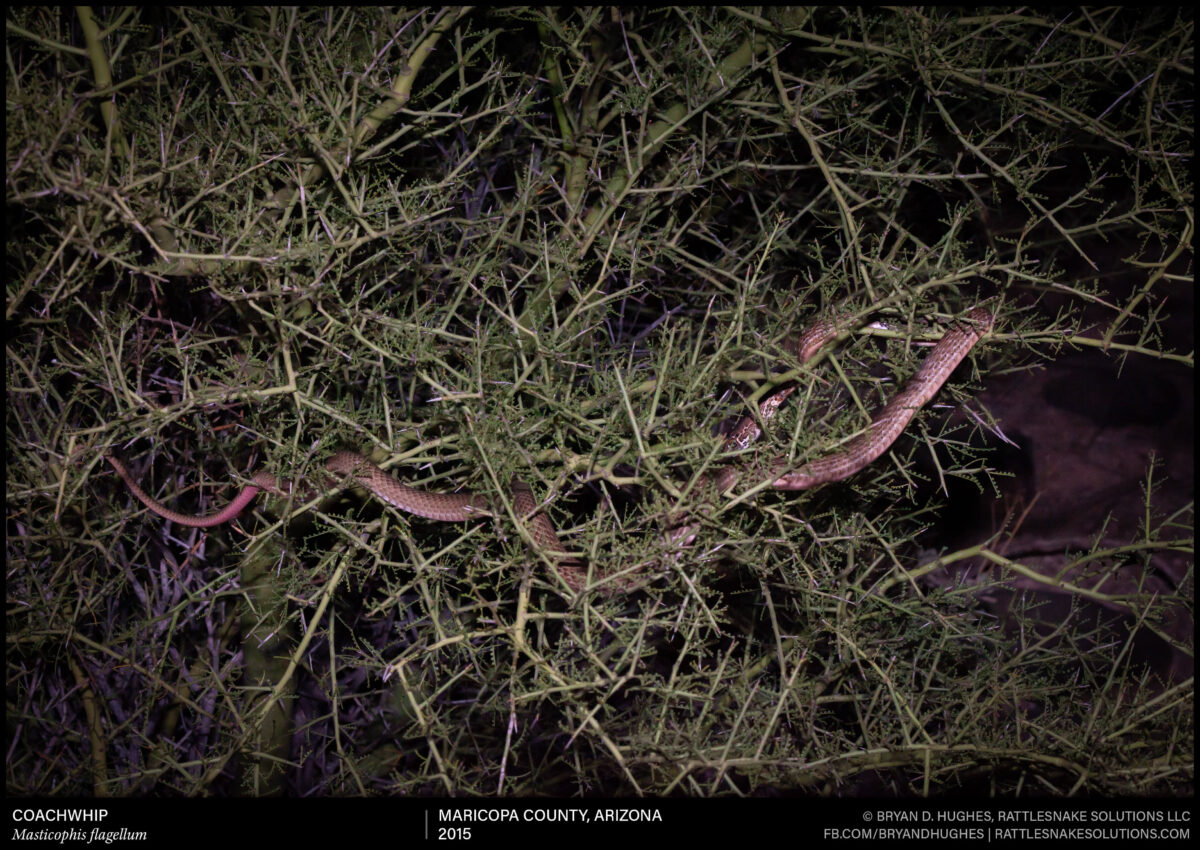
Coachwhips are out and about on even the hottest days, rarely active at night. But they can still be found where they sleep, which is often up in trees high off the ground. We spotted this one doing just that just above eye level on a late night hike. These long, slender snakes are great climbers, and this is a reasonably safe spot for such an animal to evade predators and get off the hot ground.
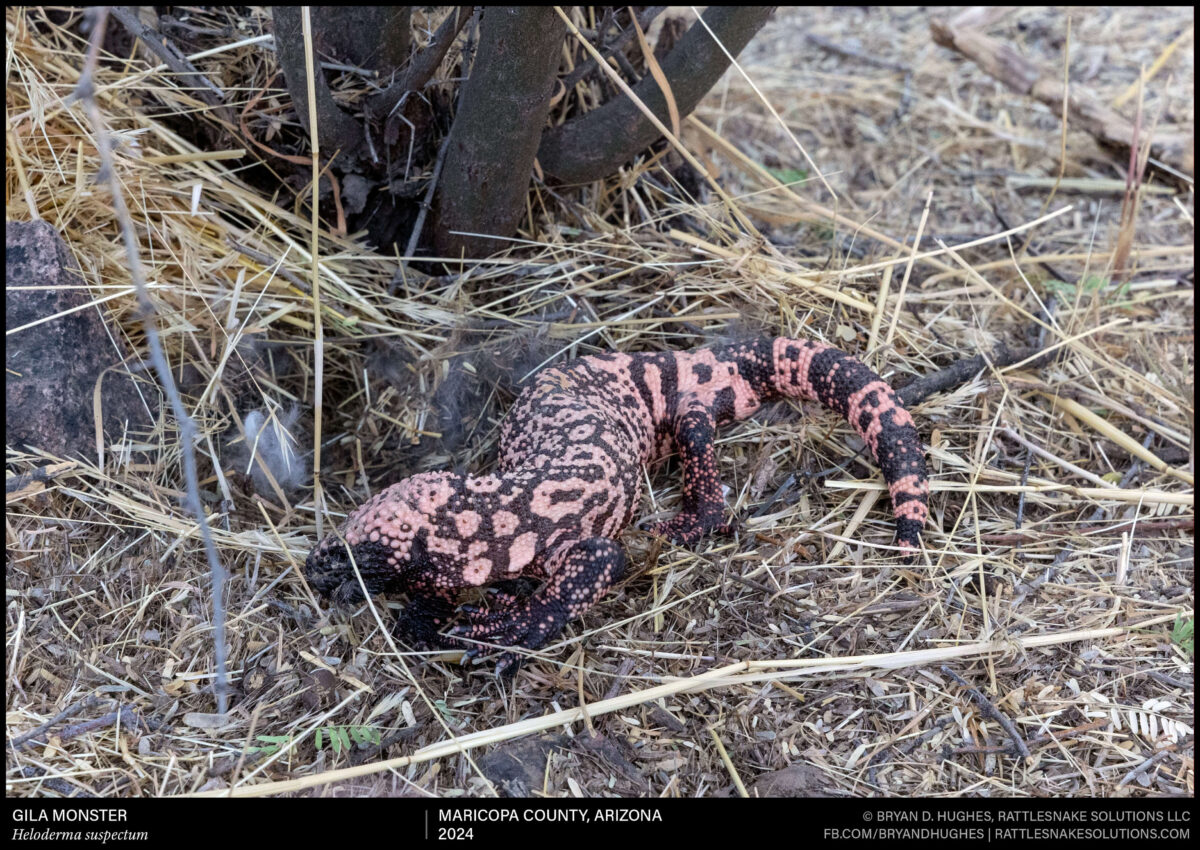
A Gila Monster I followed to a nest of cottontails. It took a while, but it ate all three of them that were in there. Amazingly, they all fit, and the lizard ambled off to rest under an overhanging root in the drainage. It was a good example of how the venom of Gila Monsters is not necessary for predation, as the venom played no apparent role in the capture or consumption of its prey.
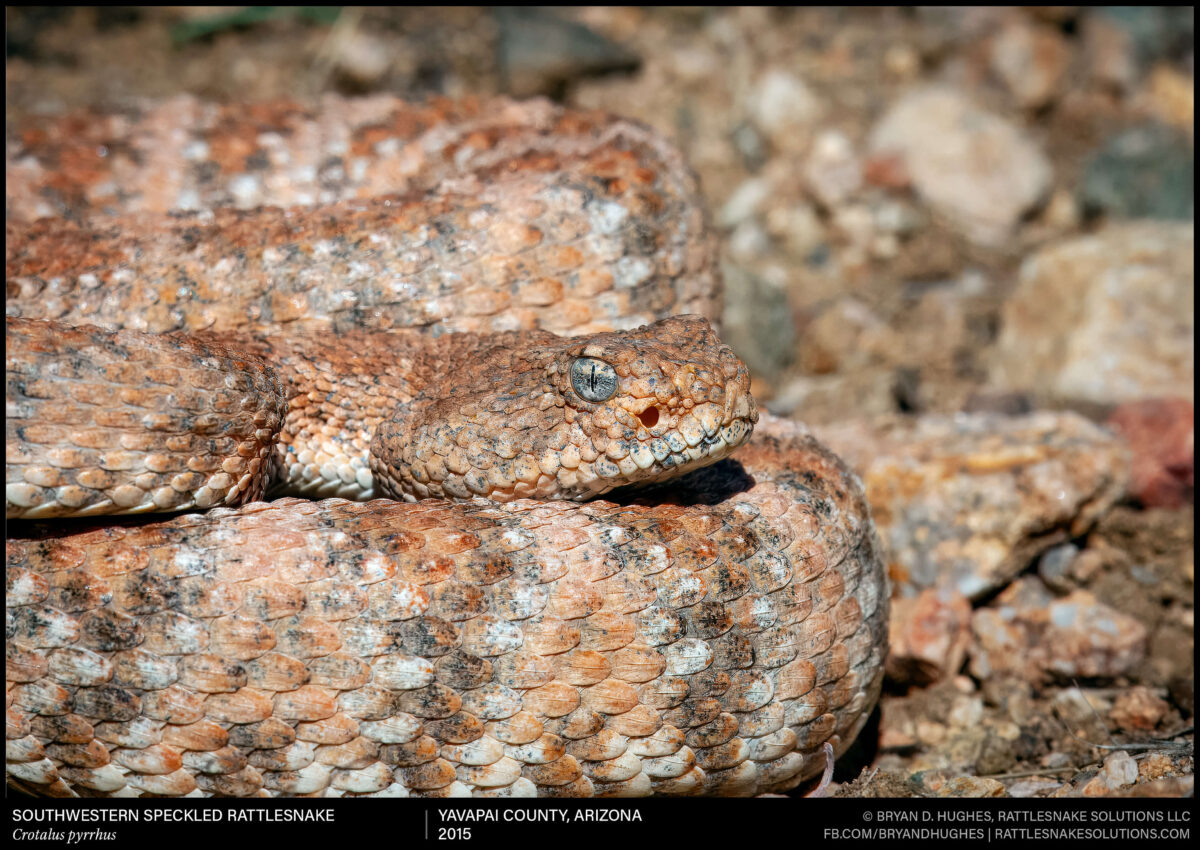
A rattlesnake that looks like a rock. This Southwestern Speckled Rattlesnake was found in central Arizona in an area of rusty granite and quartz. The resulting cryptic pattern is just as colorful, including speckled grey blue eyes. Though it is brightly colored, these snakes can be very difficult to see in context.
Cochran, C. (2019). Variation in morphology, diet, and venom composition in Crotalus pyrrhus (Cope 1867) [Doctoral dissertation, Loma Linda University]. Loma Linda University Electronic Theses, Dissertations & Projects. https://scholarsrepository.llu.edu/cgi/viewcontent.cgi?article=3590&context=etd
Crowell, H. L., Whelan, J. M., & Harmel, M. V. (2020). Rattlesnake colouration affects detection by predators. Journal of Zoology, 310(1), 1–11. https://doi.org/10.1111/jzo.12786
Hanscom, R. J., & Higham, T. E. (2023). Ambush hunting in snakes: Behaviour, function, and diversity. In Snakes: Ecology, behavior, and conservation (pp. 1–32). ResearchGate. https://www.researchgate.net/publication/373257803_Ambush_Hunting_in_Snakes_Behavior_Function_and_Diversity
Hanscom, R. J. (2025). From ambush to activity: Using accelerometry to reveal cryptic behaviors of rattlesnakes and kangaroo rats [Doctoral dissertation, University of California, Riverside]. eScholarship. https://escholarship.org/content/qt4ft2985w/qt4ft2985w.pdf
Teshera, M. S. (2021). Strike-induced chemosensory searching, kleptoparasitism, and the possibility of chemical crypsis in rattlesnakes [Doctoral dissertation, University of Texas at El Paso]. UTEP Digital Commons. https://scholarworks.utep.edu/cgi/viewcontent.cgi?article=4357&context=open_etd
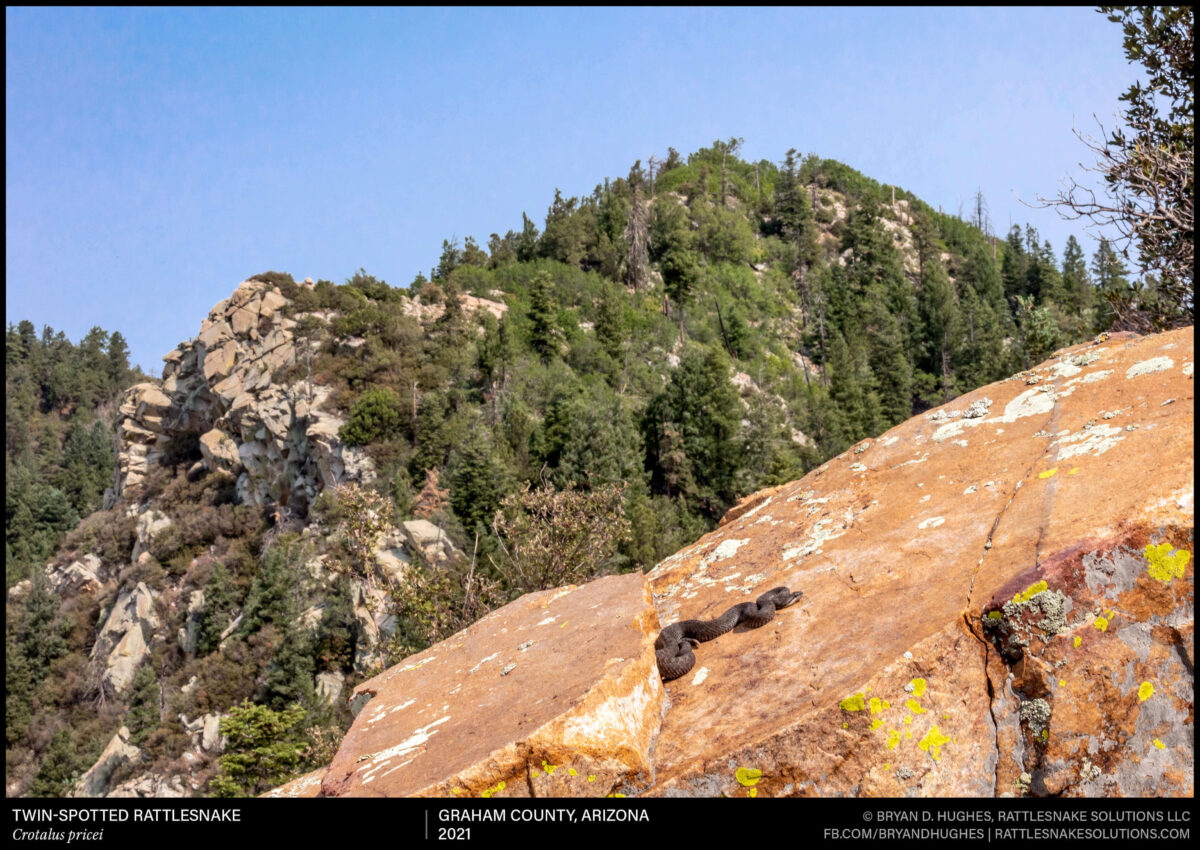
A Twin Spotted Rattlesnake at her high elevation retreat. Accessing these areas is somewhere between difficult and impossible, but they’re perfect for a small montane rattlesnake.
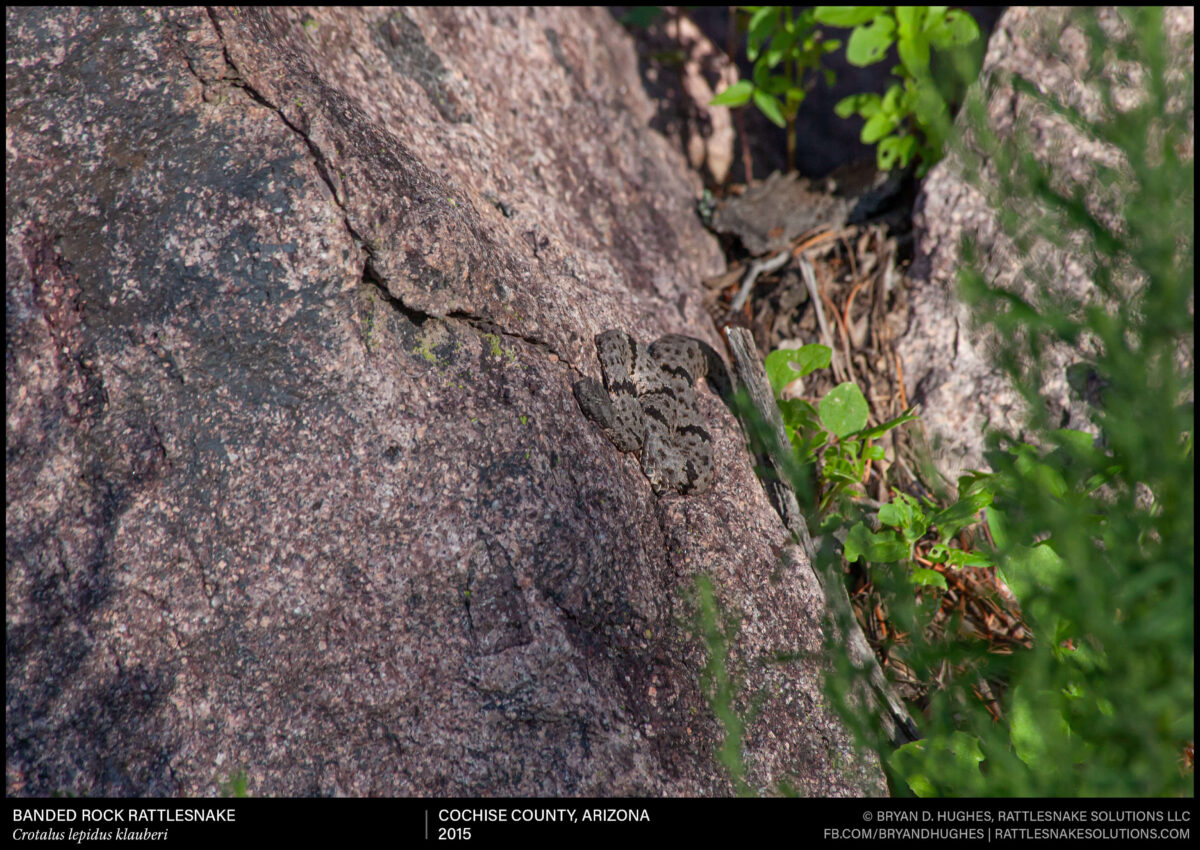
A small Banded Rock Rattlesnake in ambush along the base of a boulder in southeastern Arizona. The pattern and bands break up its shape, making it difficult to see in context. This is a good way to catch one of the many Yarrows Spiny Lizards jumping around on the same rocks each morning.
A Southwestern Speckled Rattlesnake in ambush on a humid night a couple of years back. Like many other desert reptiles, the monsoon and period after are the most active times of year. Humid air and cooler, stable temperatures make for safer activity, and a lot has to be done in a relatively short amount of time.
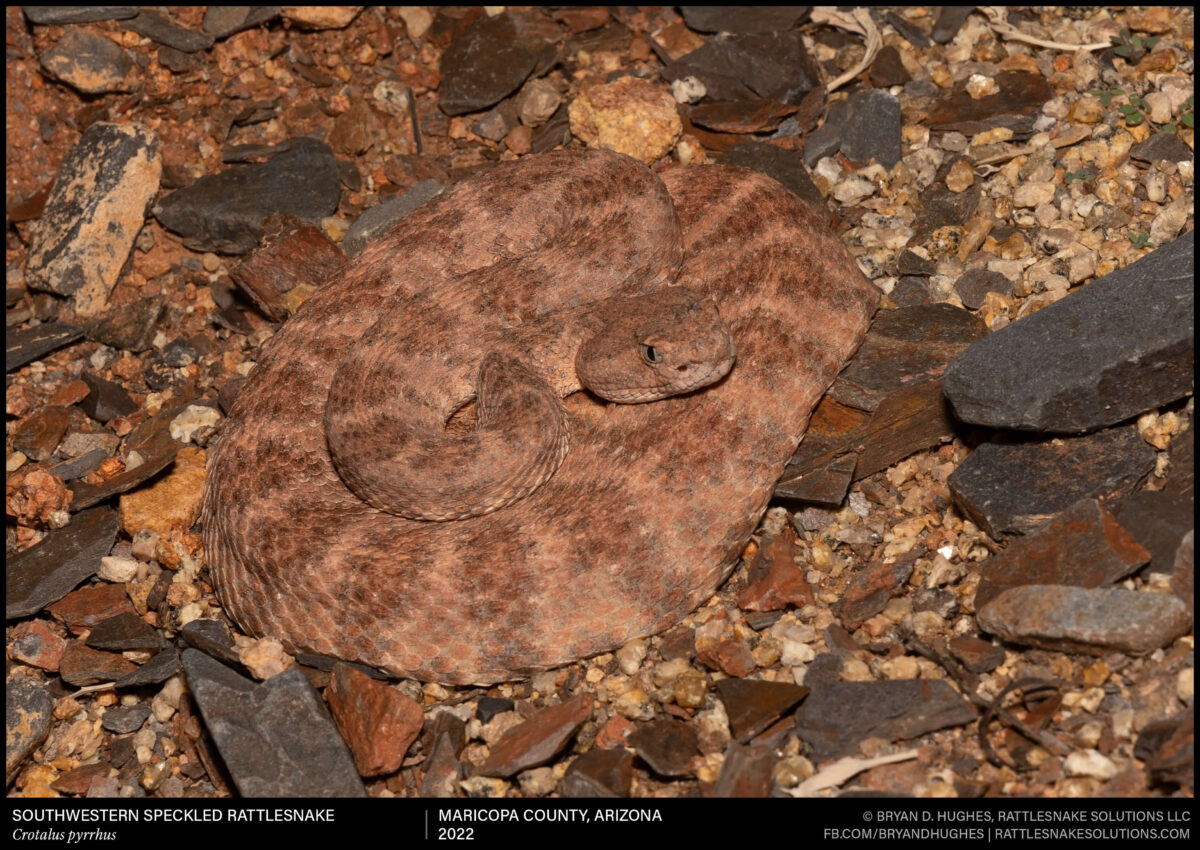
Southwestern Speckled Rattlesnake (Crotalus pyrrhus)