Arizona Black Rattlesnake giving me a reminder to keep my distance and leave it alone. I spotted this one crawling from a small drainage back to tangled debris at the base of a sycamore in southern Arizona.
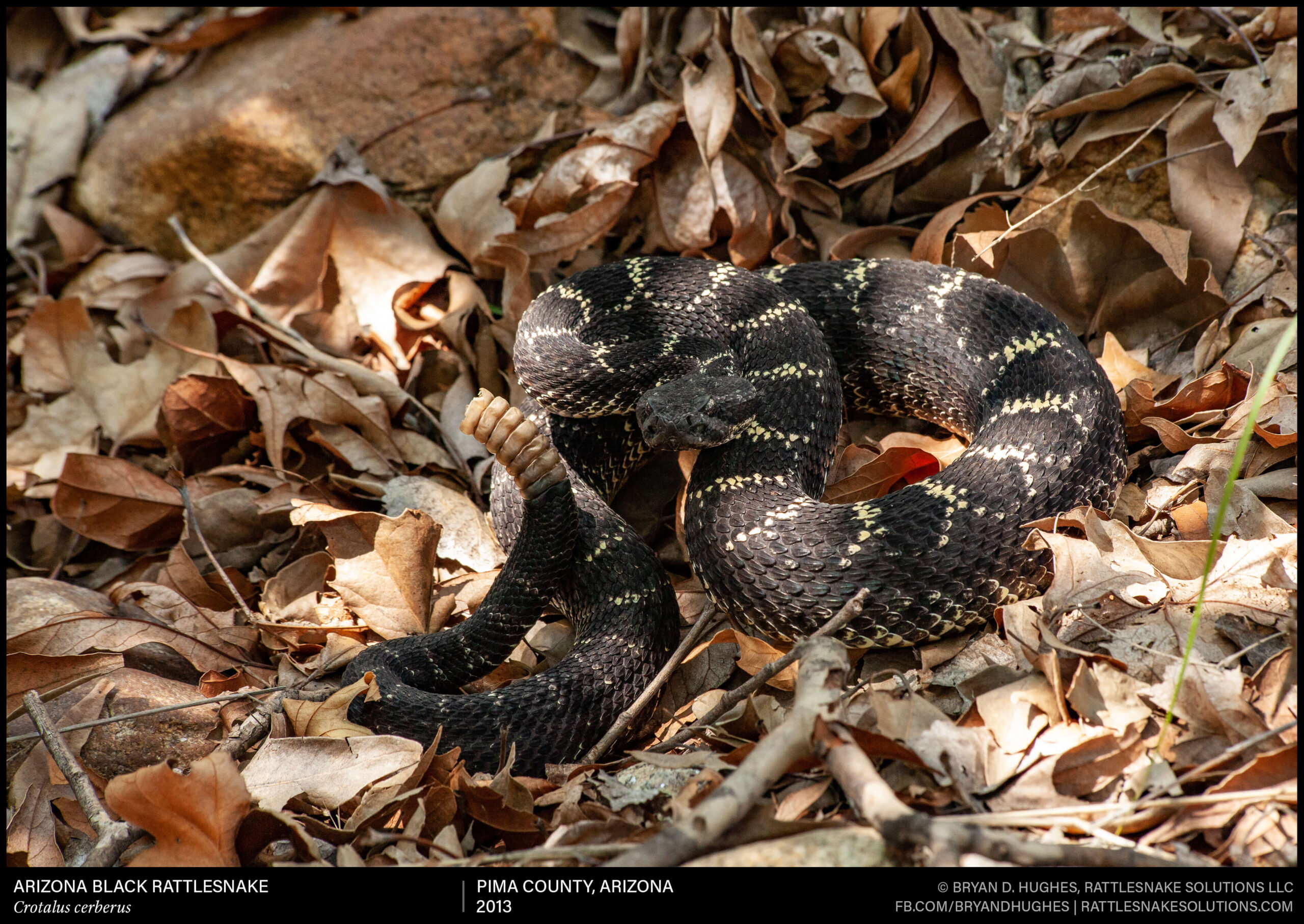

Arizona Black Rattlesnake giving me a reminder to keep my distance and leave it alone. I spotted this one crawling from a small drainage back to tangled debris at the base of a sycamore in southern Arizona.
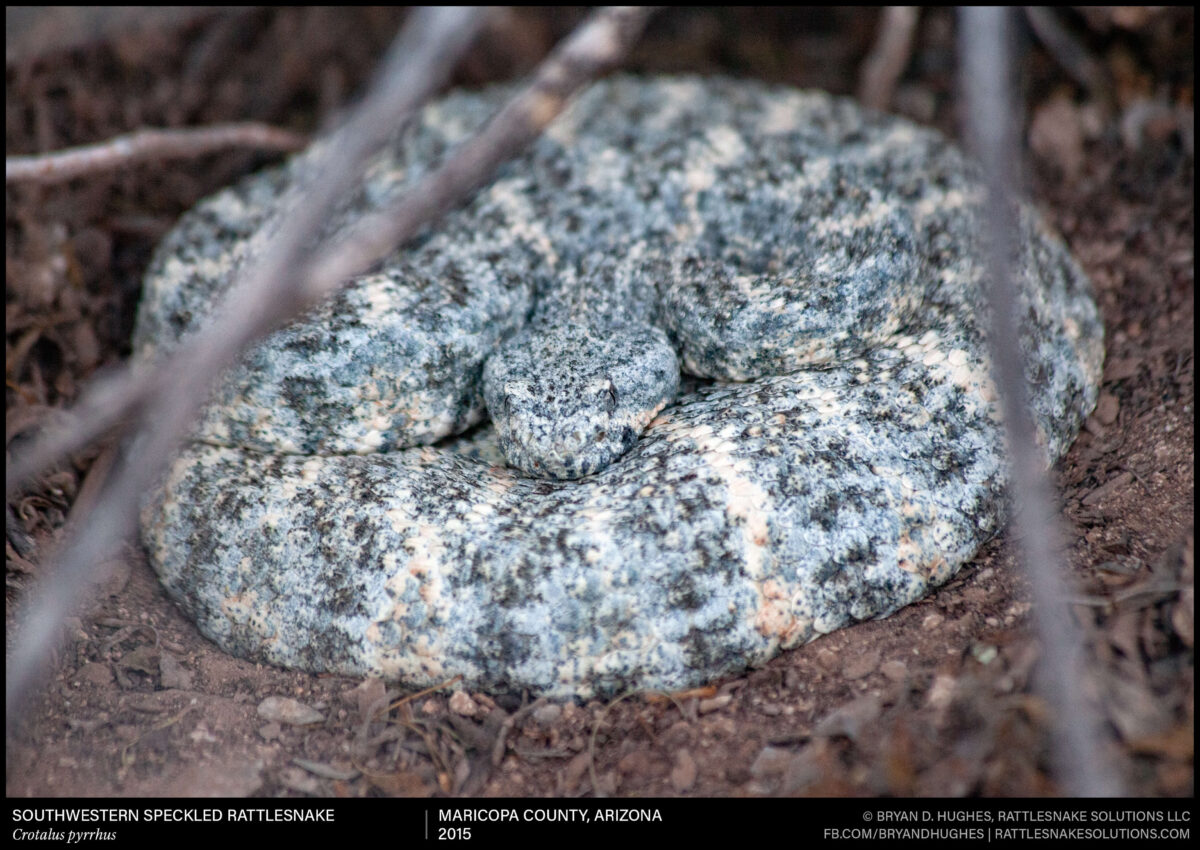
Southwestern Speckled Rattlesnake resting under a bush on a cool Spring day. With temperatures still in the low 50s at night, this snake sat out overnight waiting for prey to wander by, nearly a quarter mile from its den further up the bajada.
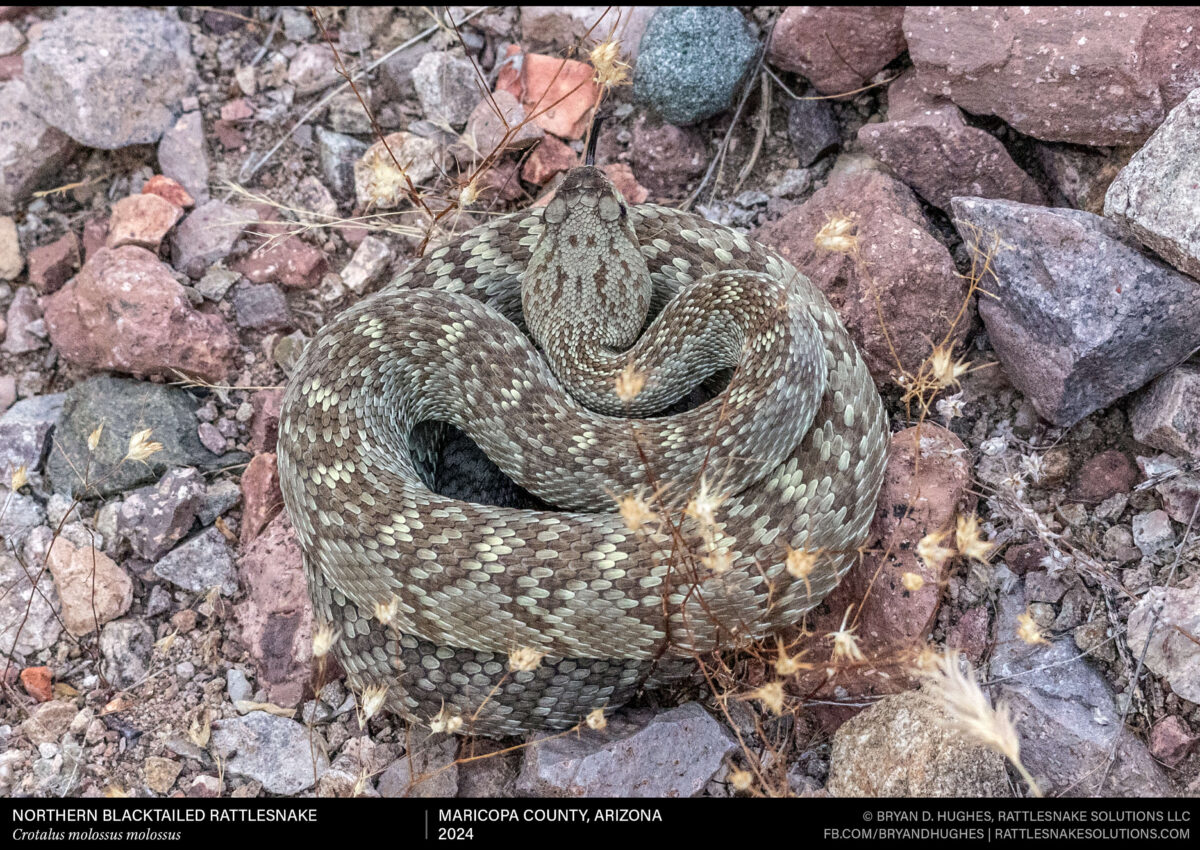
Blacktailed Rattlesnake showing off the “desert phase” phenotype, typical of lower, hot desert regions where this snake is common in rocky hills and mountains. This chaotic pattern can range from a yellow-green to silver, at times with the pattern degrading to the point of a unicolor appearance. This one is typical for mountains west of Phoenix.
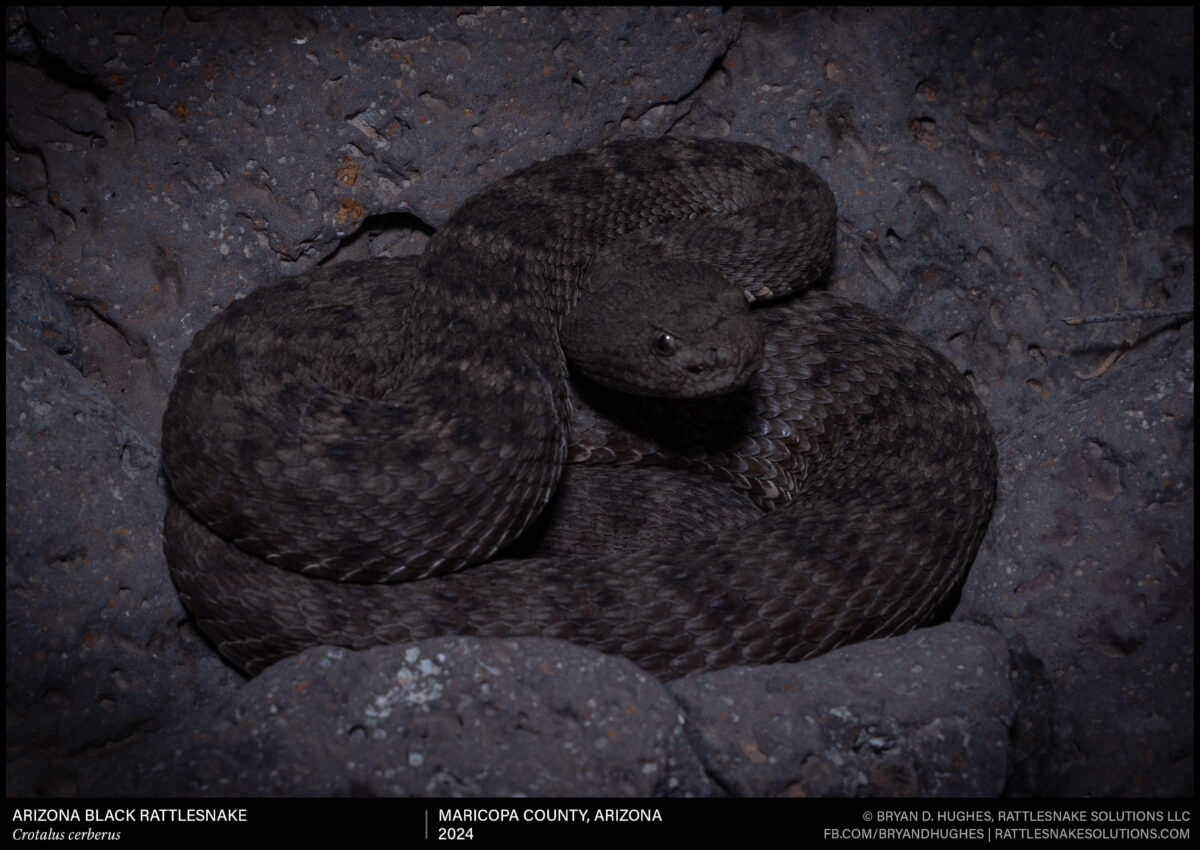
Arizona Black Rattlesnake from a desert population. Many of the snakes here are all black, missing the white or yellow scales that are typical in the more often photographed locations. This one has just a hint of yellow in some dorsal scales, but is otherwise all black or grey, including the belly.
A Southwestern Speckled Rattlesnake found in the lower foothills of the Cerbat Mountains of Mohave County, Arizona.

Arizona Black Rattlesnake lying in ambush nearly vertically against a boulder near an isolated water hole on a hot summer night.

A Sonoran Sidewinder from a sandy area in the far western end of the range for this subspecies. This is an older adult, measuring around 18″ long.

A Blacktailed Rattlesnake disturbed by my car as I made my way up a mountain road. These are large rattlesnakes found throughout the Sonoran Desert, including the high elevation Sky Islands of the southeastern part of Arizona. After a few photos, this snake was left to crawl down to cover.

Tiger Rattlesnake resting outside its aestivation den on a hot Phoenix summer night. These snakes are quite common in much of the area, though most hikers will never see one due to their secretive nature and effective camouflage. Even of those reported, a large number of them … if not most of them, end up being misidentified Speckled Rattlesnakes.

Rattlesnakes live in the highest areas of Arizona, often taking forms that defy what most residents would think possible. This one, an adult Twin-Spotted Rattlesnake (Crotalus pricei), is only about 20″ long as a mature adult, with a narrow head, tiny rattle, and body pattern that convergently looks just like a harmless nightsnake.
These are one of the four species of rattlesnakes in Arizona that are protected by law from any kind of disturbance, thankfully.
