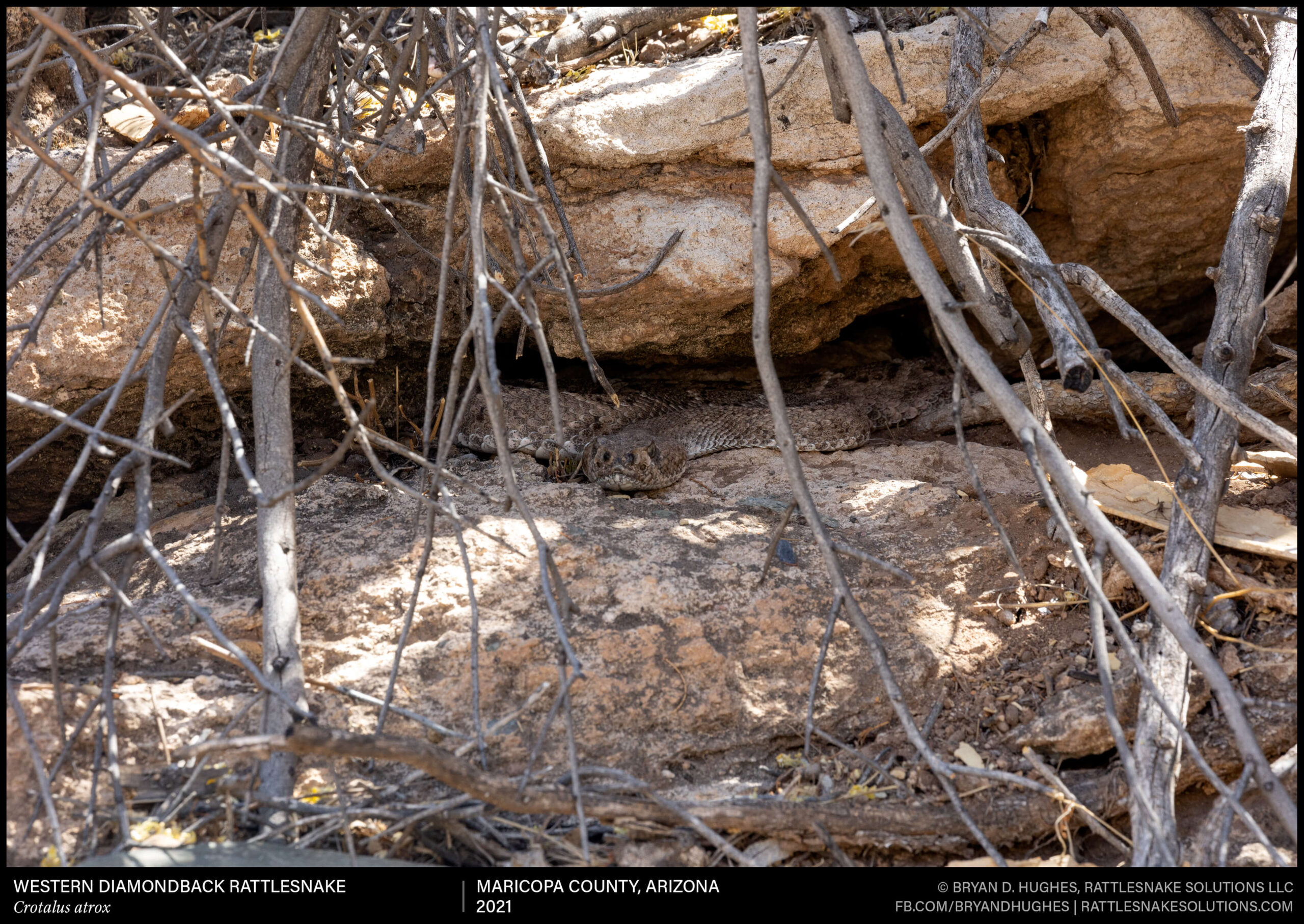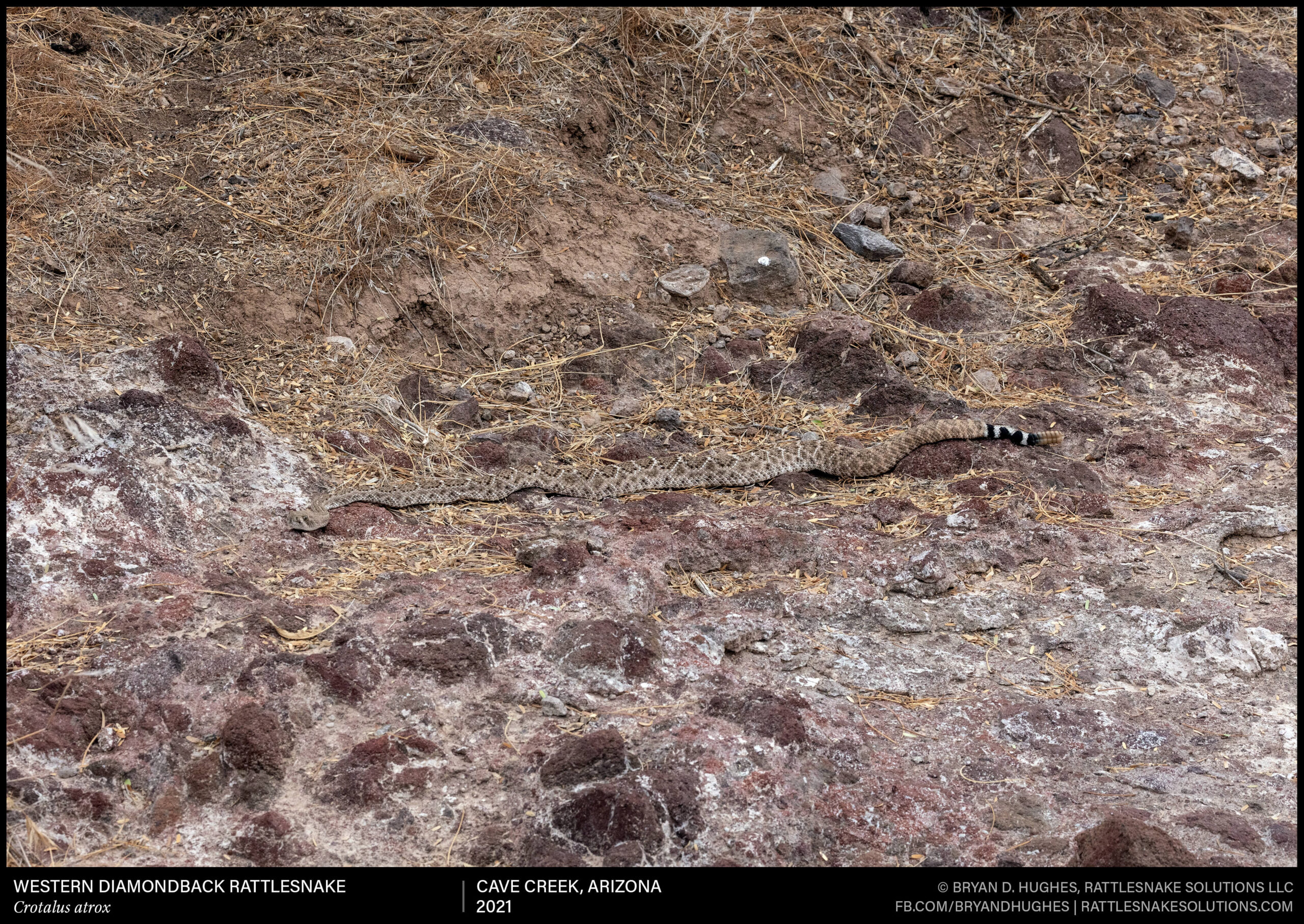
A Western Diamondback Rattlesnake out basking in early Spring at its den. An hour later, this animal was out on the crawl looking for females to court, and make sure rival males stick to their own rocks.

A Western Diamondback Rattlesnake out basking in early Spring at its den. An hour later, this animal was out on the crawl looking for females to court, and make sure rival males stick to their own rocks.

Western Pygmy Rattlesnake, Sistrurus miliarius streckeri – the first I have seen. This was actually a pretty big one! At around 18″-20″, it was much larger than the majority of Sistrurus sp. I’ve seen elsewhere, and about twice the size of the others found in subsequent days.
This leaves one last subspecies of rattlesnake for me to see in the U.S., and a flight at some point to the Carolinas to finish it up. I’m not too much of a life-lister, but after so much time it would just be nice to complete something started long ago.

Only a half mile from camp into a night hike in the Peruvian Amazon, I saw this Fer-de-lance moving to an elevated position on a meter-high buttress … right in the middle of the trail. These snakes can be anywhere at any time.

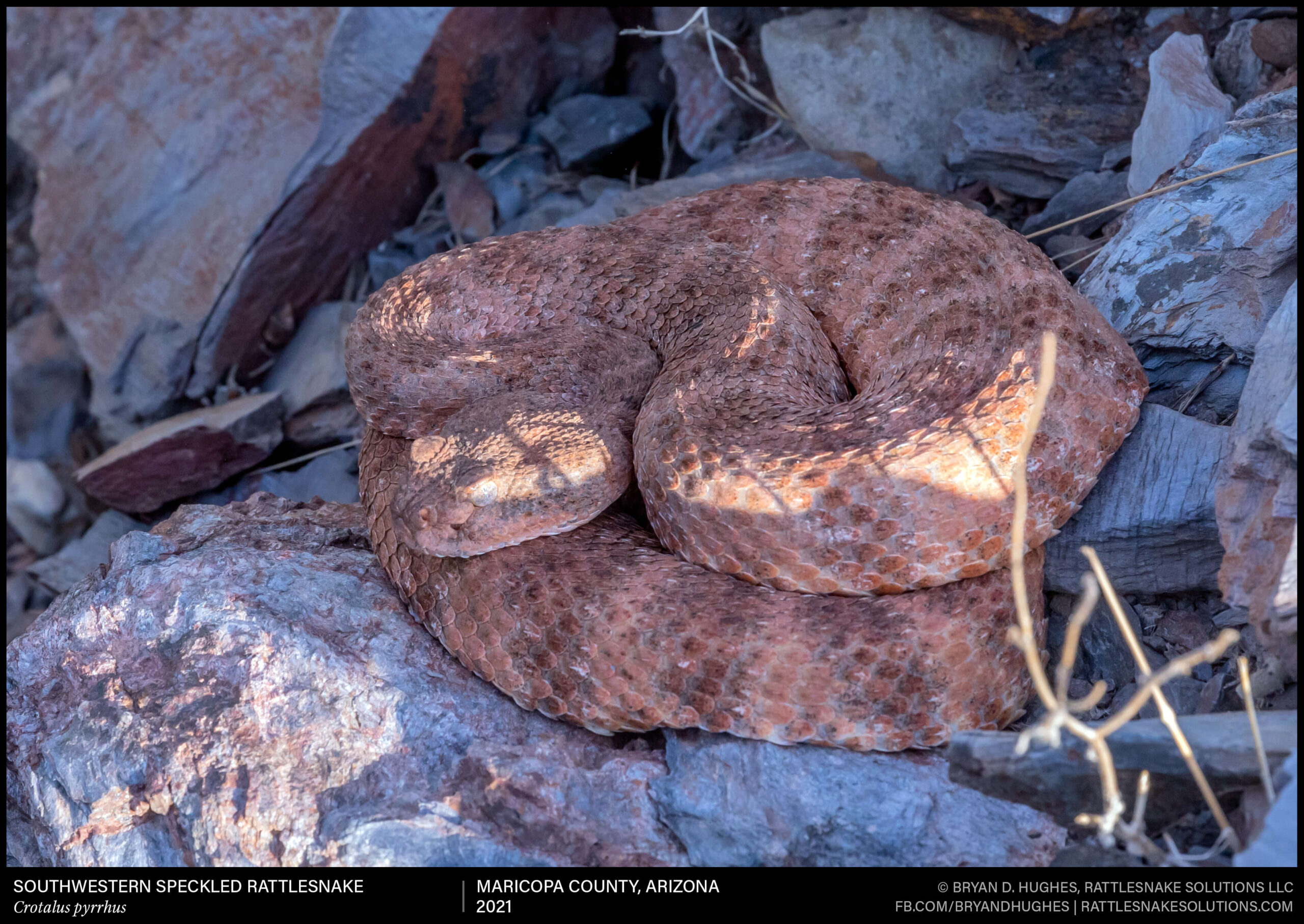
A pink Southwestern Speckled Rattlesnake resting in rocks near the Rattlesnake Solutions office in the first morning sun, This snake uses the same area each year, showing up around June and leaving once aestivation is no longer necessary during the monsoon. Where it goes in the cooler months is unknown, but the tight site fidelity of this species is nearly absolute in most cases. This was in 2021, and if she survives another year, there is no doubt we’ll see her again in the same spot in 2025.

A Speckled Rattlesnake on a small, ridiculously hot Mexican island. In the sparse vegetation littered with bones of cetaceans and fish, these small rattlesnakes survive.

A large Tiger Rattlesnake in a loose ambush coil near a series of rodent nests. This one was found just after sunup in a heavily urbanized area. Not all hunting postures for rattlesnakes are simple coils. Rattlesnakes may actively track, then settle in for a relatively short period, then move and set up again. I don’t know if this one succeeded, but it was gone when I passed through the area an hour later.

Several Western Diamondback Rattlesnakes moving around their winter den on a cloudy, warm Spring day near Tucson. These snakes move daily on the surface like this, mostly avoiding detection, for a few weeks during their transition from hibernation to spring hunting. During that time, a lot of social activity takes place.

A Speckled Rattlesnake (Crotalus mitchellii) we found in Baja California several years ago, doing its thing in exposed basalt and sand.

A Southwestern Speckled Rattlesnake waiting for an unlucky animal to come along in Phoenix. These locations are carefully selected, often after tracking a scent trail for some distance to find an ideal ambush situation.

A Banded Rock Rattlesnake with a pink belly found in southeastern Arizona last year. These small snakes are quick to rattle but seldom stand their ground, opting to flee into bunchgrass or dive into jumbles of rock.