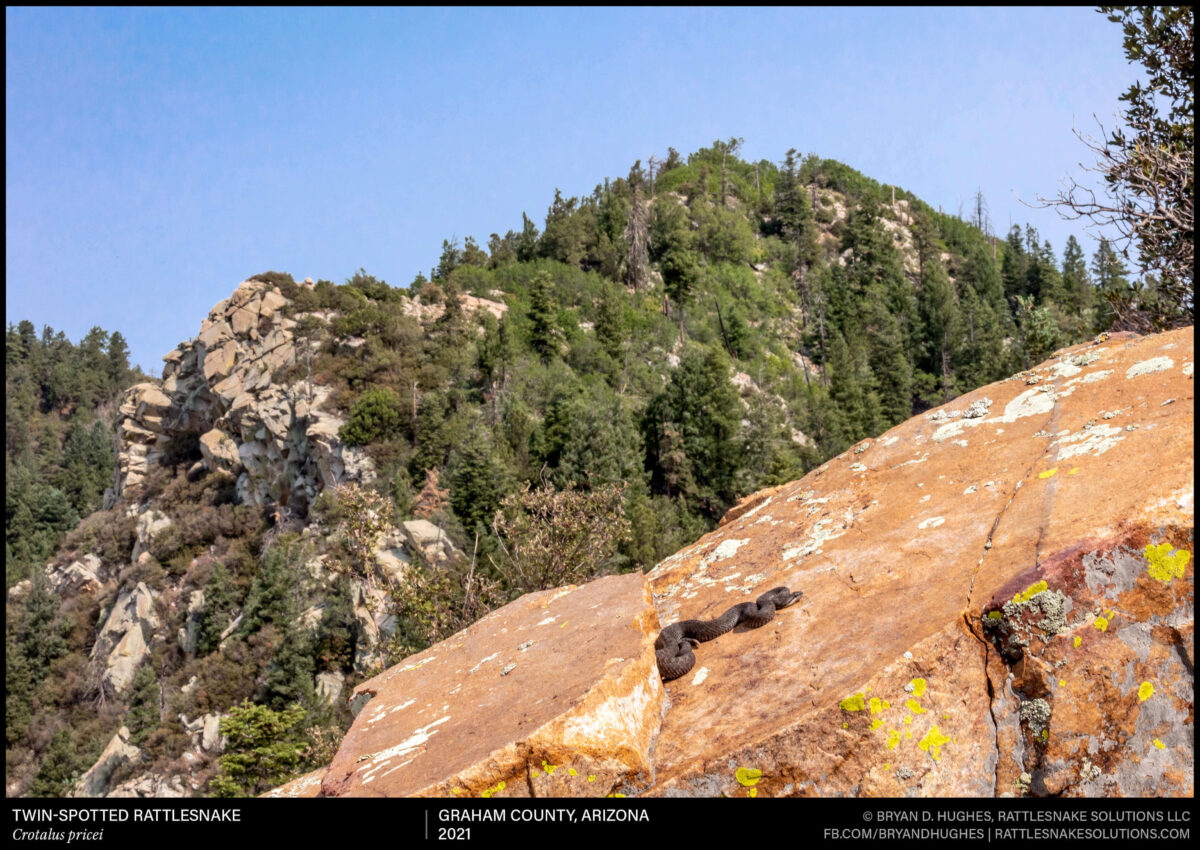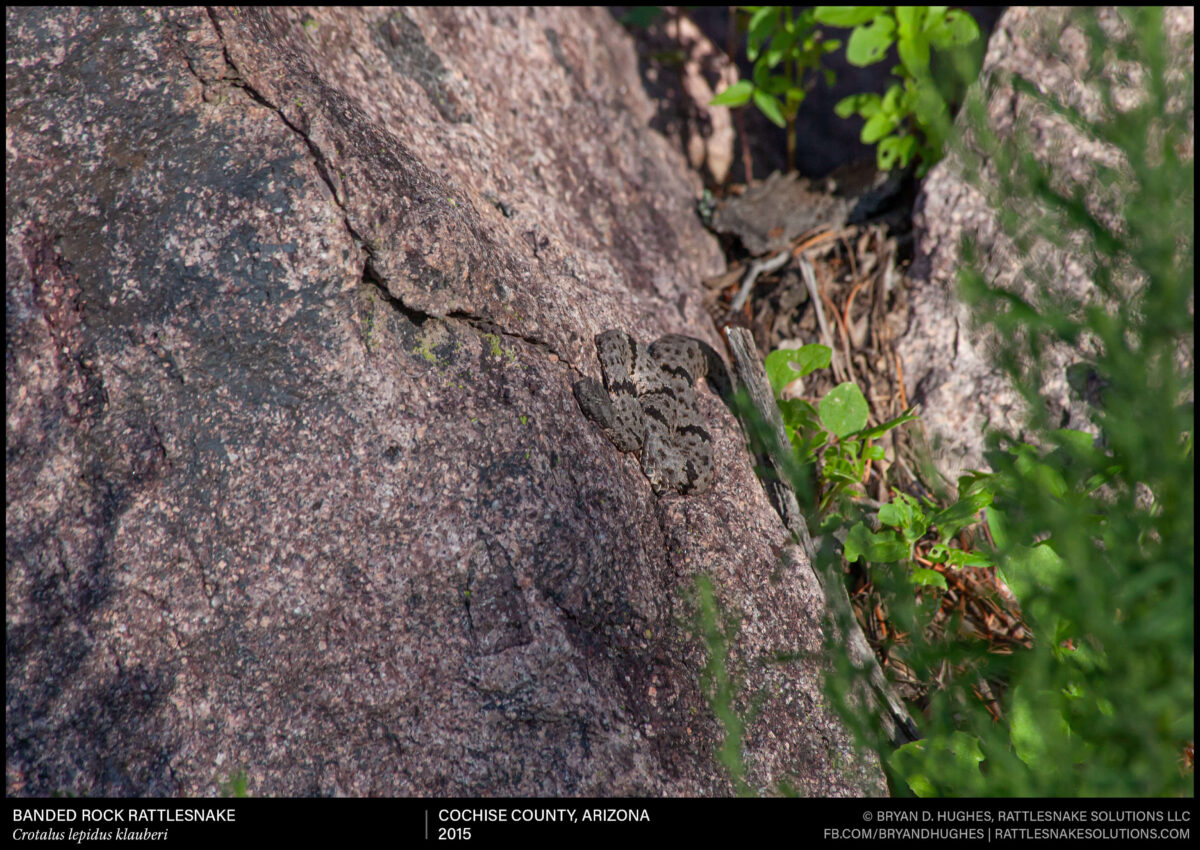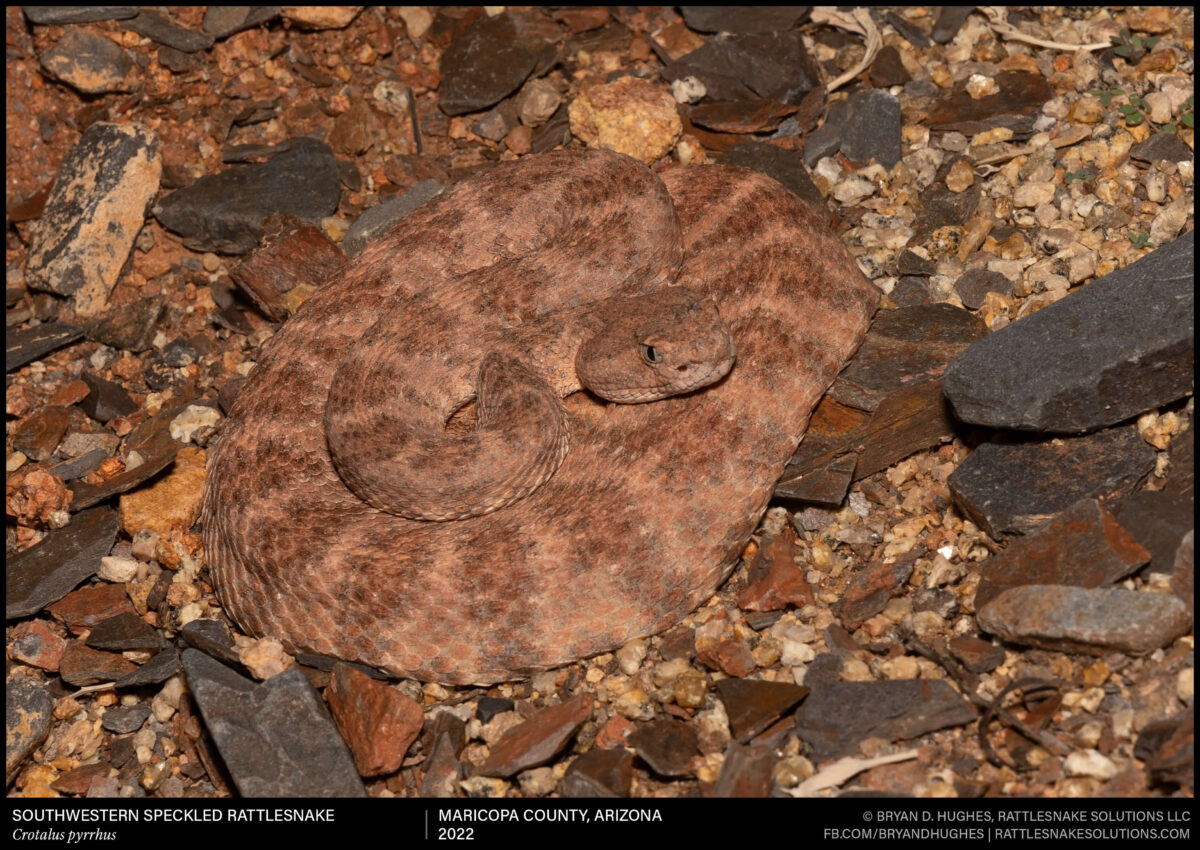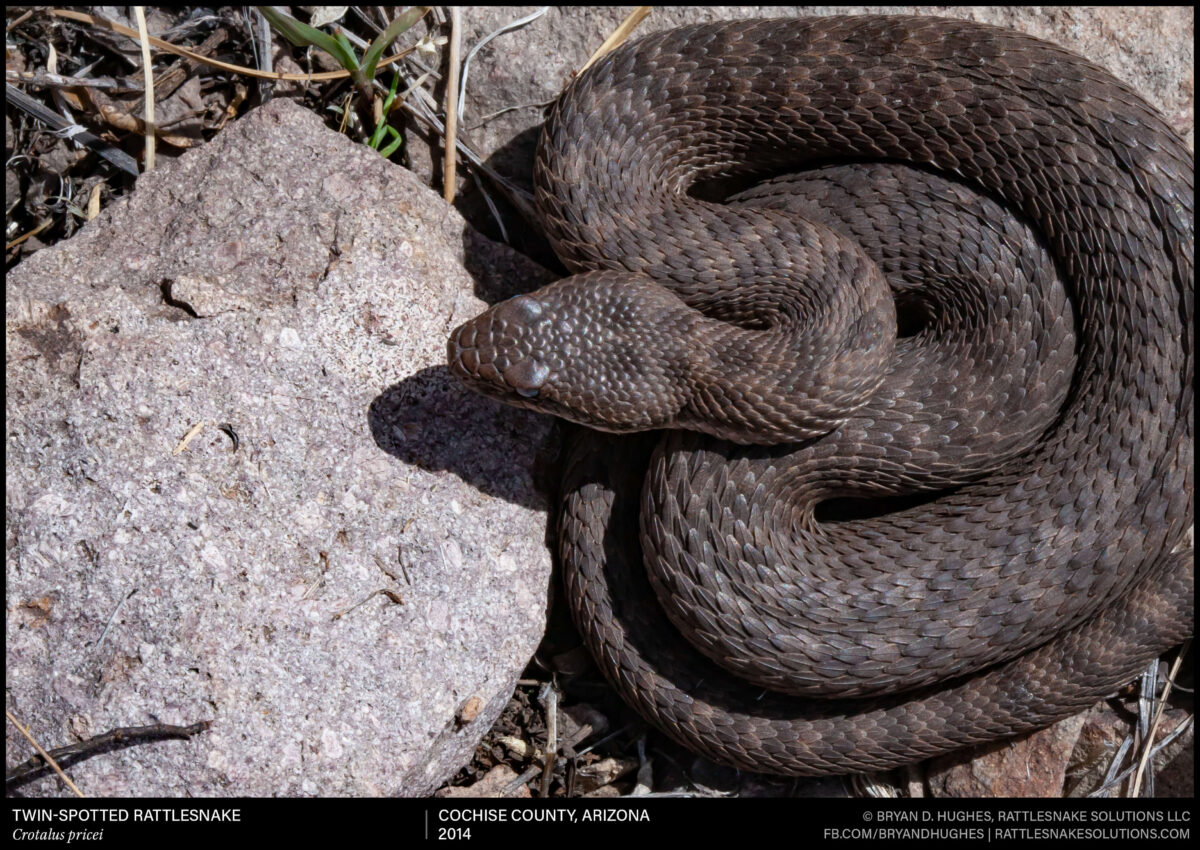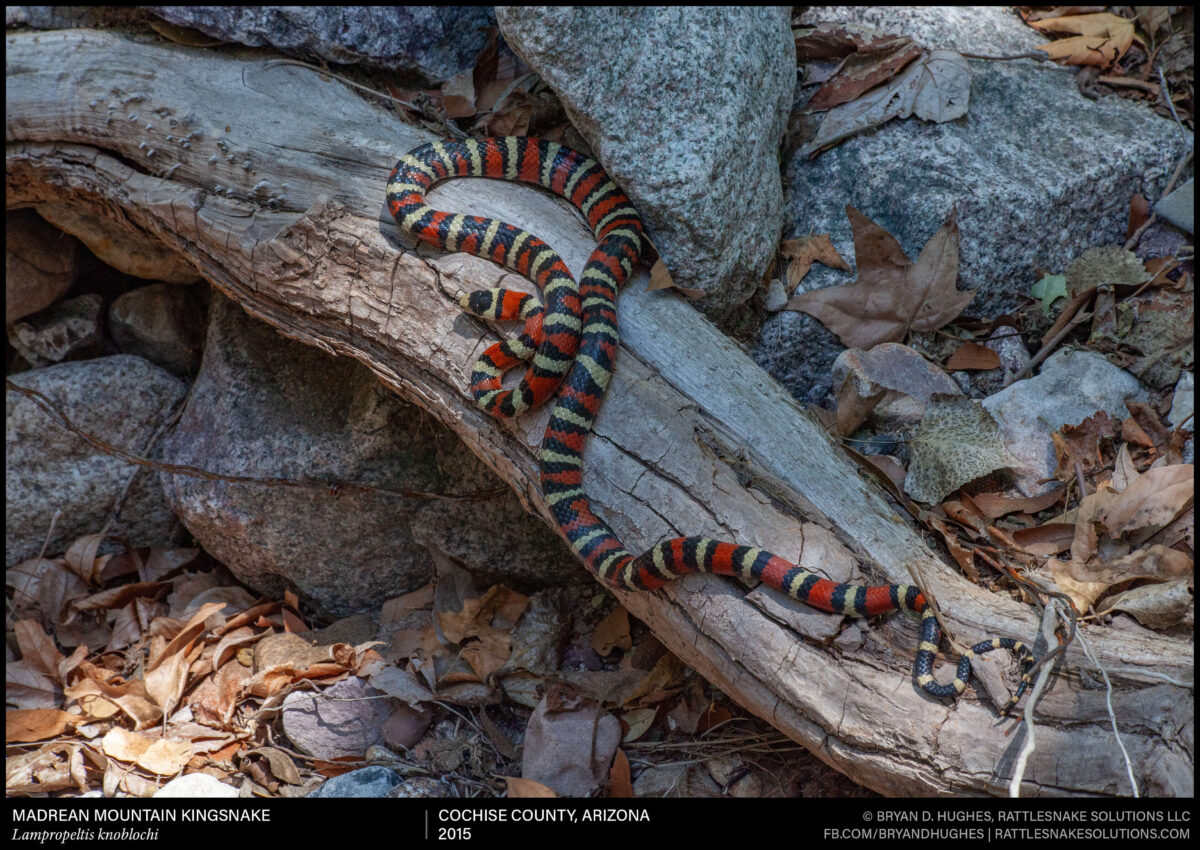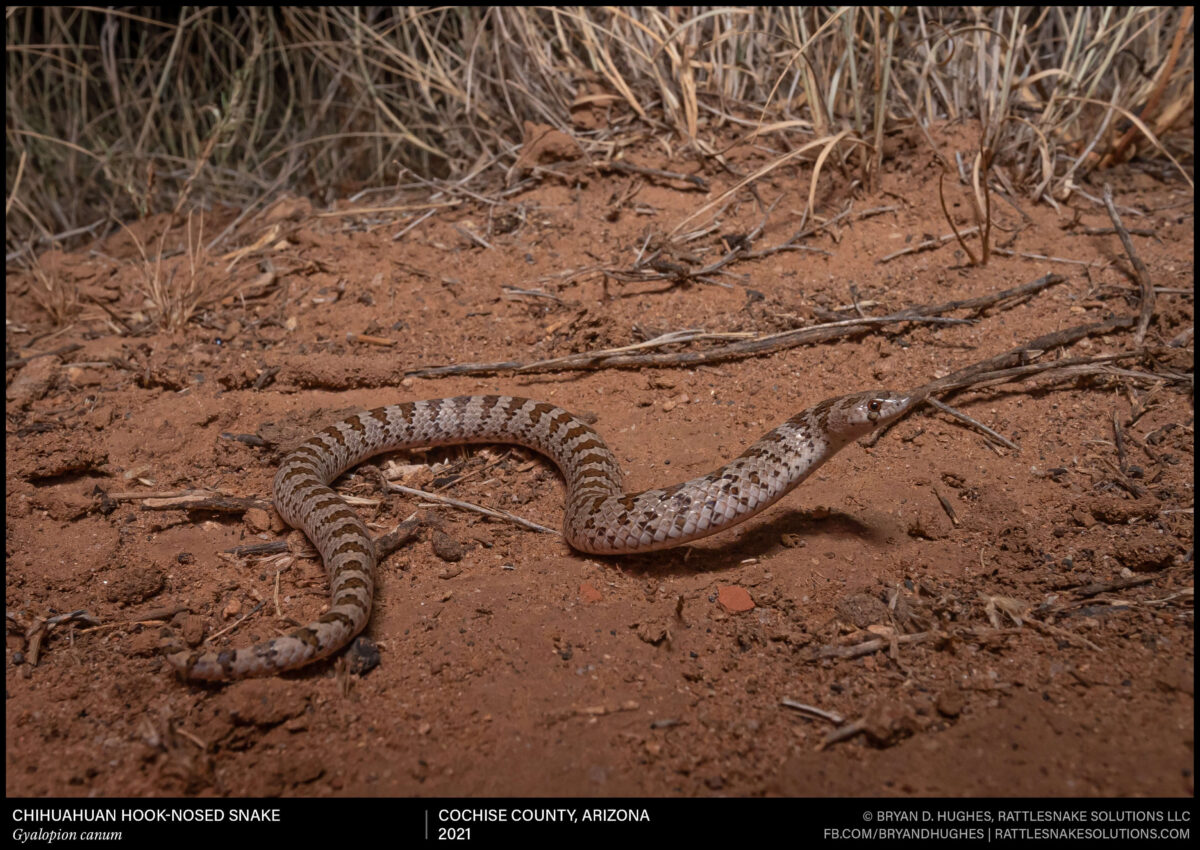
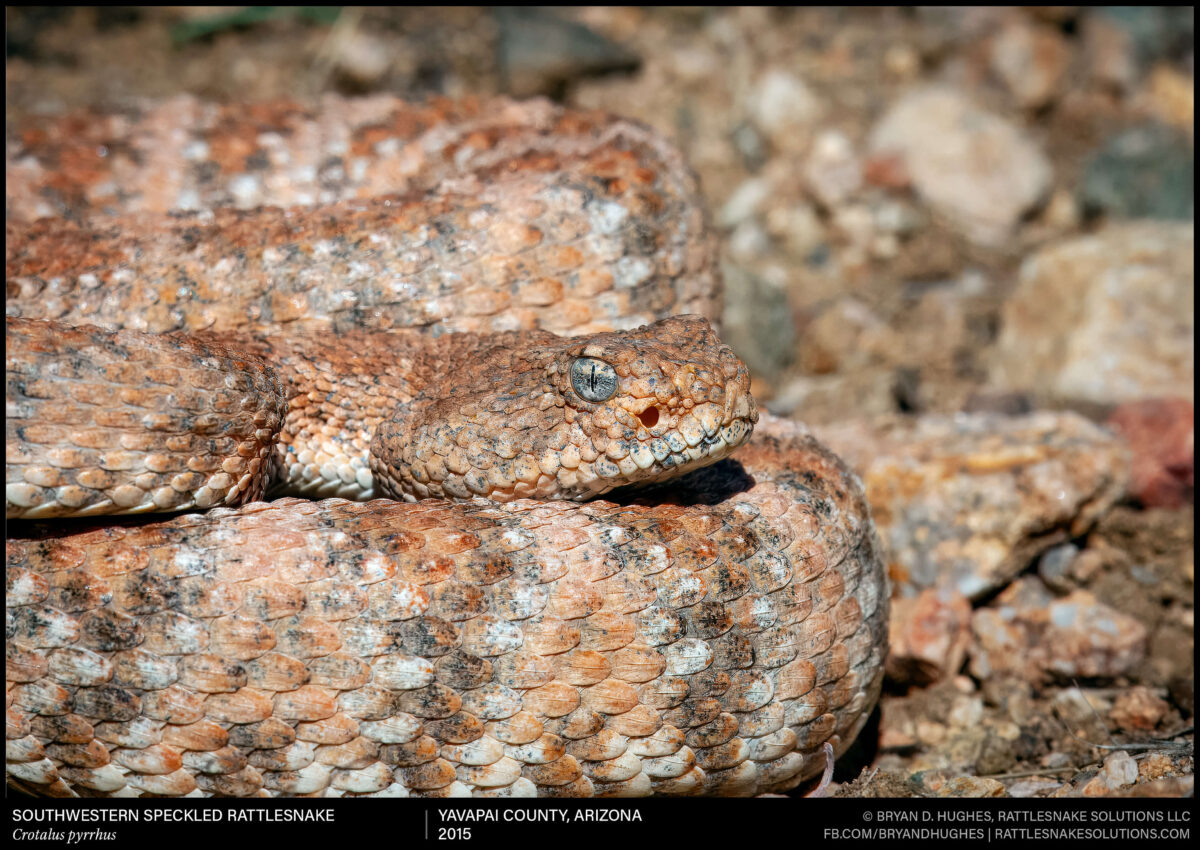
A rattlesnake that looks like a rock. This Southwestern Speckled Rattlesnake was found in central Arizona in an area of rusty granite and quartz. The resulting cryptic pattern is just as colorful, including speckled grey blue eyes. Though it is brightly colored, these snakes can be very difficult to see in context.
Cochran, C. (2019). Variation in morphology, diet, and venom composition in Crotalus pyrrhus (Cope 1867) [Doctoral dissertation, Loma Linda University]. Loma Linda University Electronic Theses, Dissertations & Projects. https://scholarsrepository.llu.edu/cgi/viewcontent.cgi?article=3590&context=etd
Crowell, H. L., Whelan, J. M., & Harmel, M. V. (2020). Rattlesnake colouration affects detection by predators. Journal of Zoology, 310(1), 1–11. https://doi.org/10.1111/jzo.12786
Hanscom, R. J., & Higham, T. E. (2023). Ambush hunting in snakes: Behaviour, function, and diversity. In Snakes: Ecology, behavior, and conservation (pp. 1–32). ResearchGate. https://www.researchgate.net/publication/373257803_Ambush_Hunting_in_Snakes_Behavior_Function_and_Diversity
Hanscom, R. J. (2025). From ambush to activity: Using accelerometry to reveal cryptic behaviors of rattlesnakes and kangaroo rats [Doctoral dissertation, University of California, Riverside]. eScholarship. https://escholarship.org/content/qt4ft2985w/qt4ft2985w.pdf
Teshera, M. S. (2021). Strike-induced chemosensory searching, kleptoparasitism, and the possibility of chemical crypsis in rattlesnakes [Doctoral dissertation, University of Texas at El Paso]. UTEP Digital Commons. https://scholarworks.utep.edu/cgi/viewcontent.cgi?article=4357&context=open_etd