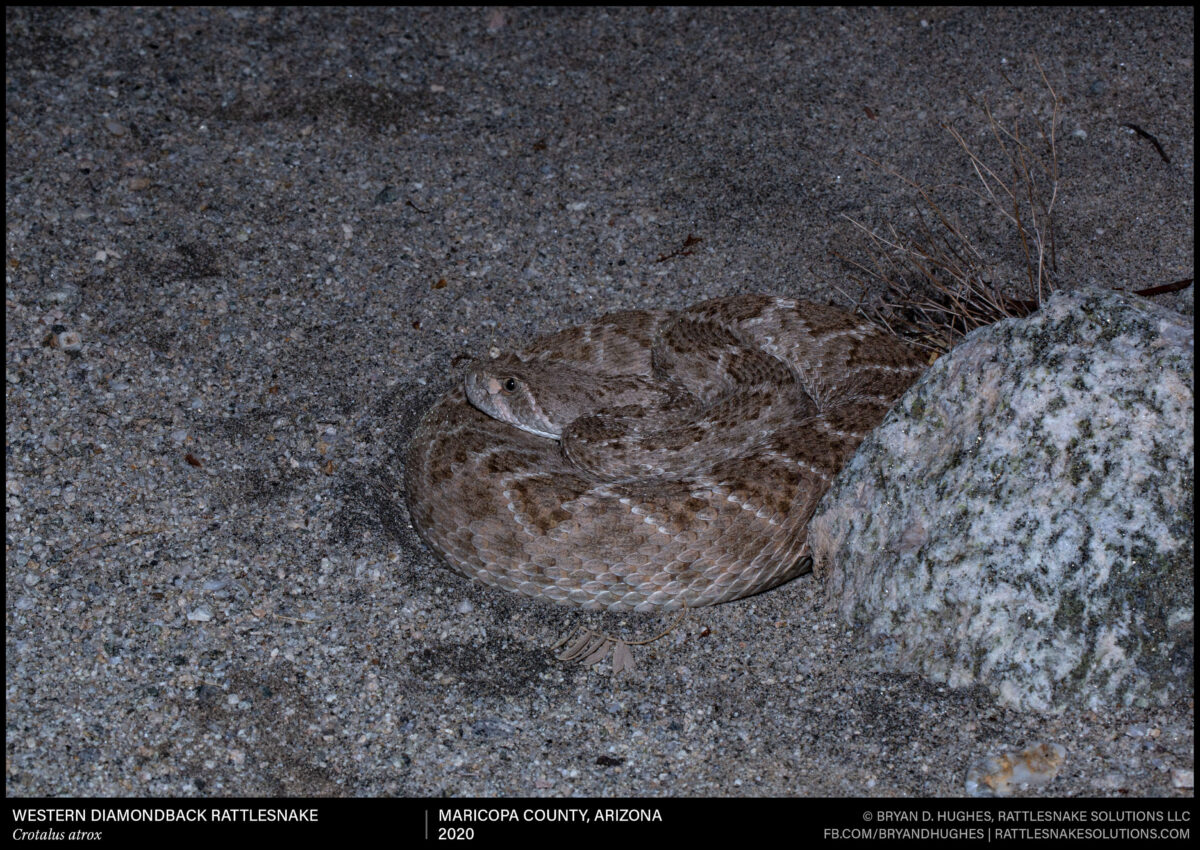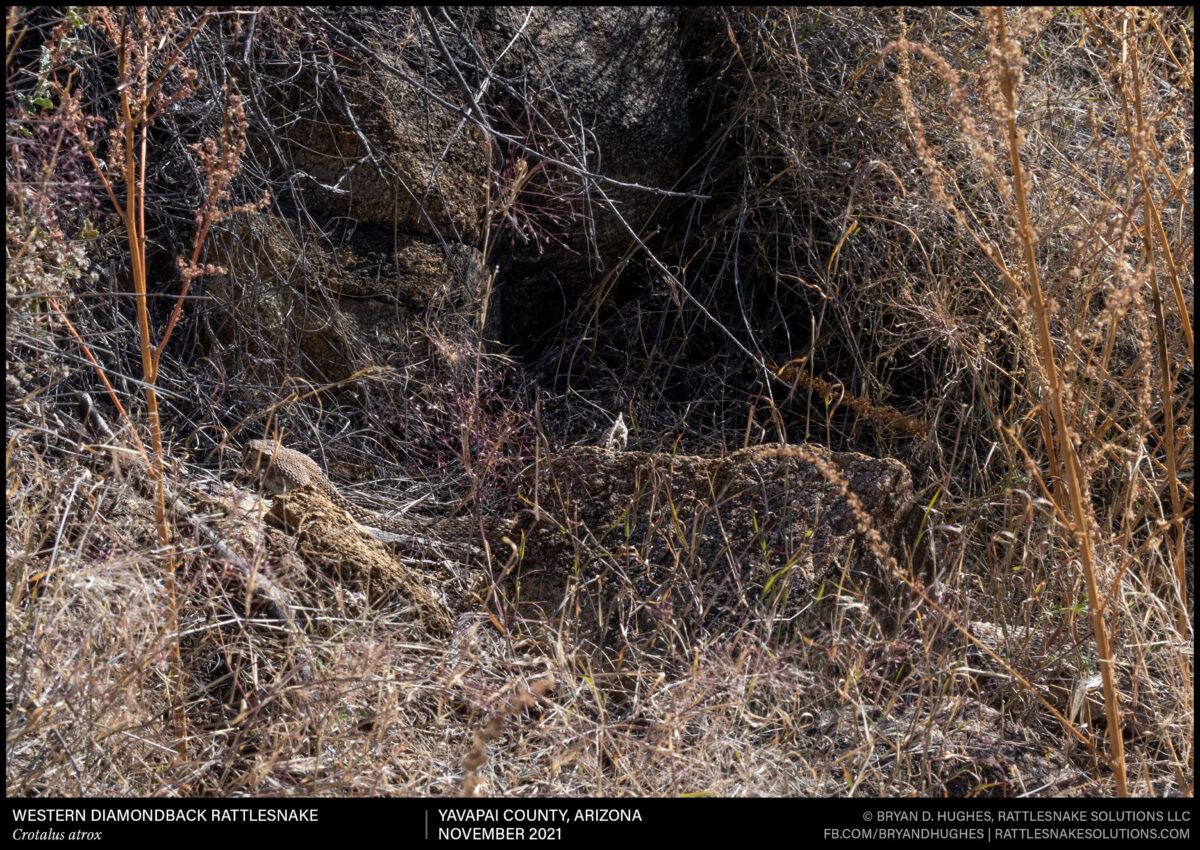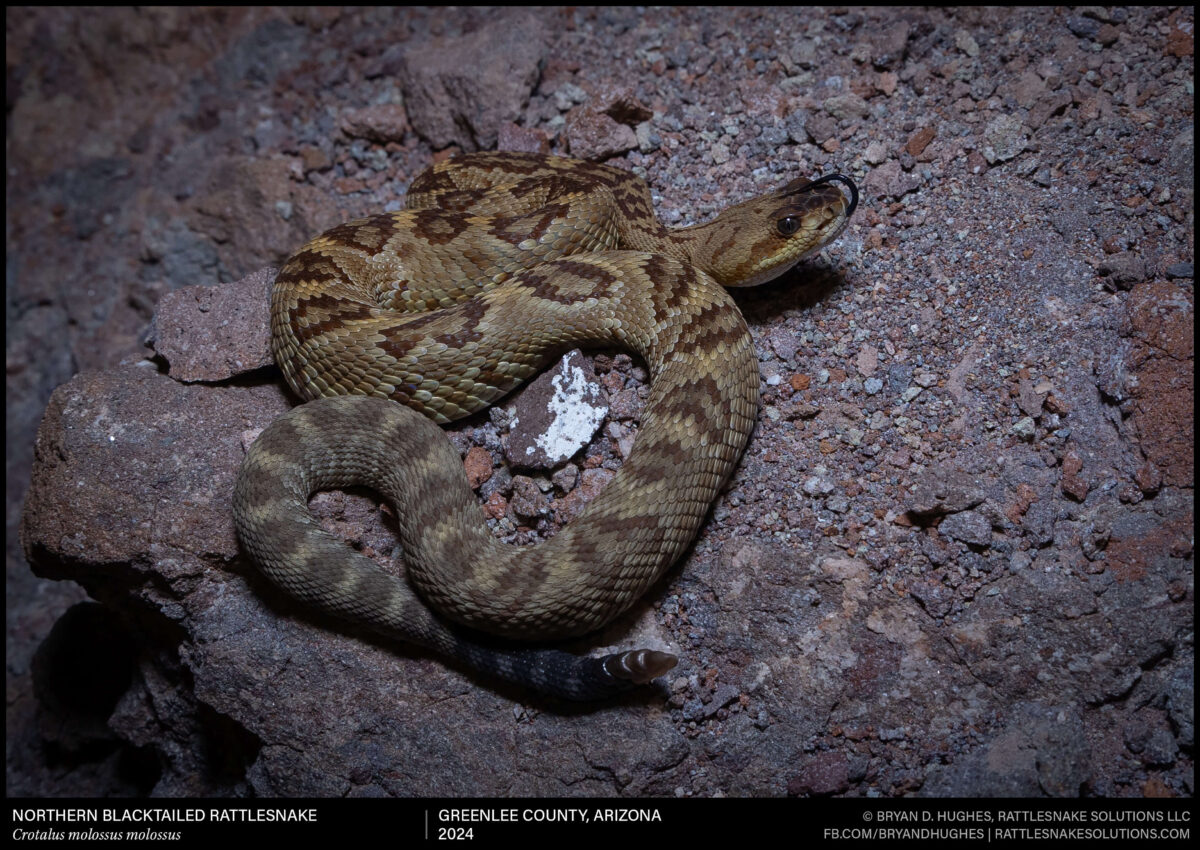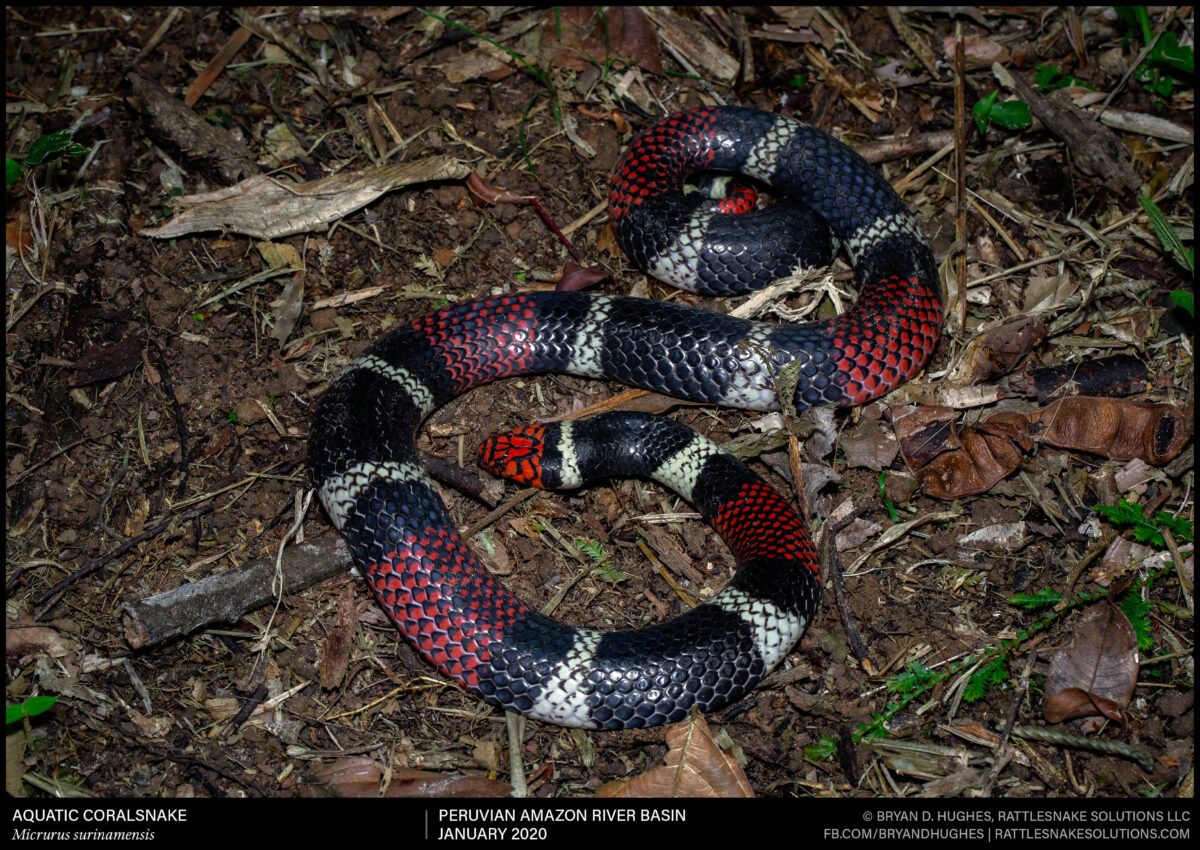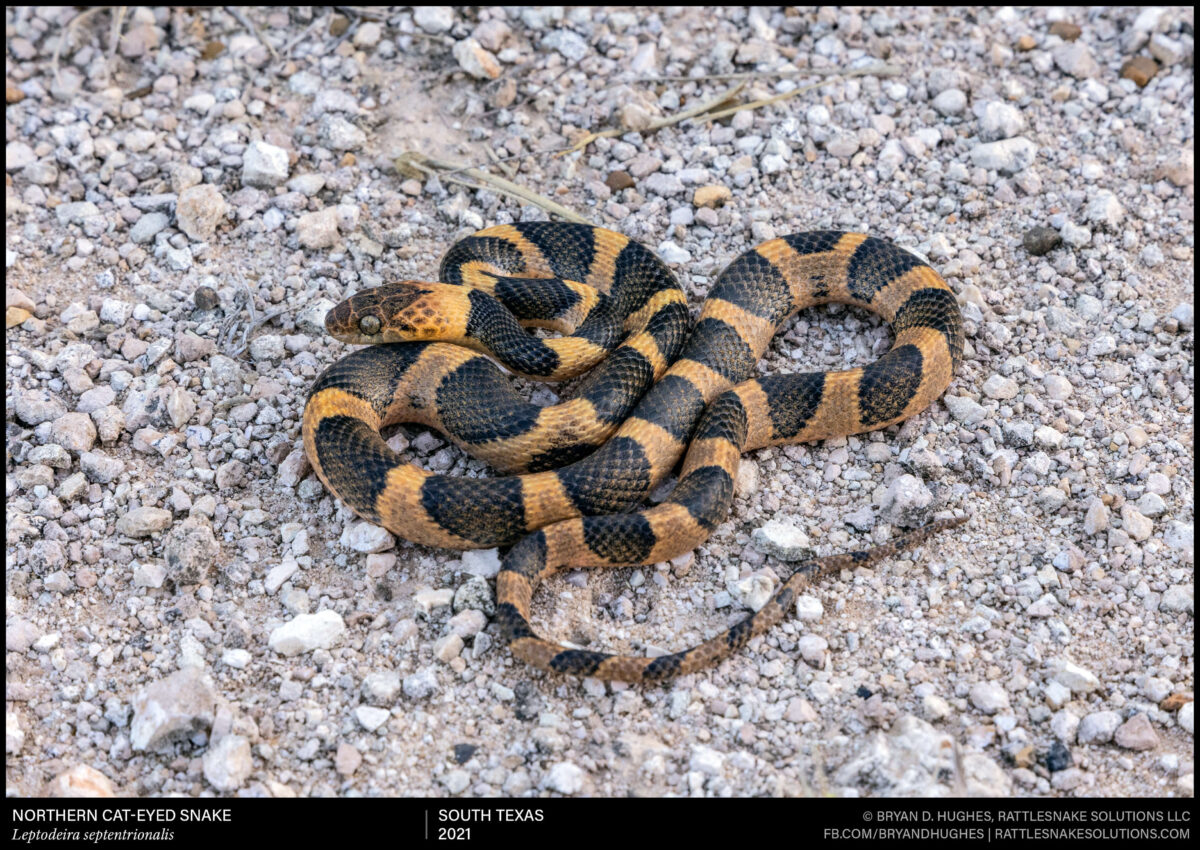
Three of the half dozen or so Western Diamondback Rattlesnakes that occupy this den each winter. These snakes spend a lot of time during the early spring basking and making short movements to thermoregulate and for social reasons, where they are vulnerable to predators and other threats.
The tiny face of a Sonoran Coralsnake. These tiny snakes are highly venomous, but reluctant to bite. Avoiding this is simple: don’t make the stupid decision to pick one up. If you can do that, there is no danger from these little snakes.
A Blacktailed Rattlesnake coiled in the grass in the Madrean woodlands of southeastern Arizona. These large, greenish rattlesnakes are a common sight for hikers and naturalists in the area.
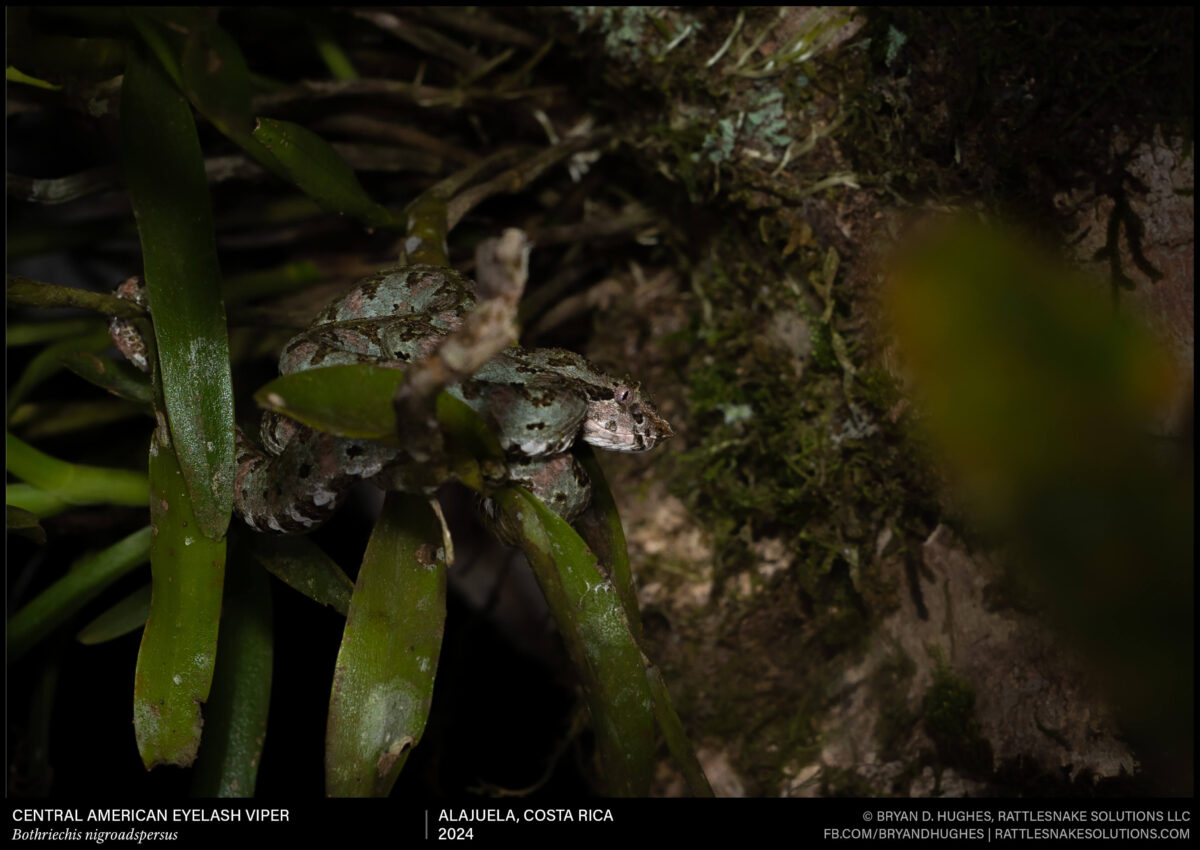
A Central American Eyelash Viper I found on a family vacation about a year ago to Costa Rica. I found none of the golden yellow version, but this minty green zipper patterned one was a welcome sight.
The face of a Chihuahuan Hook-nosed Snake. These are small eaters of invertebrates. The subtle scoop on the end of the nose is helpful for finding prey in the sandy, grassland soil where they live.
Of the Midget Faded Rattlesnakes (Crotalus concolor) I’ve seen, which is a smaller number than I’d prefer, I think this is the best looking. Found in Wyoming on a snow-flurried June day.
A Mojave Rattlesnake on the crawl after a wet night in southeastern Arizona. It’s moving laterally, hissing and watching the perceived predator with the camera, but not rattling. As this species often does, instead, it curls its tail and “wags” it slowly as a display. Prairie Rattlesnakes, notably, will often do this tail-curling behavior instead of rattling.
This guided retreat, where the snake moves laterally to cover while keeping the business end pointed forward, causes a lot of confusion with observers. For one, it’s not always a straight line away, but to cover. That cover can be a vehicle, bushes, or a cast shadow … including from the person watching it. This, and confirmation bias from decades of beloved folklore, contribute to the many tall tales about Mojave Rattlesnakes.
Greene, H. W., & May, P. G. (2002). Parental behavior by vipers. In G. W. Schuett, M. Höggren, M. E. Douglas, & H. W. Greene (Eds.), Biology of the Vipers (pp. 179–205). Eagle Mountain Publishing.
Cardwell, M. D. (2013). Behavioral changes by Mohave rattlesnakes (Crotalus scutulatus) in response to drought. California State University, Sacramento.
Maag, D. W., Francioli, Y. Z., Goetz, M. T. H., & Sanders, L. N. (2025). Variation in defensive and exploratory behaviors across a rattlesnake (Crotalus scutulatus × viridis) hybrid zone in Southwestern New Mexico. Scientific Reports, 15(1), 2345. https://doi.org/10.1038/s41598-025-96155-8
Calvete, J. J., Massey, D. J., Sánchez, E. E., Sanz, L., & Bush, S. P. (2012). Venom variability and envenoming severity outcomes of the Crotalus scutulatus scutulatus (Mojave rattlesnake) from Southern Arizona. Toxicon, 60(9), 802–810. https://doi.org/10.1016/j.toxicon.2012.06.004