A young Grand Canyon Rattlesnake I found near its namesake a little over a decade ago. As this snake matures, the clean pattern of its head and body will fade and degrade to a series of dark splotches and smudges against a simple background.
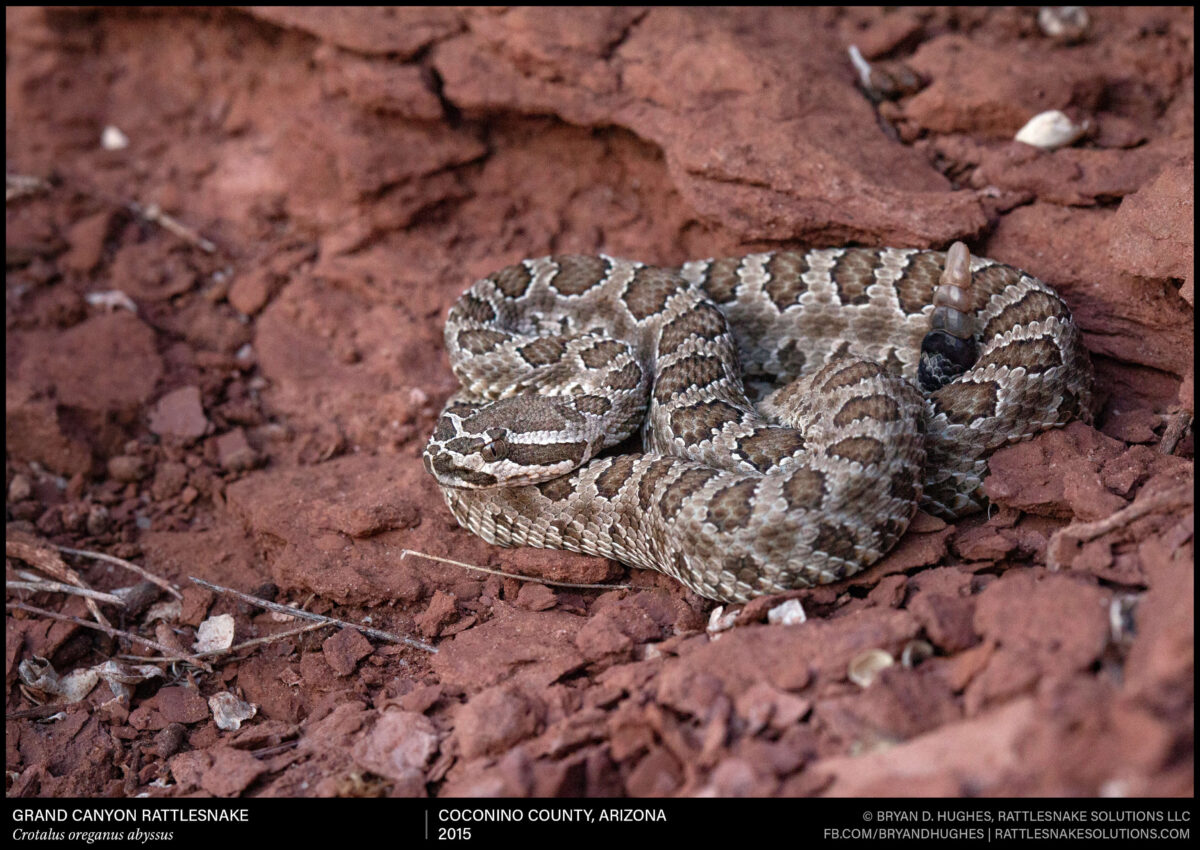

A young Grand Canyon Rattlesnake I found near its namesake a little over a decade ago. As this snake matures, the clean pattern of its head and body will fade and degrade to a series of dark splotches and smudges against a simple background.
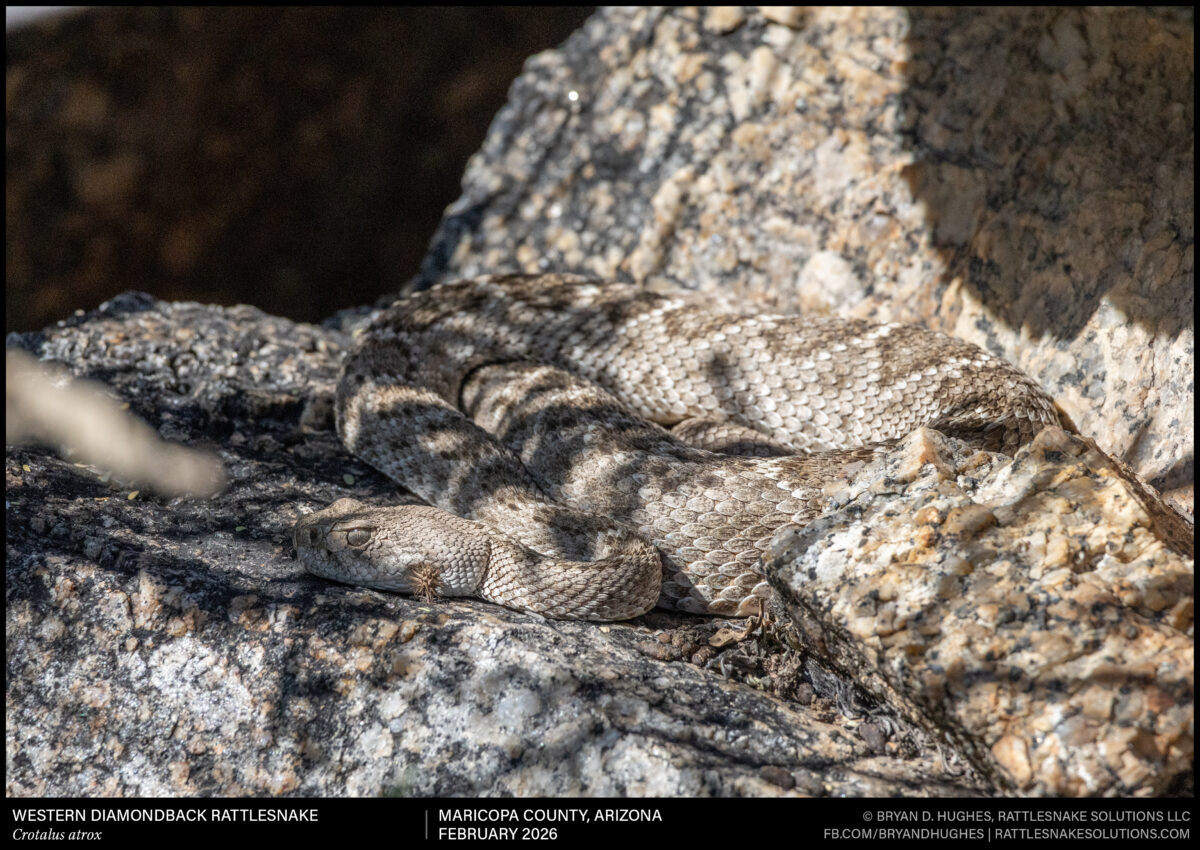
We saw this Western Diamondback Rattlesnake resting high on a ledge, just below a crevice where at least one other was resting.
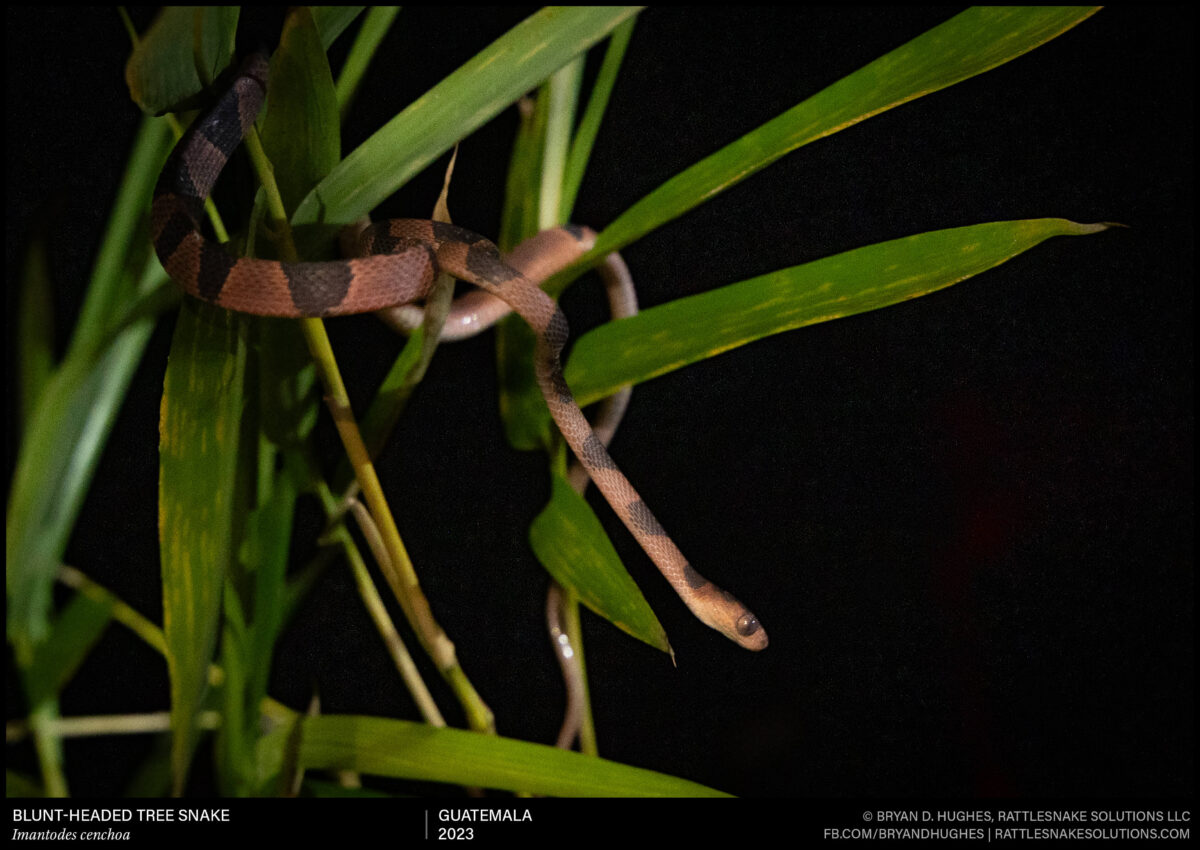
A Blunt-headed Tree Snake from Guatemala a few years back. These are extremely thin snakes that can be very difficult to photograph, as they just never stop moving. This one took awhile, but eventually let me get this subpar shot.
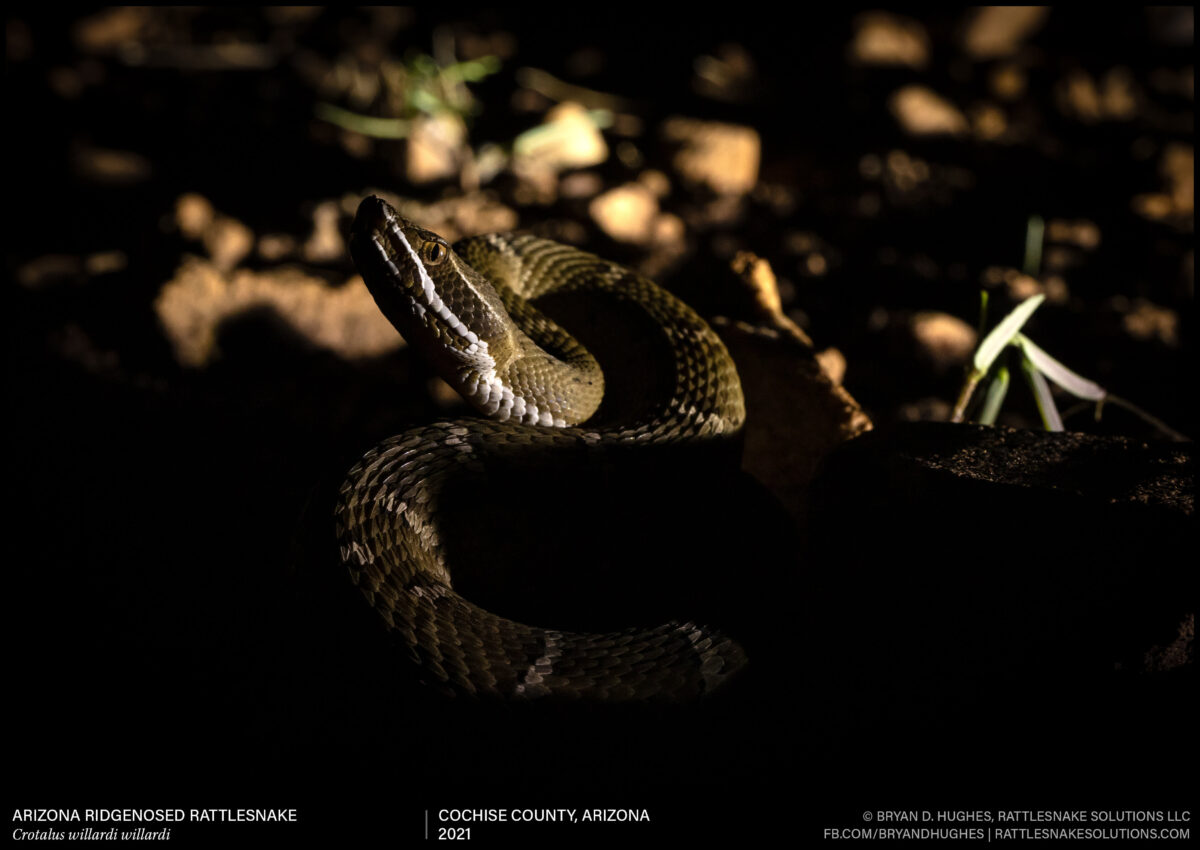
Arizona Ridgnosed Rattlesnakes are common in a few mountain ranges in southeastern Arizona, but not found in the desert environments where most people live. They are usually seen by hikers and wildlife observers in the daytime, but often found moving at night as well.
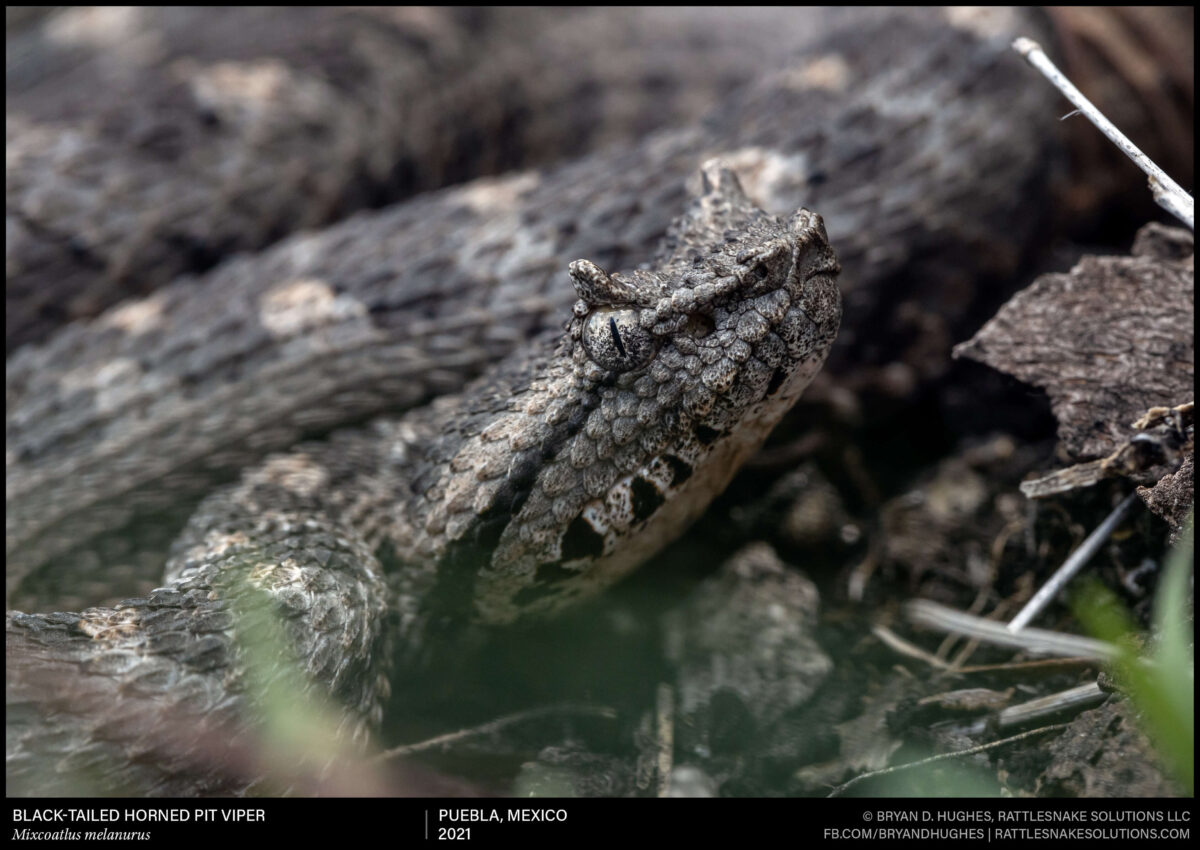
A cool little viper with horn-like scales above the eyes. That’s a common thing with arboreal vipers in Central and South America, but vipers with “horns” are relatively few in comparison. They’re closely related to other montane vipers in the area that have similar structures, but live more familiar lives in steep, heavily vegetated forests.
A few hours of careful scouring of perfect habitat turned up none of these. Then after having more or less given up, I decided to flip some rocks near the cars while we waited for the crew to reassemble … and poof: the target. It’s fun when that happens.
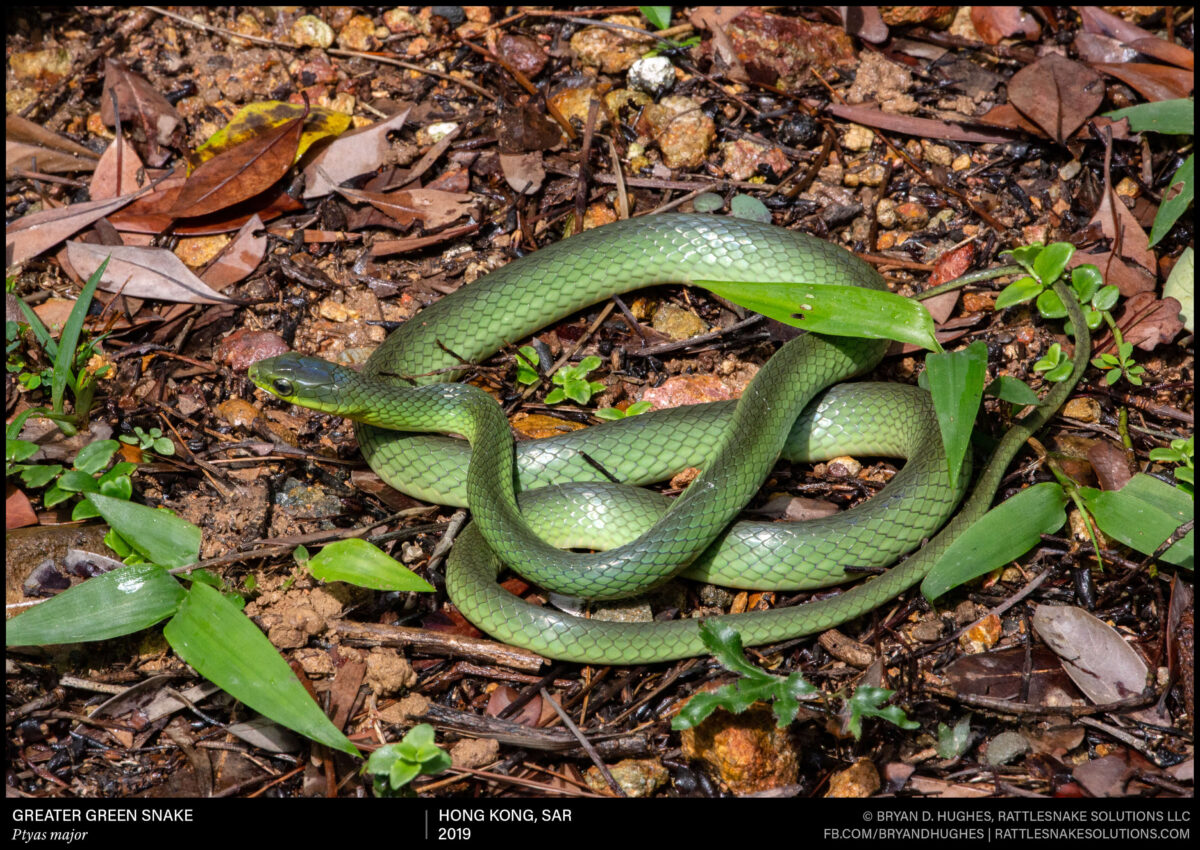
A Greater Green Snake (Ptyas major) we saw in Hong Kong several years ago.
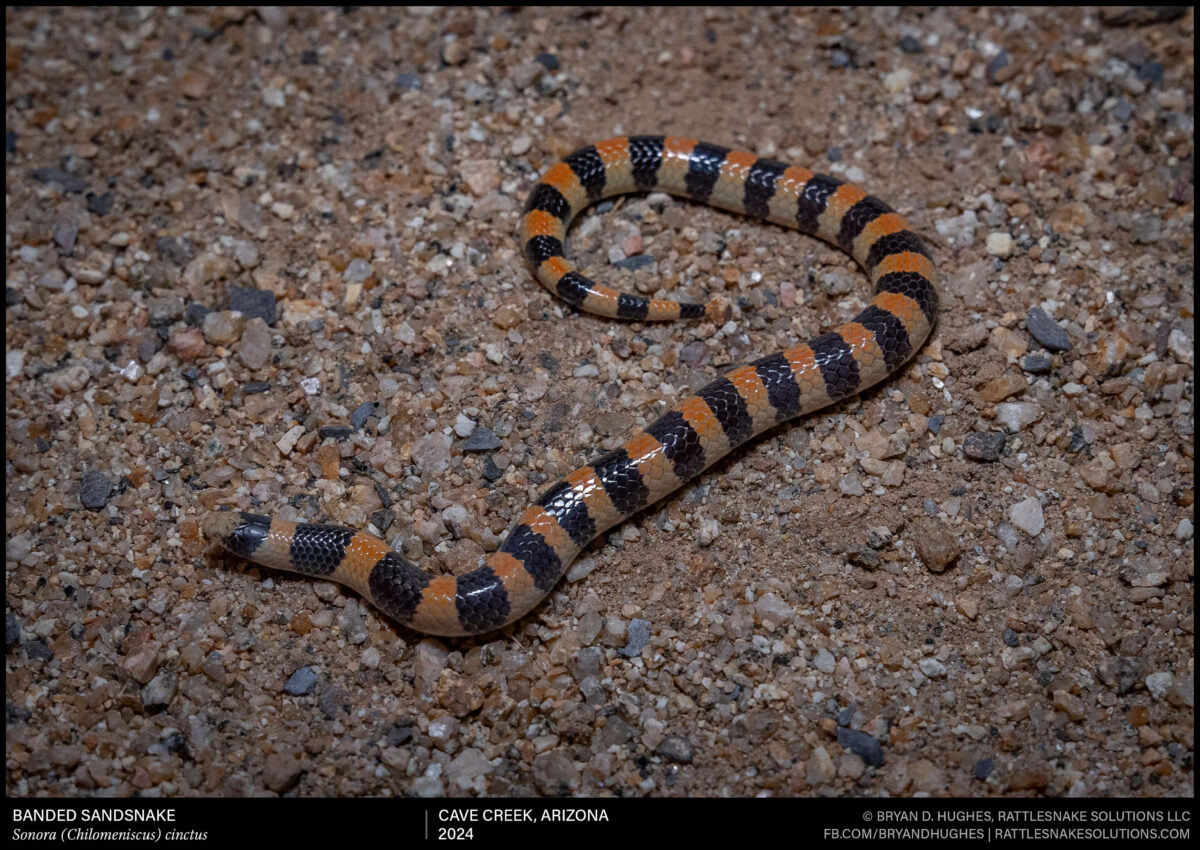
A Banded Sandsnake from my own backyard. These are tiny, even as adults. This one is a bit shorter than a pencil, and likely won’t get any bigger. They eat invertebrates, don’t bite, and are completely harmless to people and pets. They’re also very often mistaken for Western Groundsnakes, which look superficially similar.
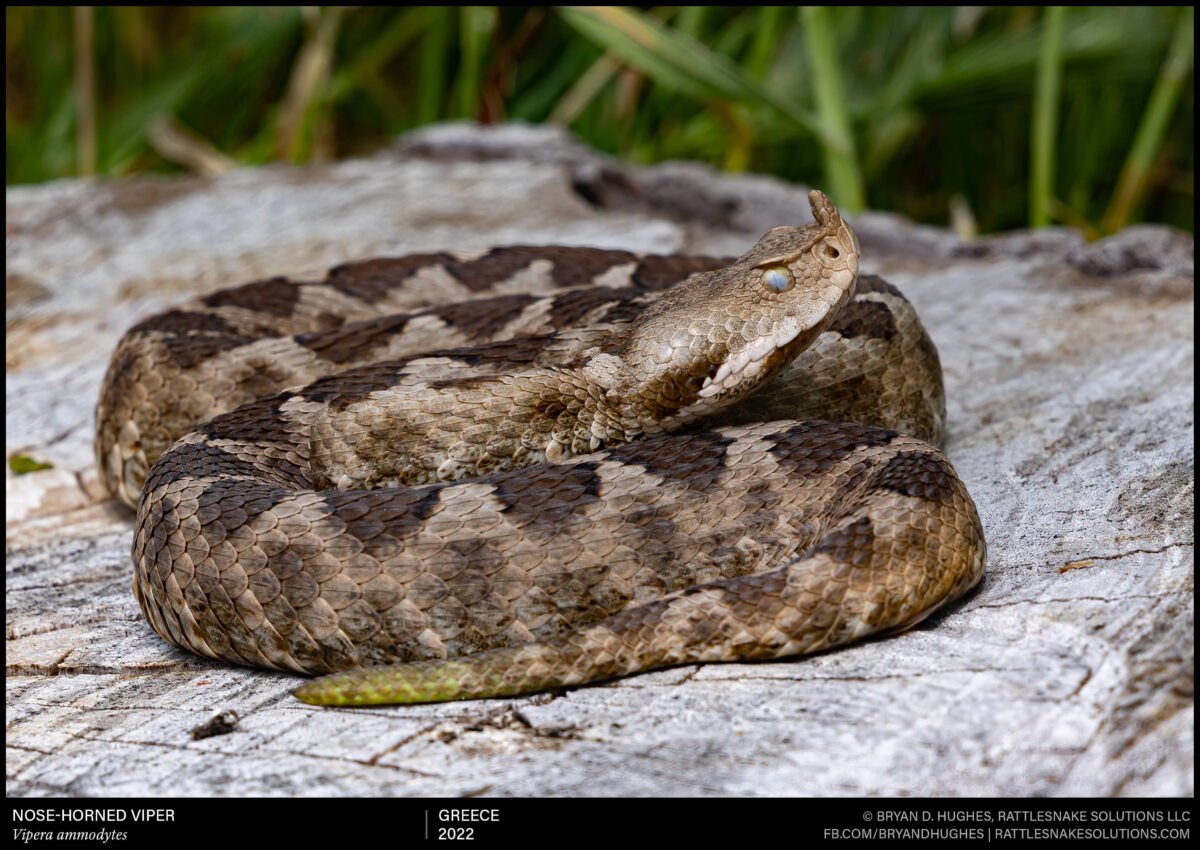
One of many Nose-horned Vipers (Vipera ammodytes) we found in Greece a few years ago. This one is about to shed its skin in coming days, indicated by the clouded eye scale.
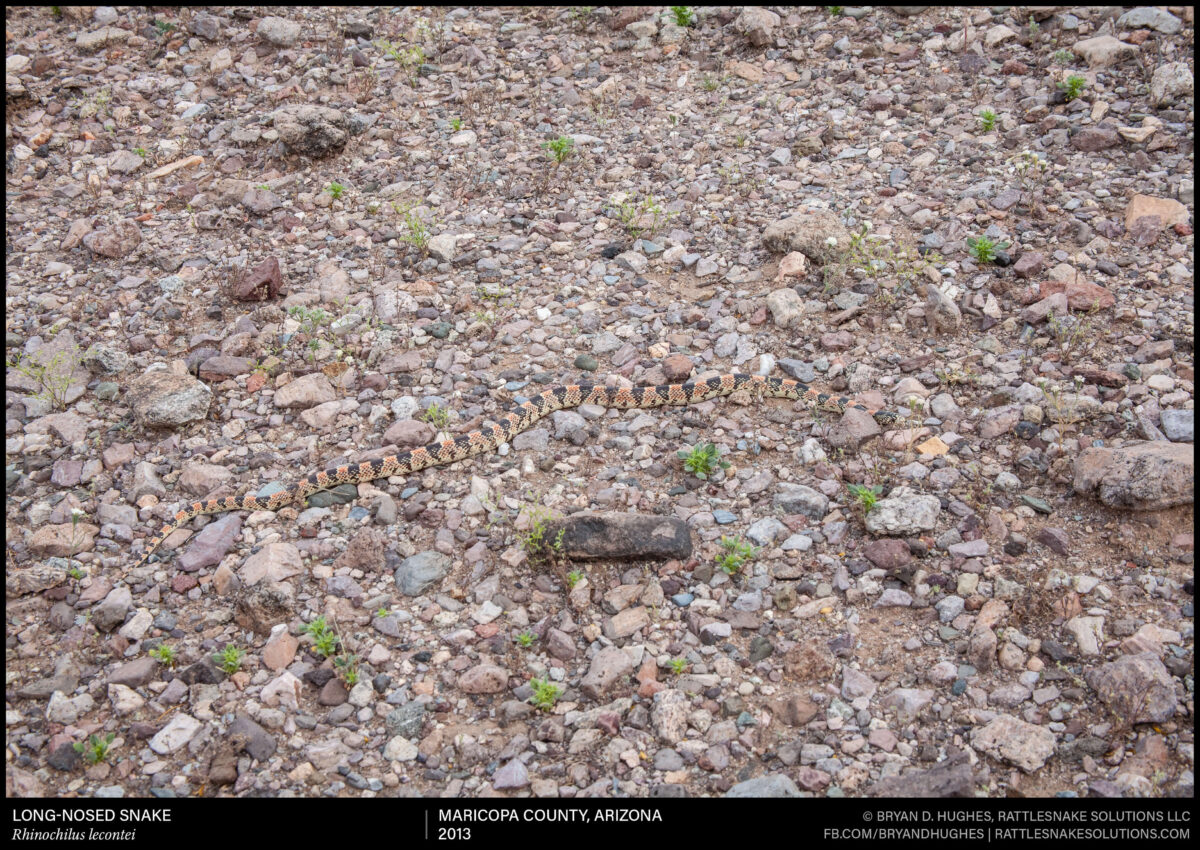
A Longnosed Snake cruising around in the low light at the end of the day. These snakes are most often nocturnal, but may be found in the early morning or late afternoon, especially in the Spring. Against the chaotic, rocky backdrop of desert pavement between sandy plains, its shape breaks up, and spotting it can be difficult.
These snakes are commonly found in backyards, even a decent distance into the city, where they are usually misidentified as kingsnakes.
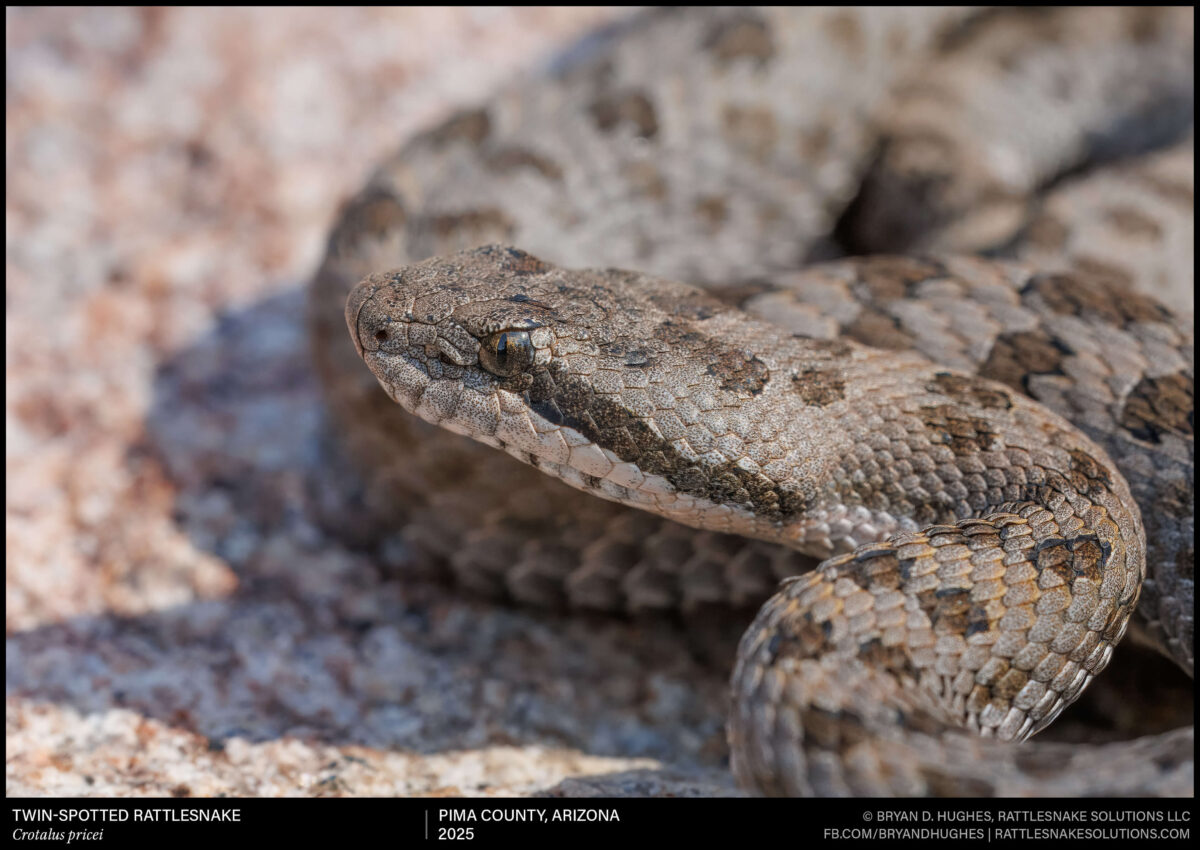
We found this Twin Spotted Rattlesnake high in the mountains of southeastern Arizona. These tiny rattlesnakes are sometimes seen by hikers visiting the sky islands, finding them scurrying off trails at high elevation. They’re usually only around a foot and a half long as adults and quick to exit if anyone shows up – a person would have to really try to be bitten by one.