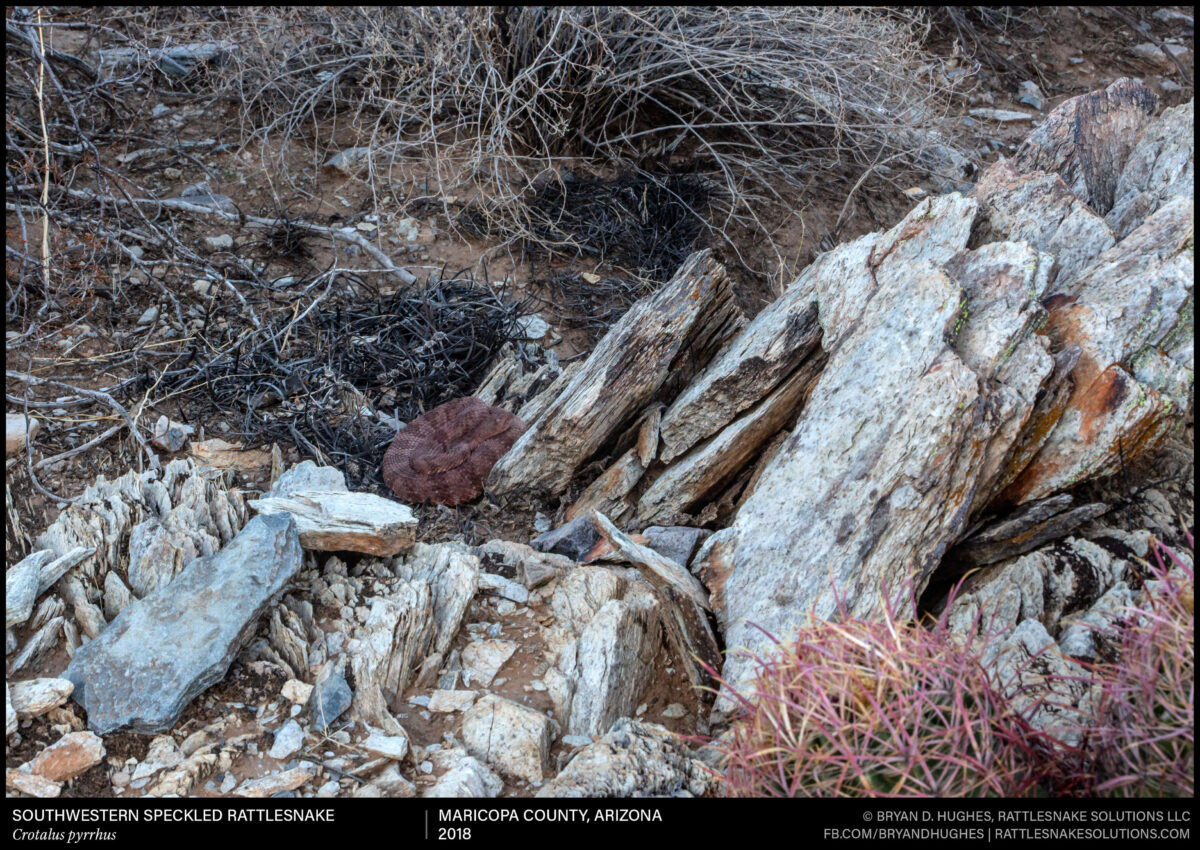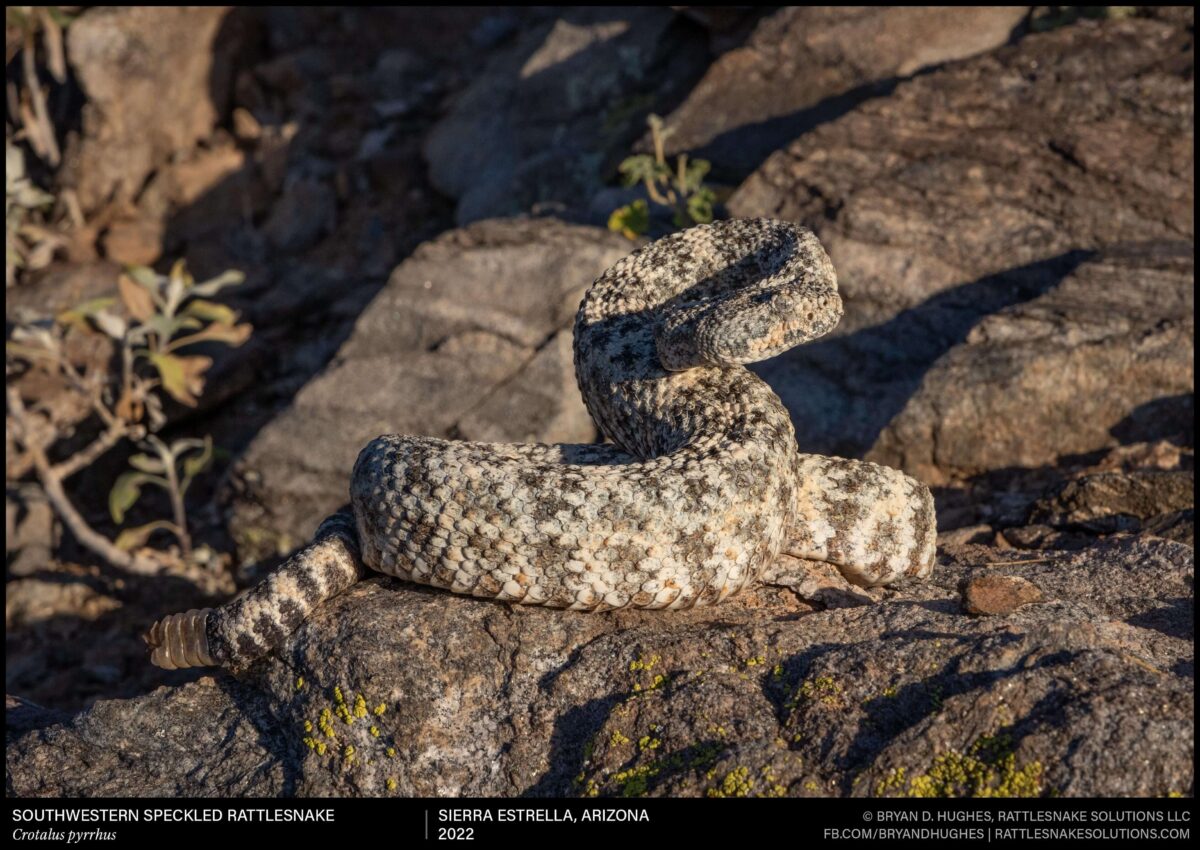
A Southwestern Speckled Rattlesnake resting in the shade outside its summer aestivation den. It’s one of a handful that gather here each year to hide from the heat and gestate.

A Southwestern Speckled Rattlesnake resting in the shade outside its summer aestivation den. It’s one of a handful that gather here each year to hide from the heat and gestate.

Western Diamondback Rattlesnakes in the Phoenix area aren’t all grey. Some can be reddish or have hints of orange, and some rich brown tones like this one.

A Western Diamondback Rattlesnake basking in partial cover. This is how rattlesnakes and other reptiles typically thermoregulate. Filtered light and conduction from nearby surfaces and substrate can help them tune in on the right temperatures to a fine degree, all while avoiding detection by predators and prey. This is also a reminder of why it’s best to stay on established trails and keep dogs on leash when hiking in the spring.

A Sonoran Desert Tortoise cruising around near one of its burrows. These animals dig out and widen natural caves in caliche or under boulders that they will use for a lifetime.
These are protected by law … but did you know you can adopt one as a family pet, for free? If you have a backyard, they are so fun. Here’s how you can adopt a Sonoran Desert Tortoise from the AZGFD: https://www.azgfd.com/wildlife-conservation/living-with-wildlife/wildlife-care-center/tortoise-adoption-information/

A Southwestern Speckled Rattlesnake emerges from its aestivation den for a short time to drink rainwater from its scales. In a rare pre-monsoon summer rain, every drop is needed. Hydrophobic keeled scales collect rain droplets, which the snake drinks over time.

A young Blacktailed Rattlesnake breaking position to hide in rocks. We’d accidentally disturbed it by showing up, but it held this pose long enough for us to back off and get a few photos. This is in a remote canyon far from any road, and being bothered by people isn’t a regular thing for the snakes here.

A Speckled Rattlesnake from the Belmont Mountains, west of Phoenix. These rattlesnakes in this range often lack much of the characteristic speckling within the eye, leaving solid-colored, light grey or pale white eyes. A typical response when we post a snake from this area is something like “it’s ready to shed skin”, though that is not at all the case.

A California Kingsnake I saw crossing a road near my house. I was out looking for baby Western Diamondback Rattlesnakes to move off the roadway, which were out in force that night. I think this kingsnake and I were doing the same thing, though hoping for different outcomes. I moved it to the side of the road and wished it luck.

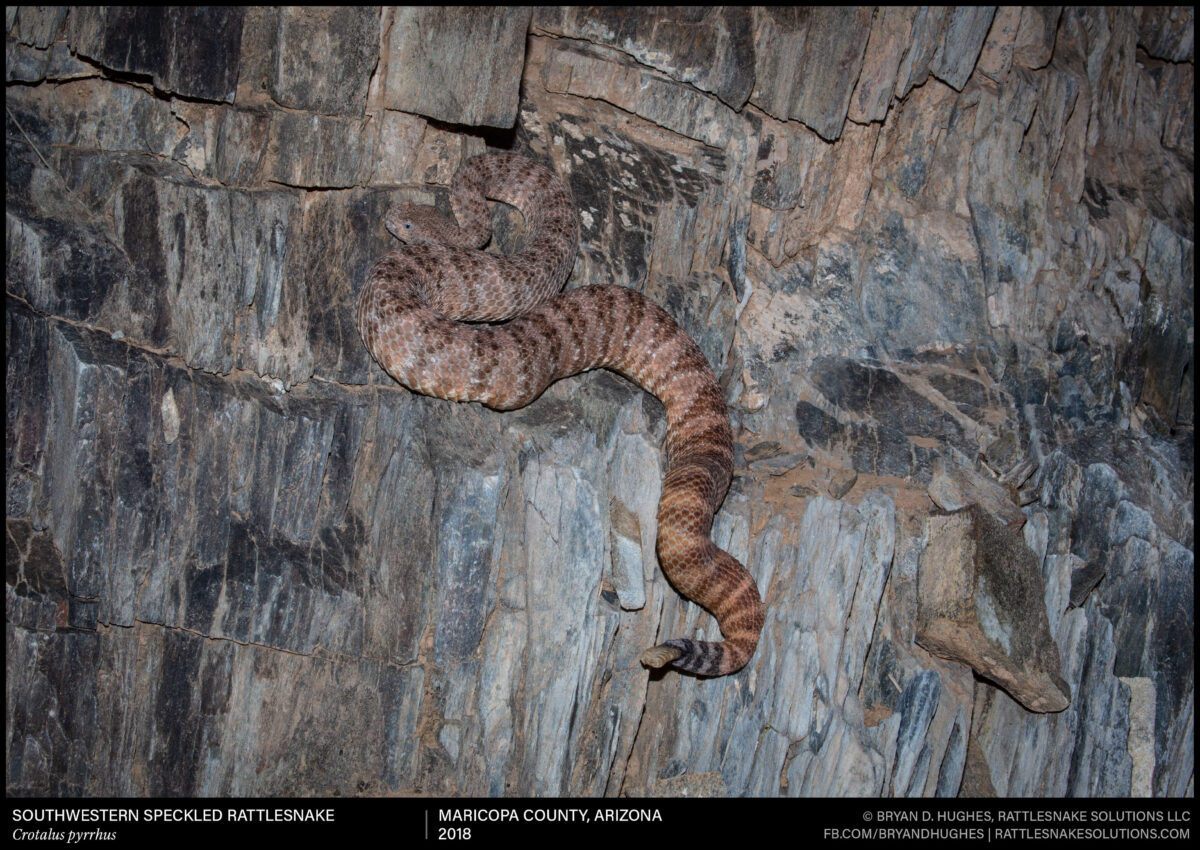
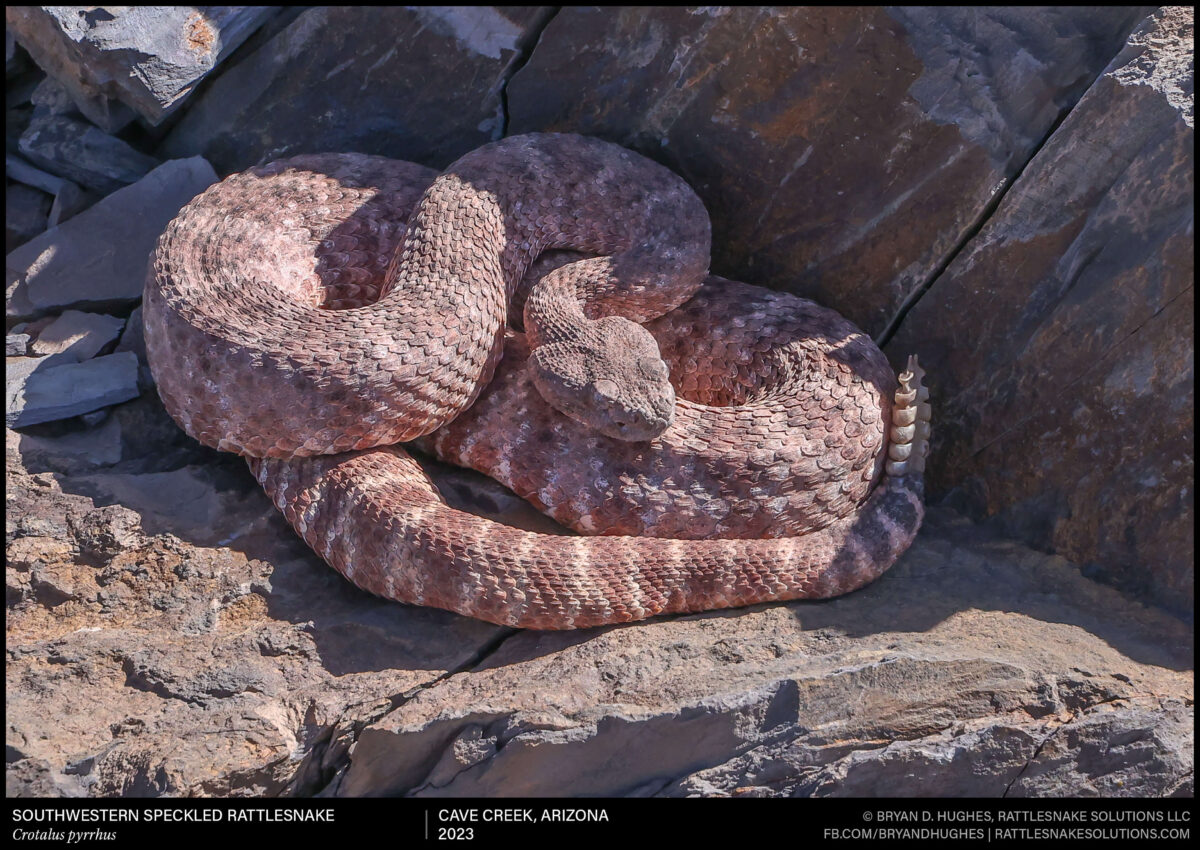
A red-hued Southwestern Speckled Rattlesnake from Phoenix, Arizona. Its red coloration is typical of the local phenotype, which may include many variations of reds, orange, purple, and all shades in between.
These snakes are common in popular hiking areas, but are not an issue for people. Considering the hundreds of people that visit area trailheads each weekend during the peak of these animals’ activity, bites are incredibly uncommon. Hikers can keep that status by staying on trails, not wearing headphones or texting while walking, and keeping dogs on leash (it’s the law, too).

A female Western Diamondback Rattlesnake pausing on a bit near a large bush where she likely lives. These are the most common rattlesnake, if not snake, seen by hikers and homeowners in the Phoenix area.