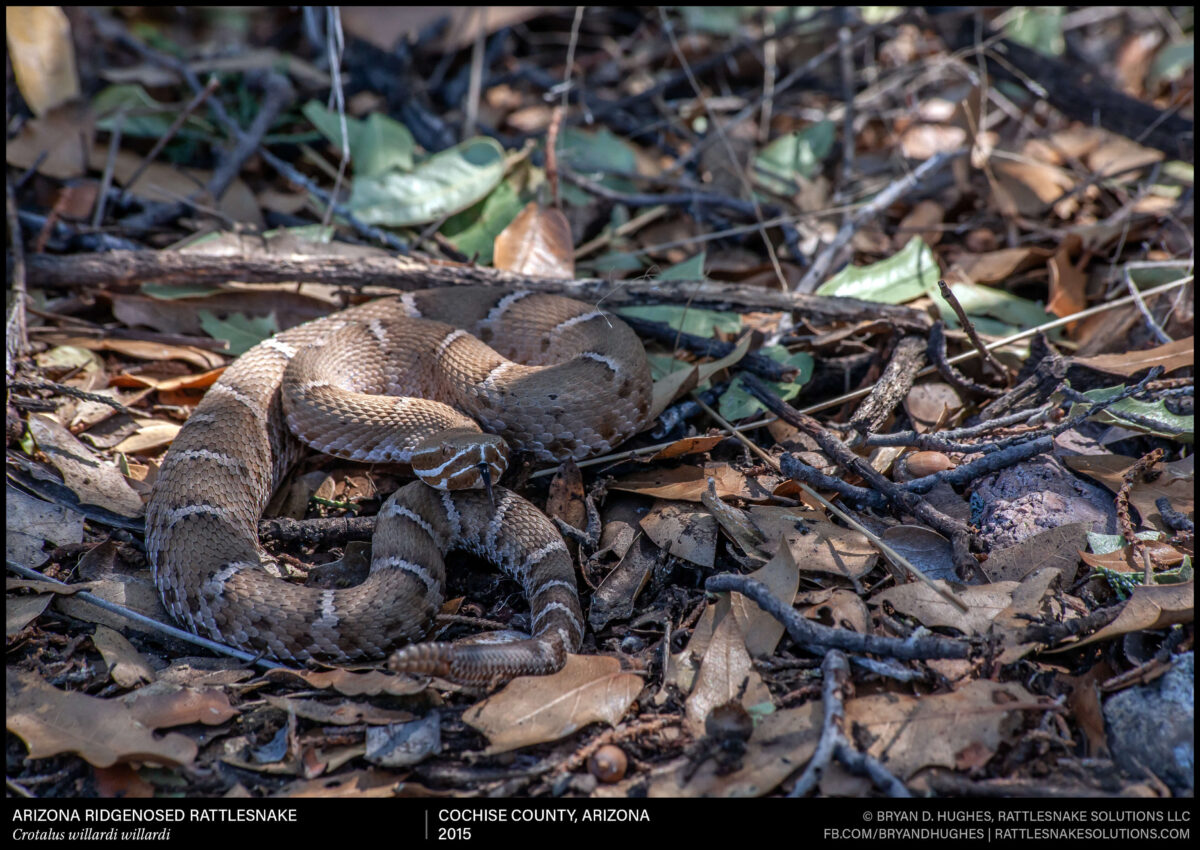
A pretty little Arizona Ridgenosed Rattlesnake from a humid week in southeastern Arizona.
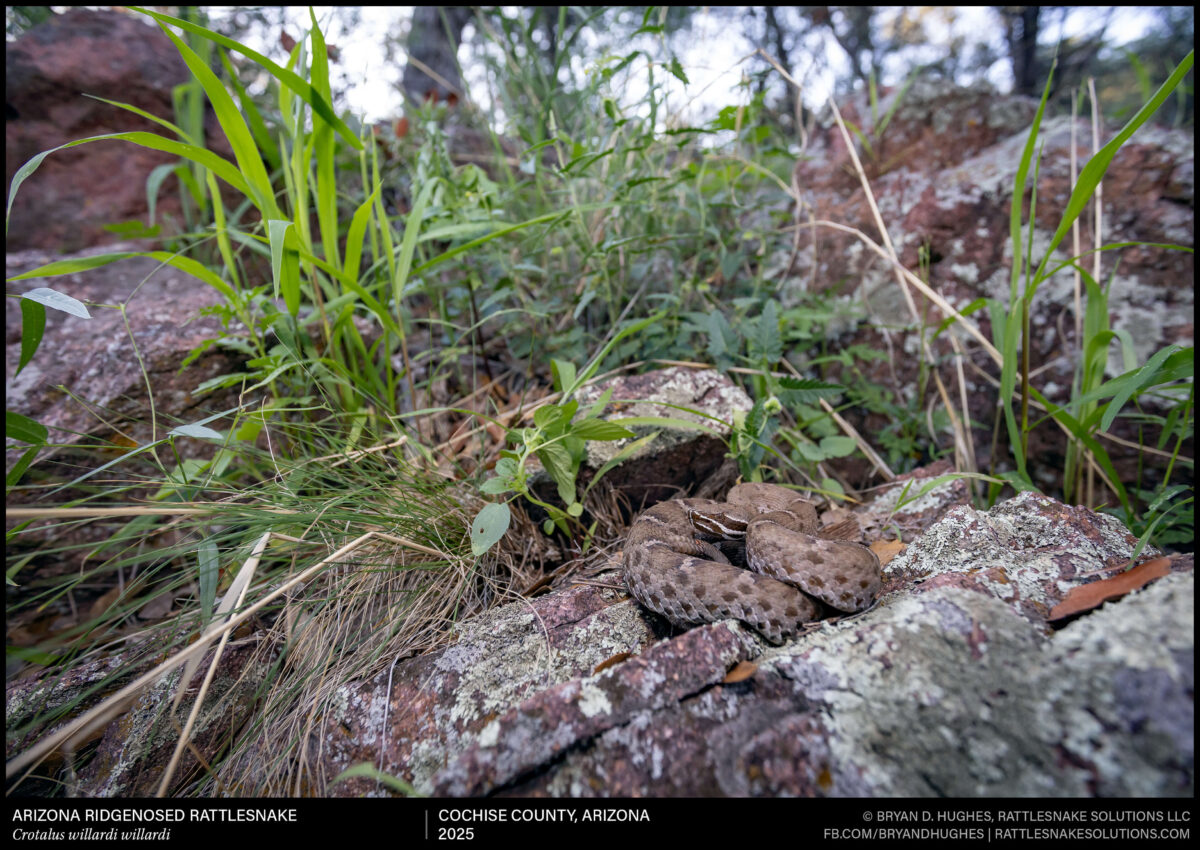

A pretty little Arizona Ridgenosed Rattlesnake from a humid week in southeastern Arizona.
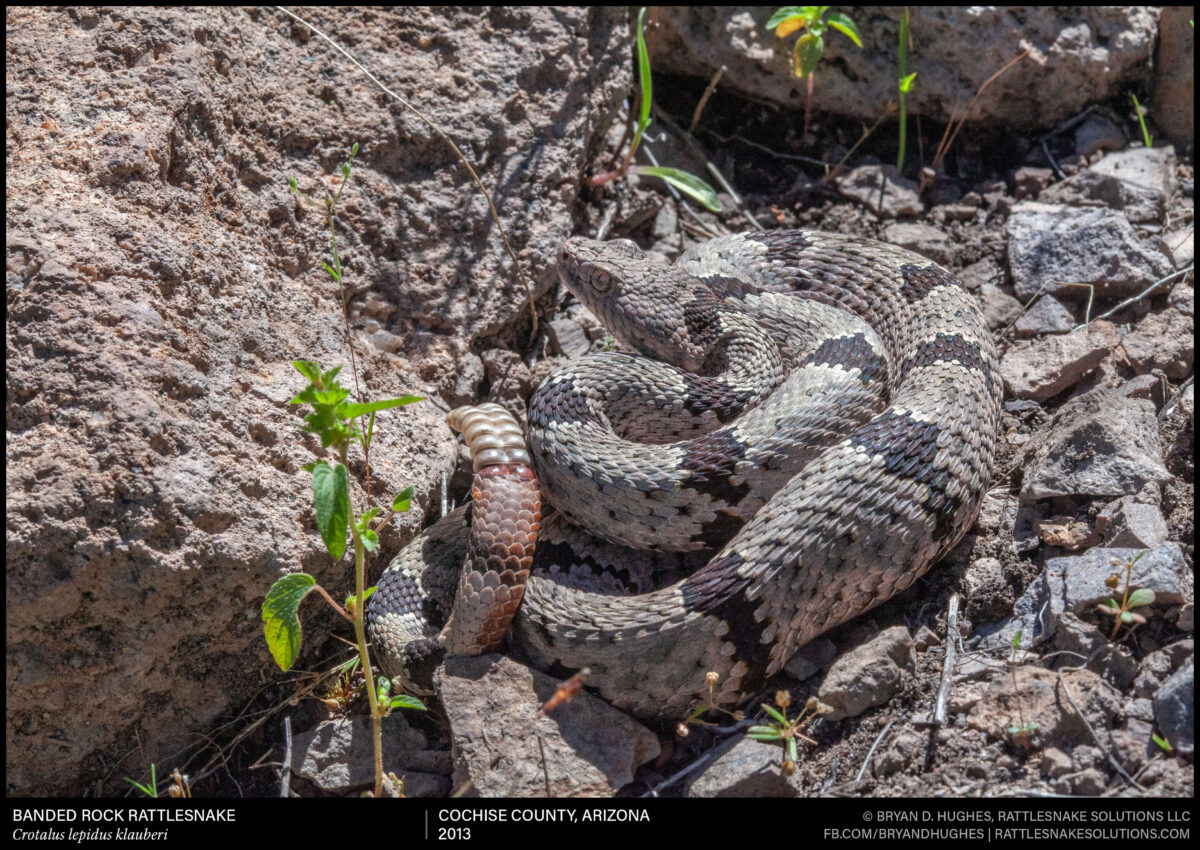
A Banded Rock Rattlesnake found on a sunny day back in 2013 in the sky islands of Arizona. These small rattlesnakes are locally abundant, but would be difficult to be bitten by anyone not actively looking to handle, capture, or kill them. When they see a person, they typically just slip away into the rocks or grass quickly, sometimes with a parting buzz.
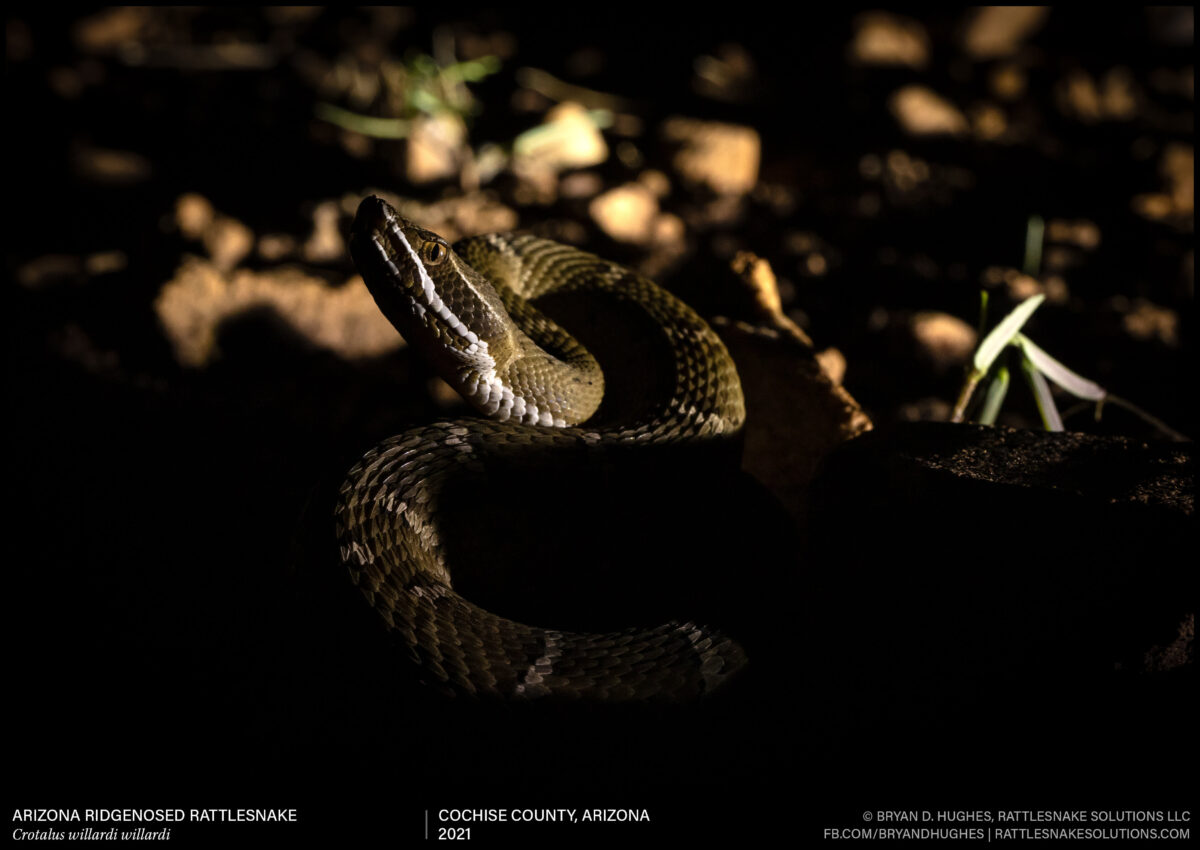
Arizona Ridgnosed Rattlesnakes are common in a few mountain ranges in southeastern Arizona, but not found in the desert environments where most people live. They are usually seen by hikers and wildlife observers in the daytime, but often found moving at night as well.
We found this Twin Spotted Rattlesnake high in the mountains of southeastern Arizona. These tiny rattlesnakes are sometimes seen by hikers visiting the sky islands, finding them scurrying off trails at high elevation. They’re usually only around a foot and a half long as adults and quick to exit if anyone shows up – a person would have to really try to be bitten by one.
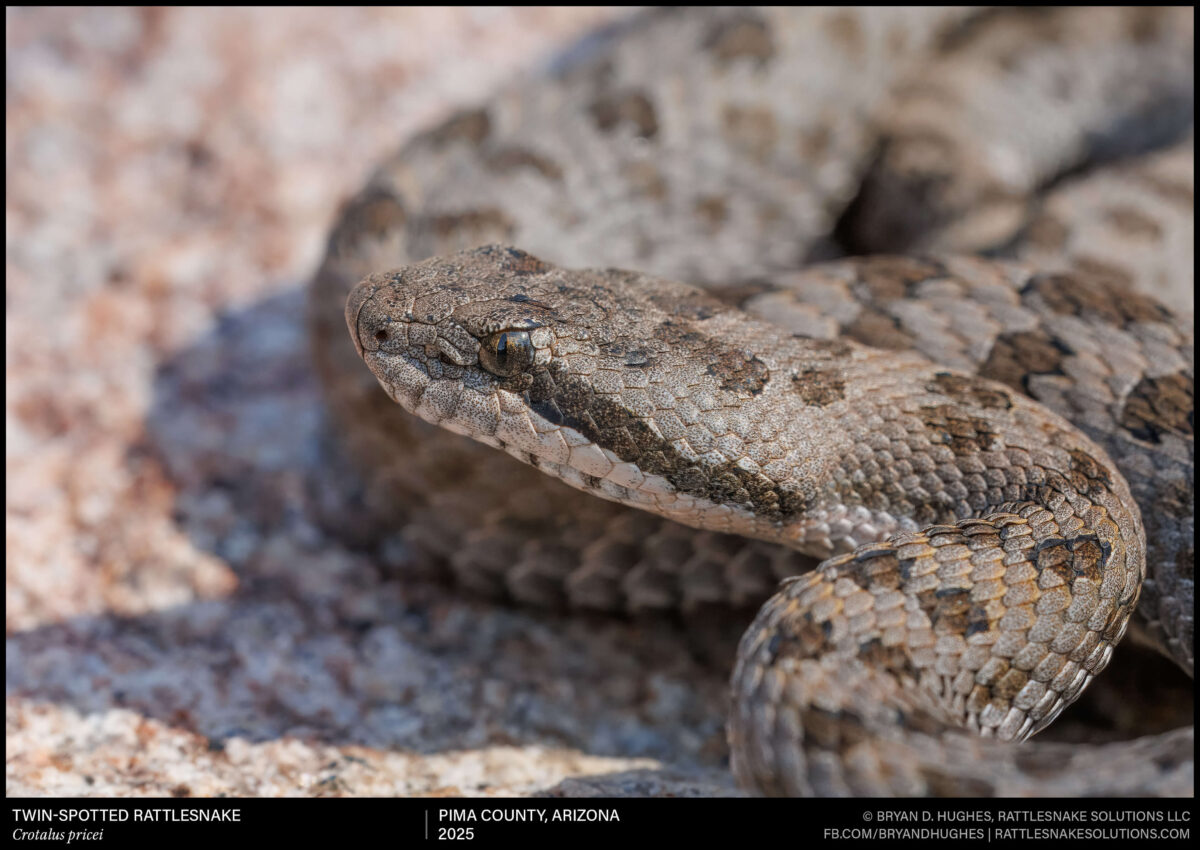
A beautiful young Madrean Mountain Kingsnake (Lampropeltis knoblochi) from the southeastern corner of Arizona. These colorful snakes harmless, and often seen by hikers on stream-side mountain trails in the Sky Islands region of the state.
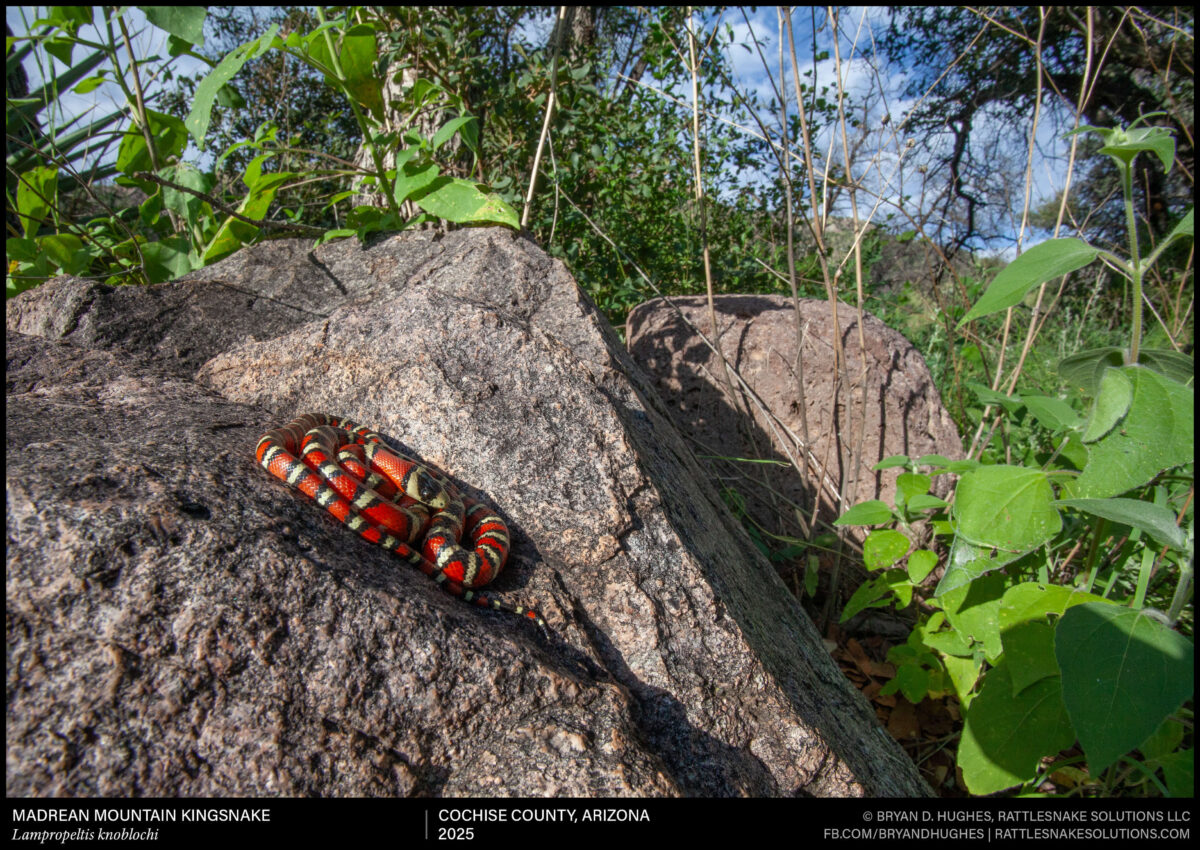
A Banded Rock Rattlesnake from southeastern Arizona. These snakes are typically quick to rattle and flee into cover. But due to their small size, it can sound more like an insect than a rattlesnake. Despite being common and locally abundant, there is little chance of an accidental bite to anyone not purposely trying to capture one.
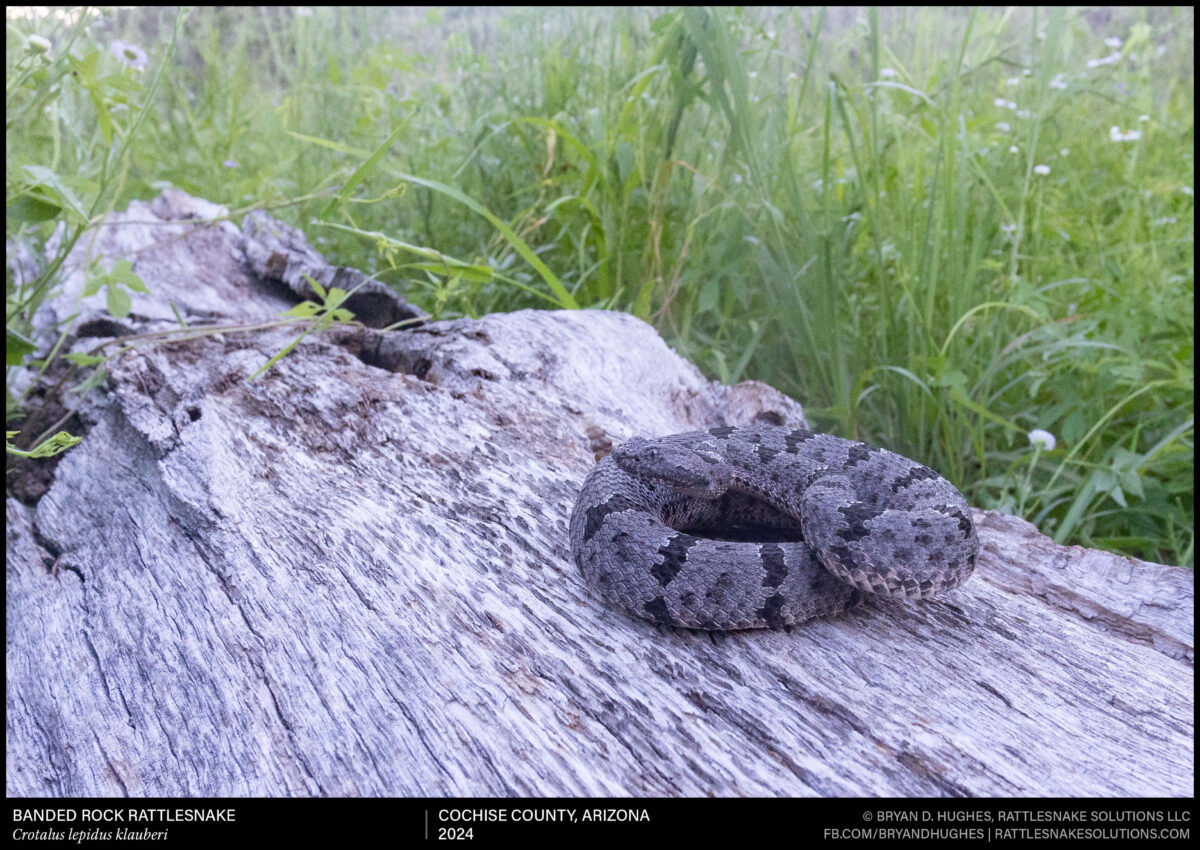
A thunderstorm materialized while I was hiking in a canyon in southern Arizona, so I ducked into a grove of suitable trees to wait it out and not be the tallest thing in the area. While waiting, I saw scales … though not many. It was a Banded Rock Rattlesnake that had emerged from nearby rocks to take advantage of the first rain in several months. It was a reminder that even when intently looking for them, most rattlesnake encounters are ones we will never know about.
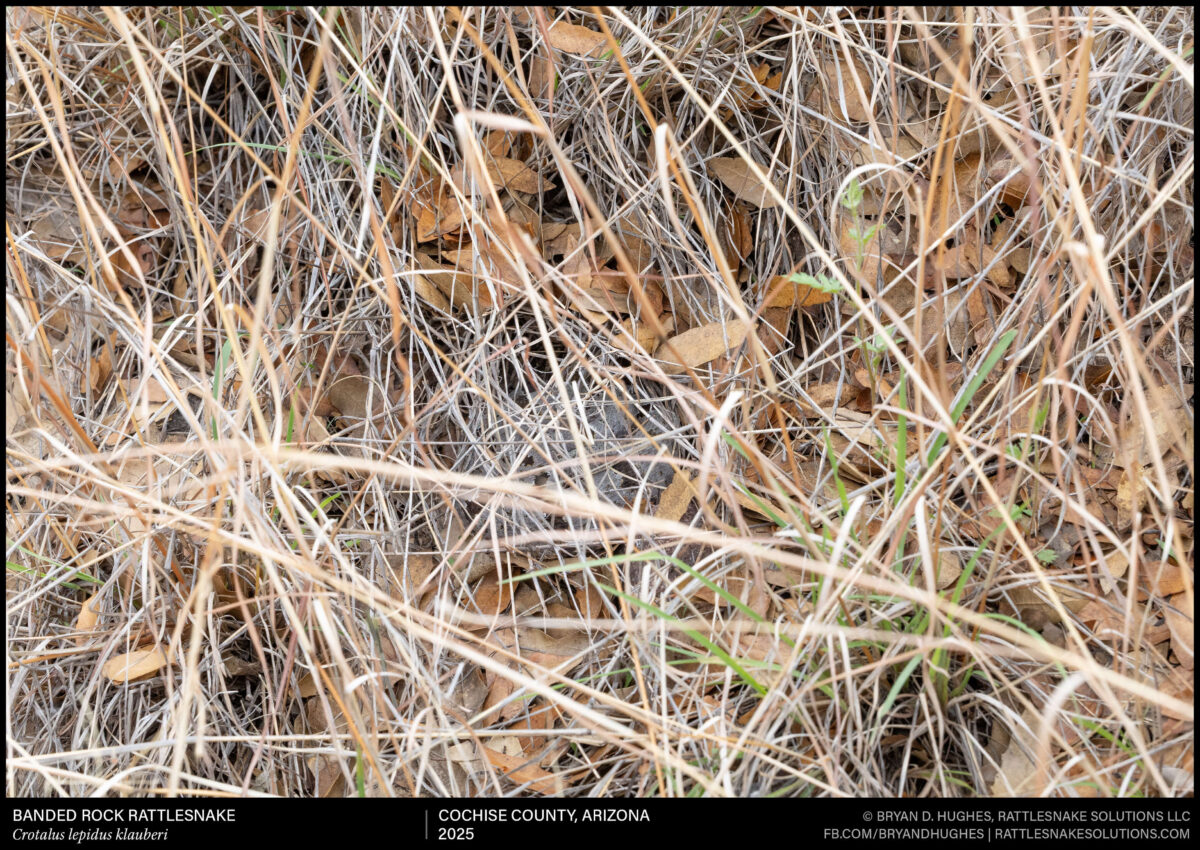
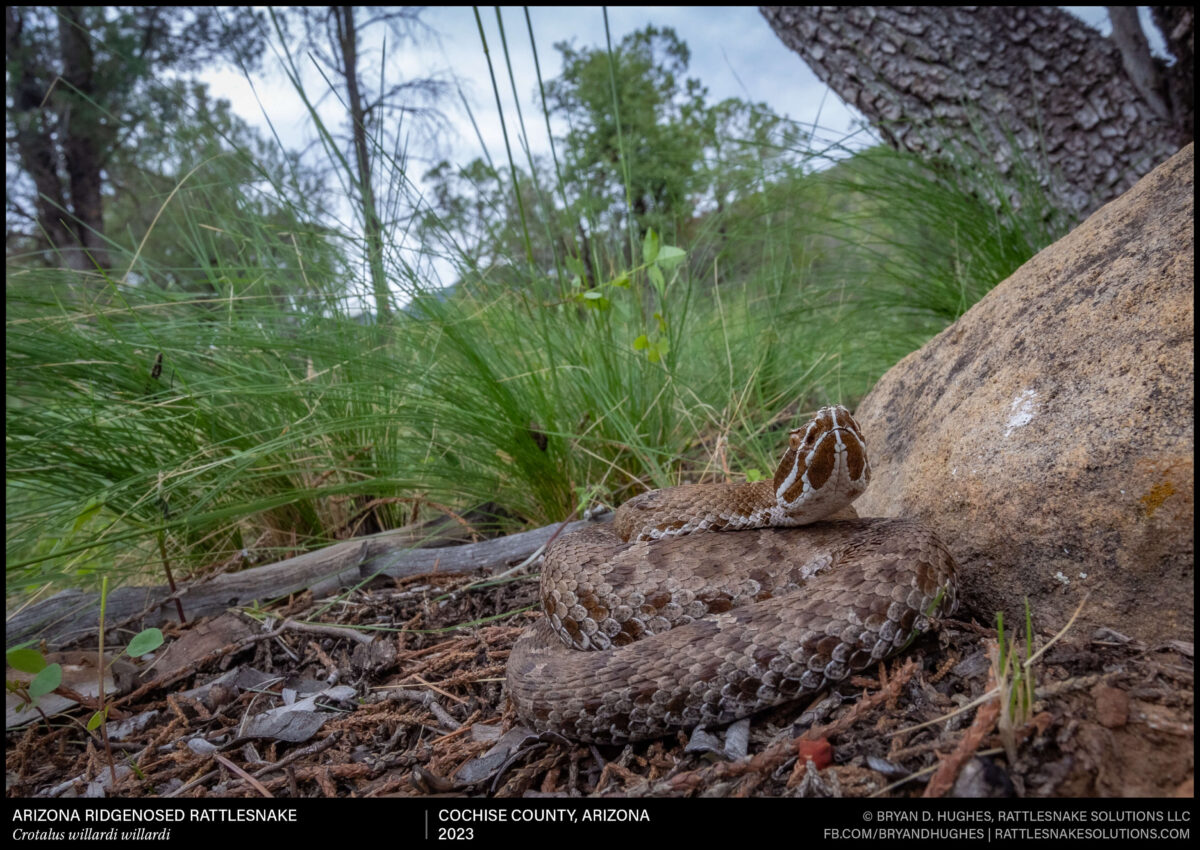
An Arizona Ridgenosed Rattlesnake in southeastern Arizona. These small rattlesnakes are found in bunchgrass and oak leaf litter at elevations above around 4,500′. Though they may be locally abundant, most of the long-term locals asked in the area about them have no idea it exists.
Buontempo, M. J. (2024). Evolutionary history of a specialized and diverse highland snake complex (Crotalus willardi) (Doctoral dissertation, University of Texas at El Paso). https://scholarworks.utep.edu/cgi/viewcontent.cgi?article=5226&context=open_etd
An Arizona Ridgenosed Rattlesnake found in bunchgrass on a perfect, overcast day in the Arizona sky islands.
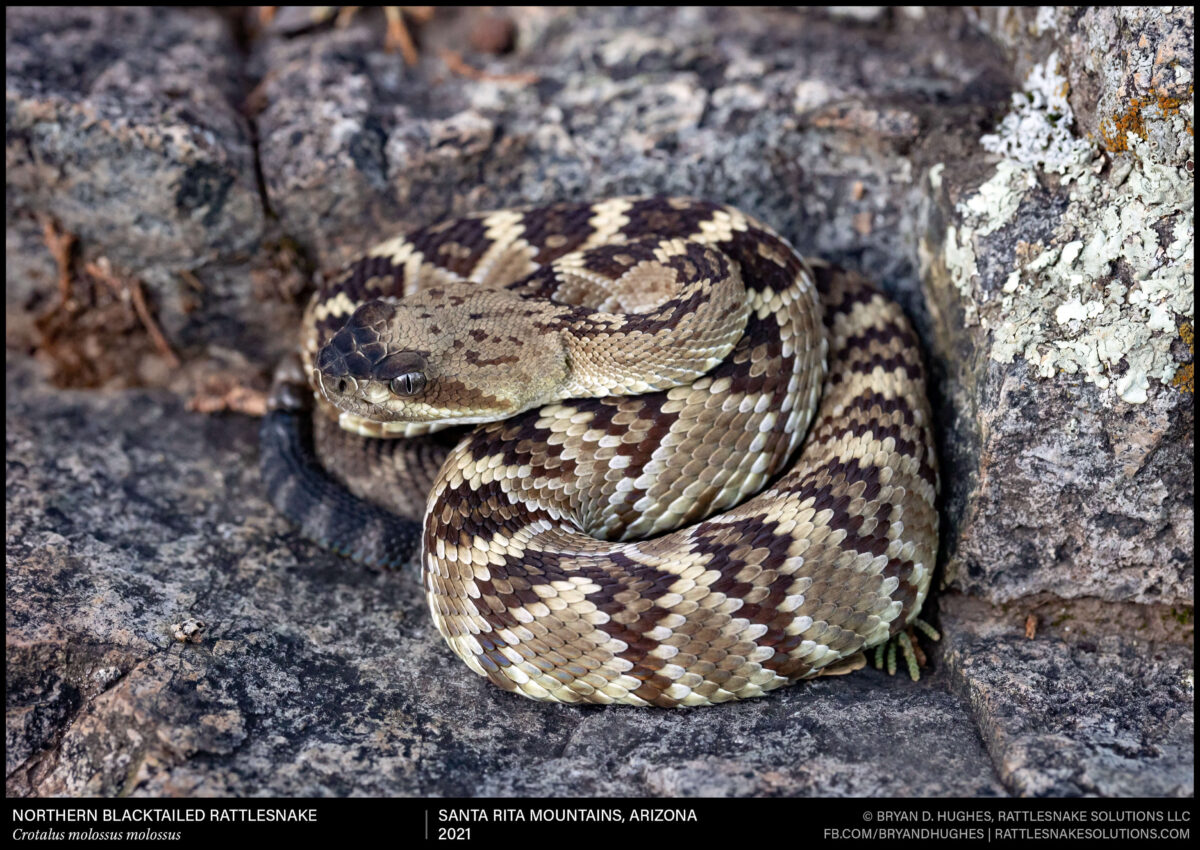
A young Blacktailed Rattlesnake from the southeastern mountains of Arizona. When they are this age, they’ll often have subtle grey and black banding in the tail. This usually darkens to a solid black with age, but not always. Of the species of rattlesnakes in the state, coming across babies of this species out and about may be the least frequent for me.