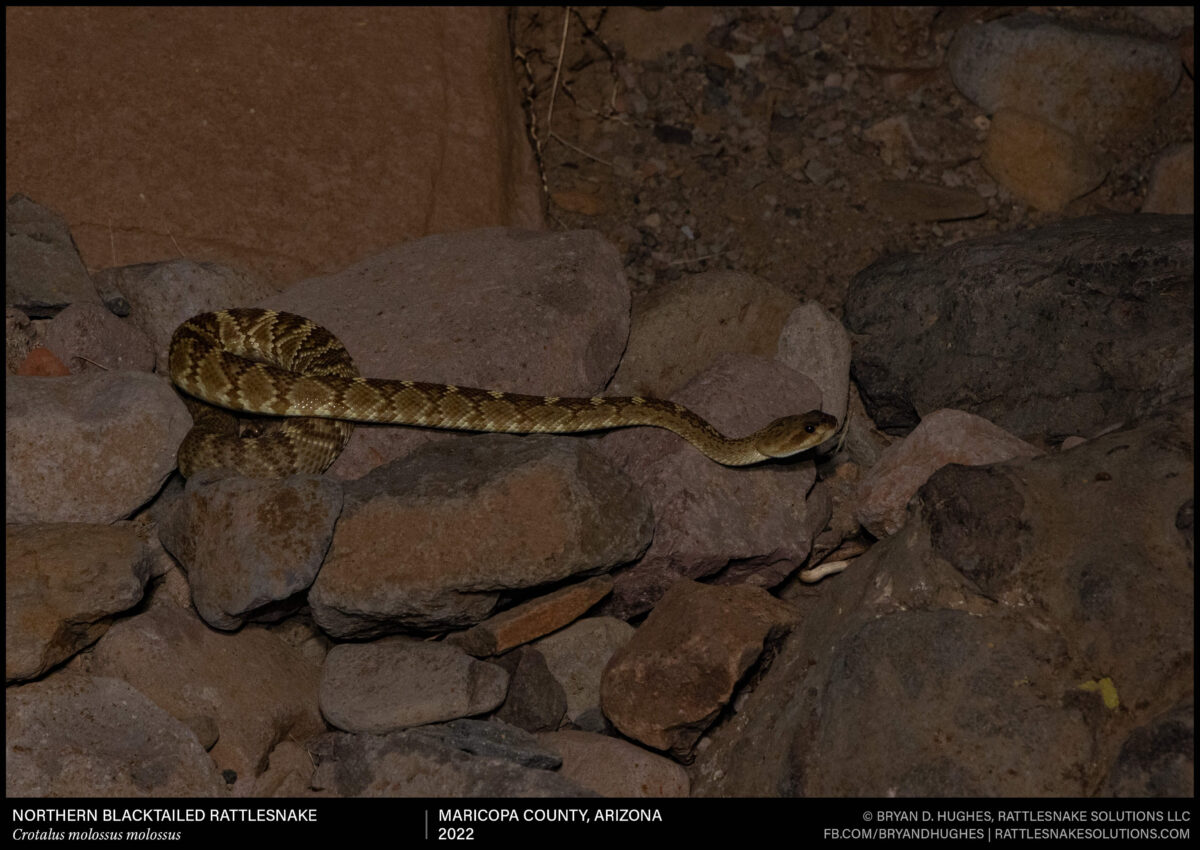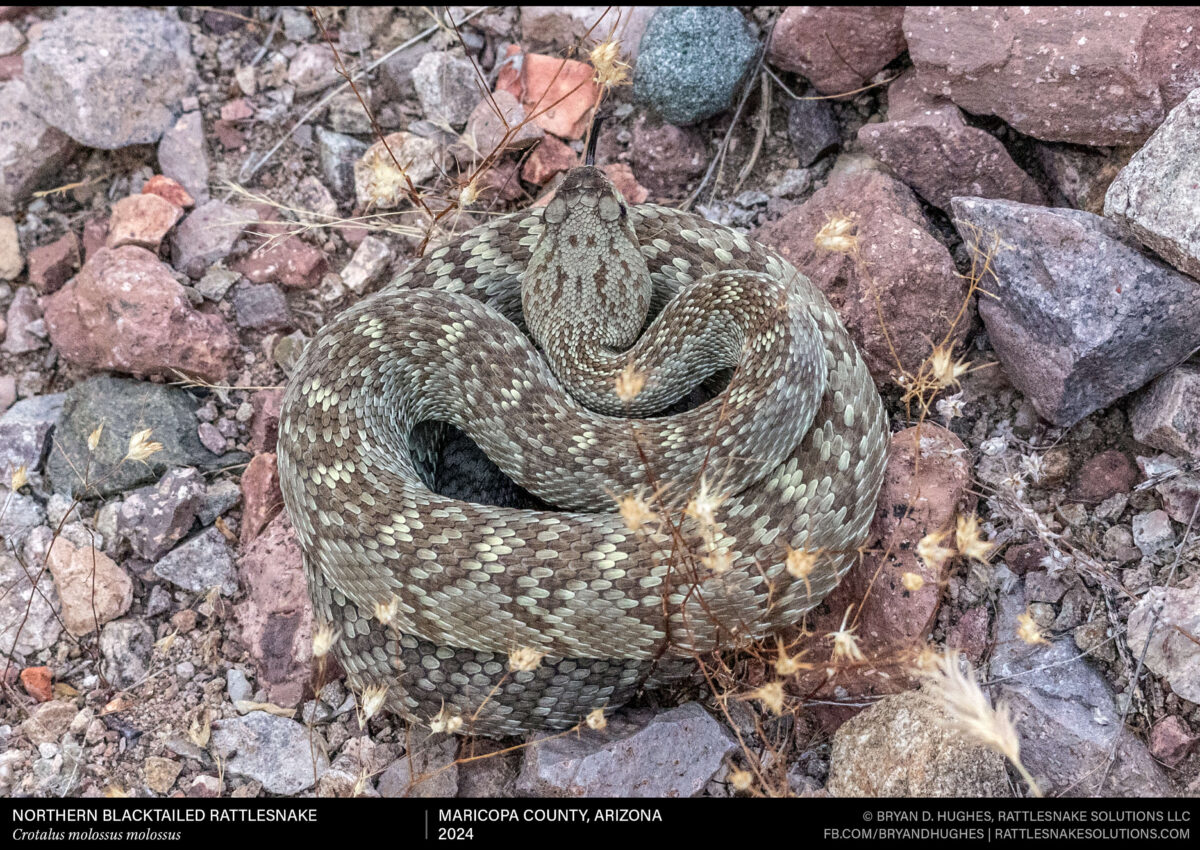
Desert Phase Blacktailed Rattlesnake

Blacktailed Rattlesnake showing off the “desert phase” phenotype, typical of lower, hot desert regions where this snake is common in rocky hills and mountains. This chaotic pattern can range from a yellow-green to silver, at times with the pattern degrading to the point of a unicolor appearance. This one is typical for mountains west of Phoenix.

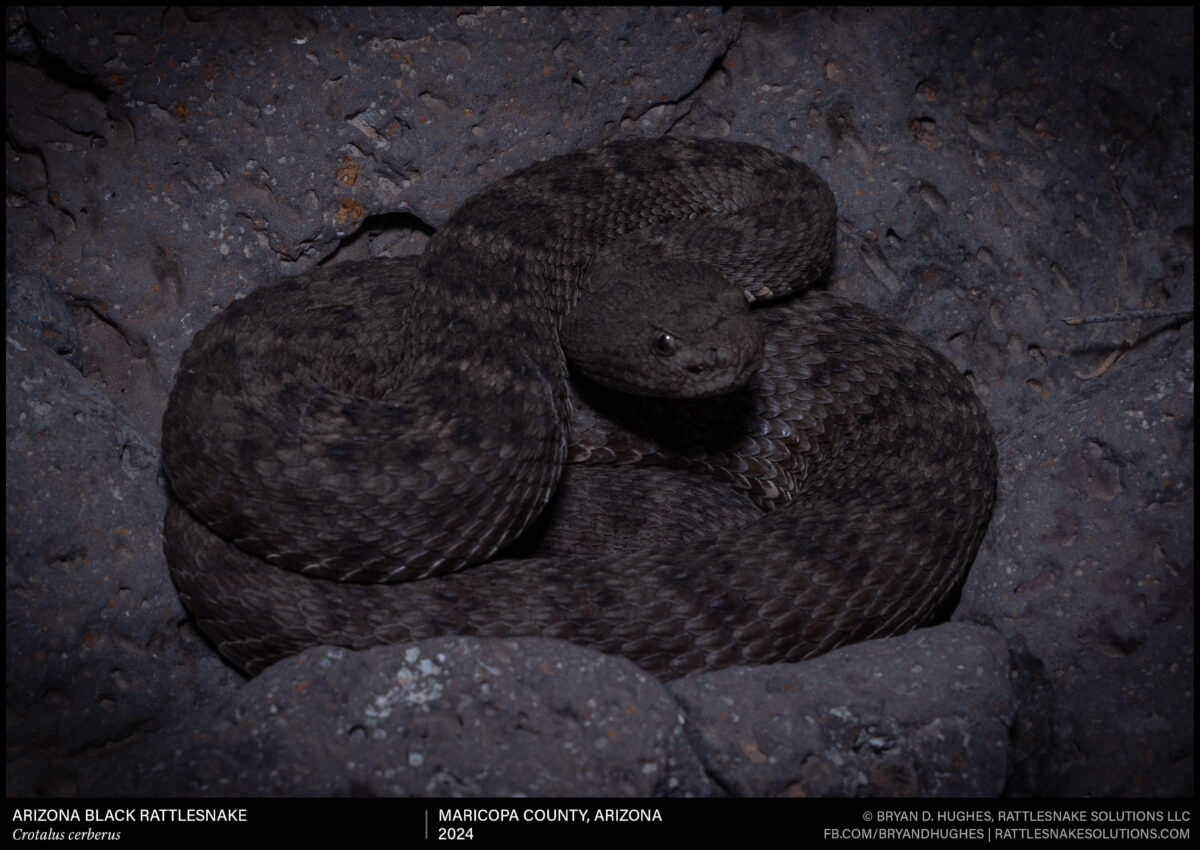
Arizona Black Rattlesnake In Ambush

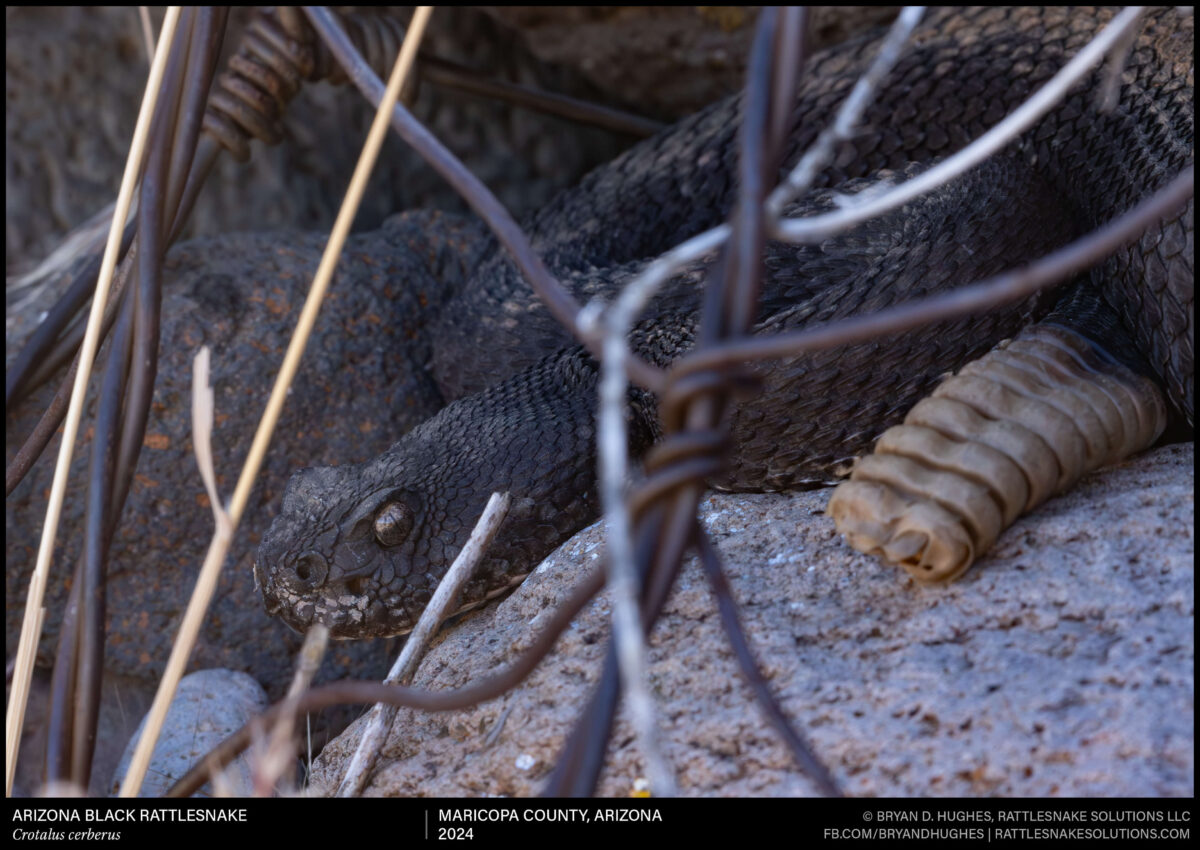
An Arizona Black Rattlesnake in ambush in the first sun of the day. The flat rock is on the only, narrow path to a natural water hole – the only water in the region. Any small mammal wanting to visit it would have to jump across this rock. This is likely something this snake knows very well by now, an example of how much can go into the selection of a hunting position. If I may anthropomorphize a bit, I’d call it strategic.

Arizona Black Rattlesnake In Ambush

Western Diamondback Rattlesnake Hiding From The Fire

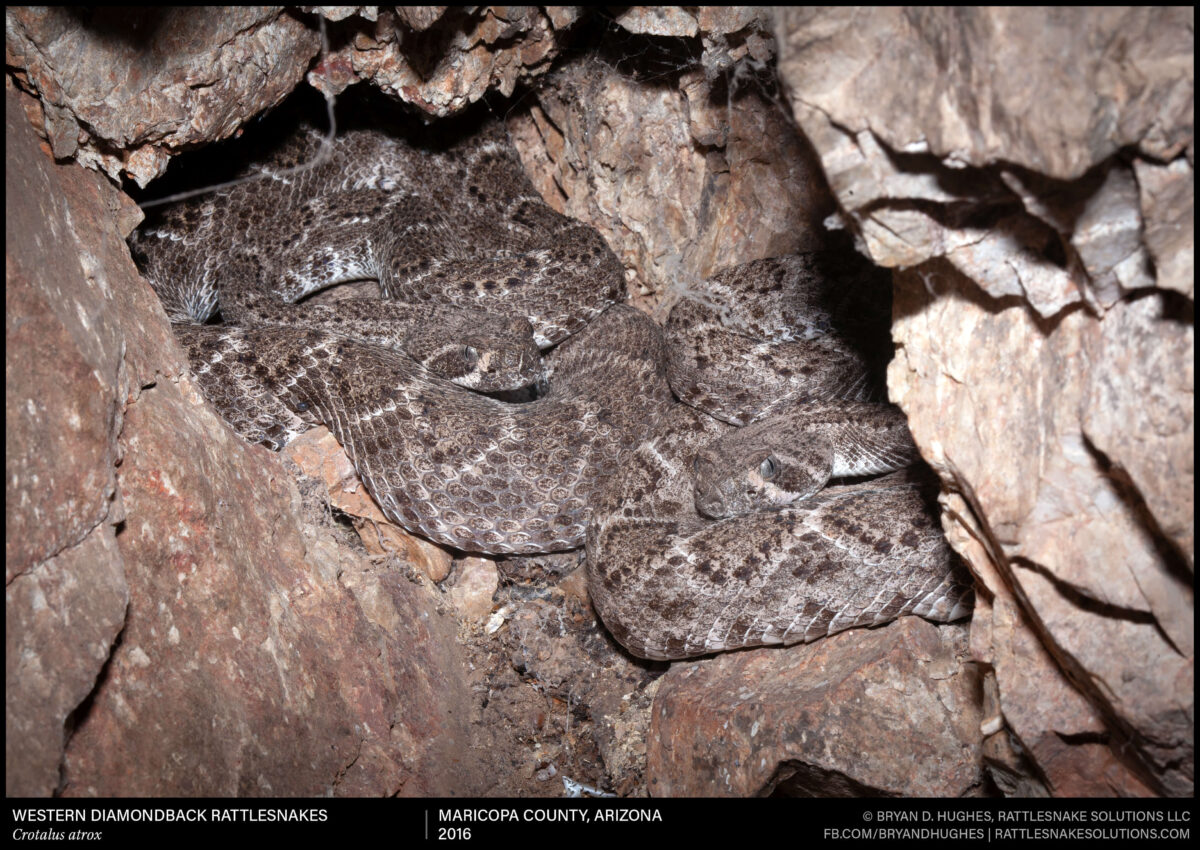
This Western Diamondback Rattlesnake was aestivating on a cool, extremely dry May morning. This drainage used to be rich with life, but recent fires fueled by invasive grasses have changed it into a charred, open oven. A few animals remain – the most abundant life to spring up after the event: globe chamomile. Hopefully this snake found a way to survive.

Western Diamondback Rattlesnake Hiding From The Fire

Banded Sandsnake From Above

Banded Sandsnakes are common, found in sandy drainages and often spotted on the surface in the summer. They’re often mistaken for superficially similar groundsnakes and shovelnosed snakes – one way to tell them apart is the relatively wide body, and the gradual transition of the dorsal stripe to the tan base color along its back. They also have kind of silly puppy faces, which can’t be unseen once you do. This one was found near our office in Cave Creek.

Banded Sandsnake From Above