Arizona Black Rattlesnake lying in ambush nearly vertically against a boulder near an isolated water hole on a hot summer night.

Arizona Black Rattlesnake lying in ambush nearly vertically against a boulder near an isolated water hole on a hot summer night.

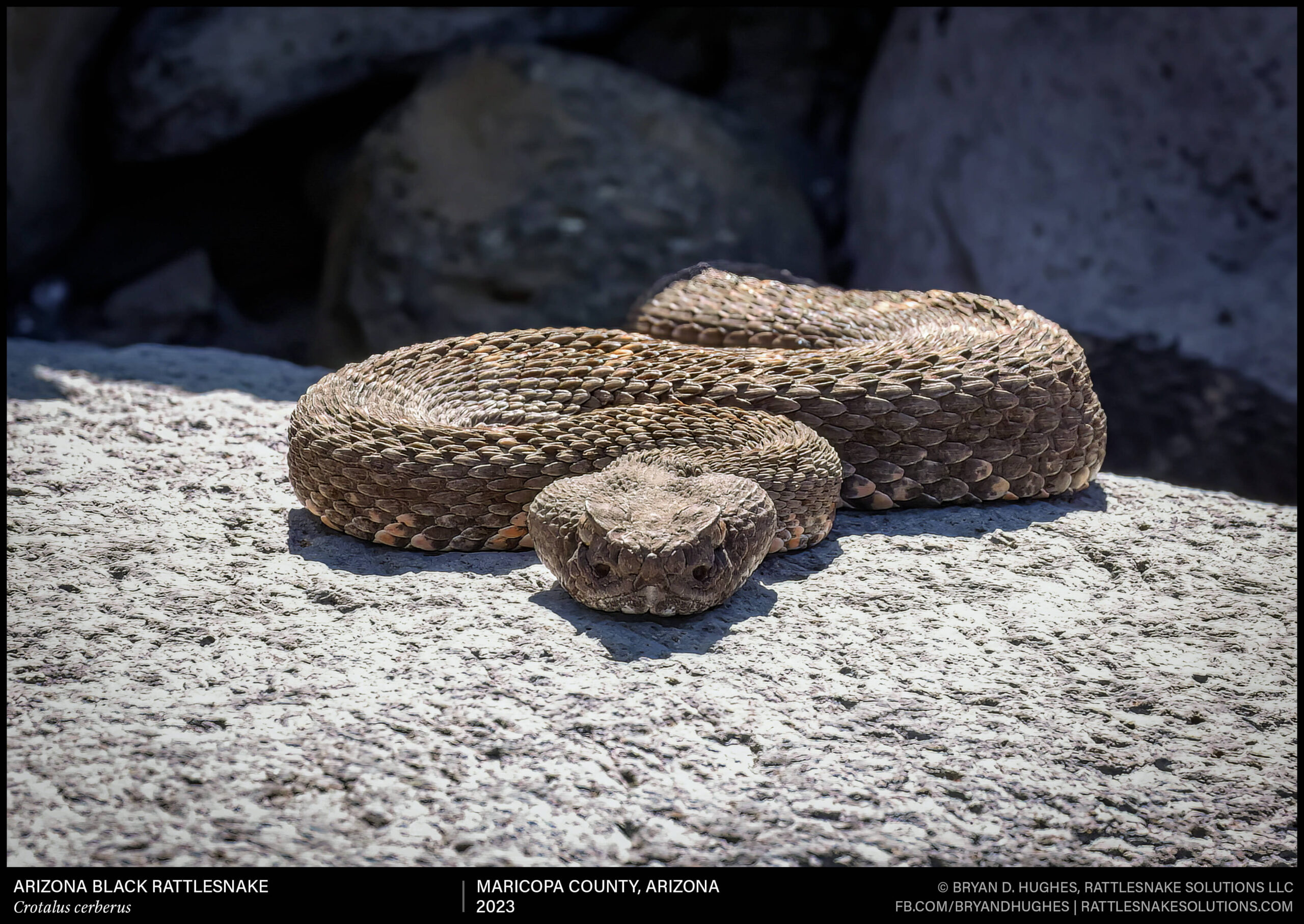
An Arizona Black Rattlesnake in ambush in the first sun of the day. The flat rock is on the only, narrow path to a natural water hole – the only water in the region. Any small mammal wanting to visit it would have to jump across this rock. This is likely something this snake knows very well by now, an example of how much can go into the selection of a hunting position. If I may anthropomorphize a bit, I’d call it strategic.

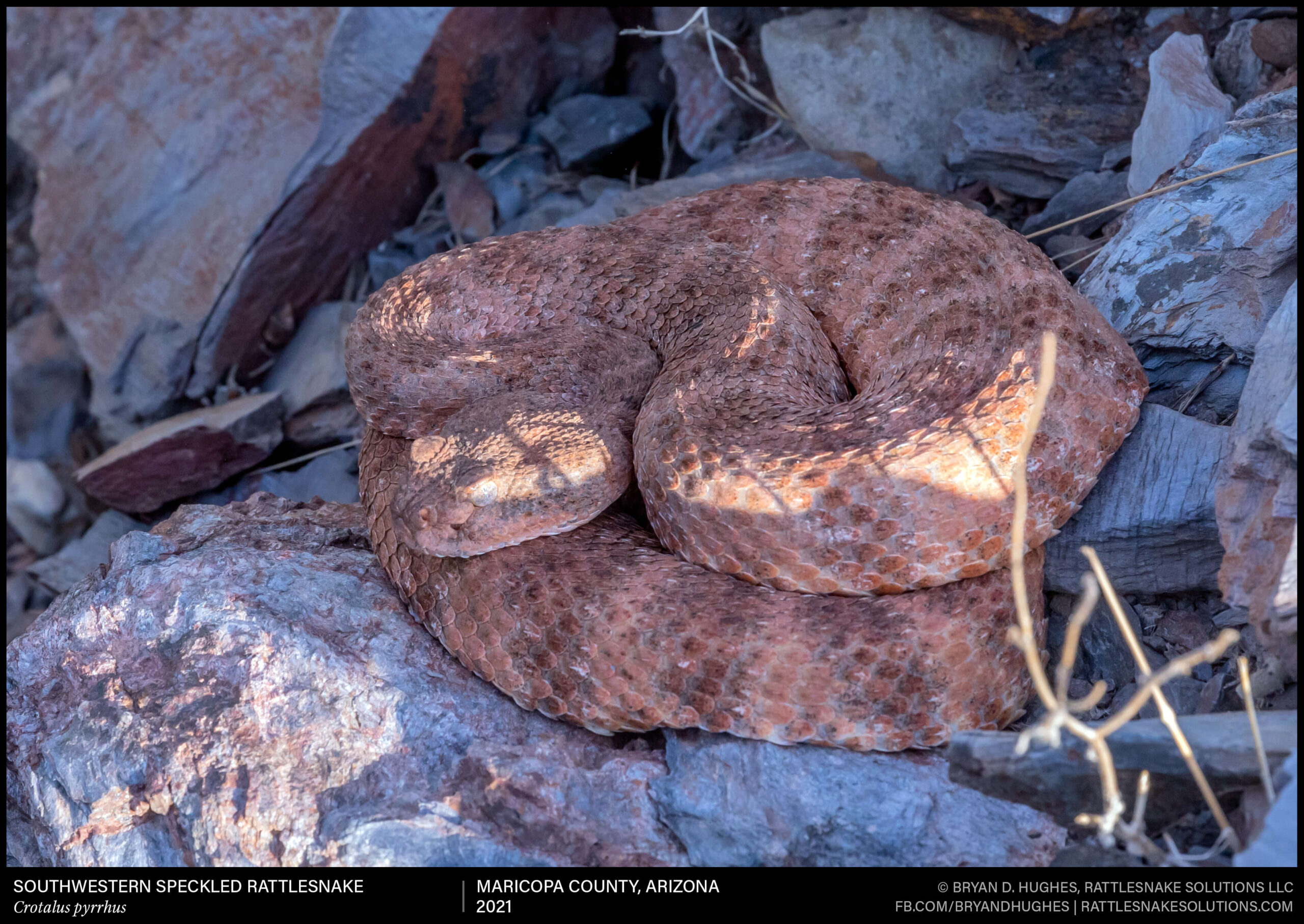
Southwestern Speckled Rattlesnake sitting out in the early morning after a long night waiting for a mouse. It will have another chance for prey, as birds and lizards visit the hillside, possibly not noticing this orange “rock” perfectly situated in the landscape.

Arizona Black Rattlesnake as seen from above. This snake was found in ambush on a narrow channel leading to a rare water hole – animals must walk this path to drink, making for a great hunting spot.

A large Tiger Rattlesnake in a loose ambush coil near a series of rodent nests. This one was found just after sunup in a heavily urbanized area. Not all hunting postures for rattlesnakes are simple coils. Rattlesnakes may actively track, then settle in for a relatively short period, then move and set up again. I don’t know if this one succeeded, but it was gone when I passed through the area an hour later.

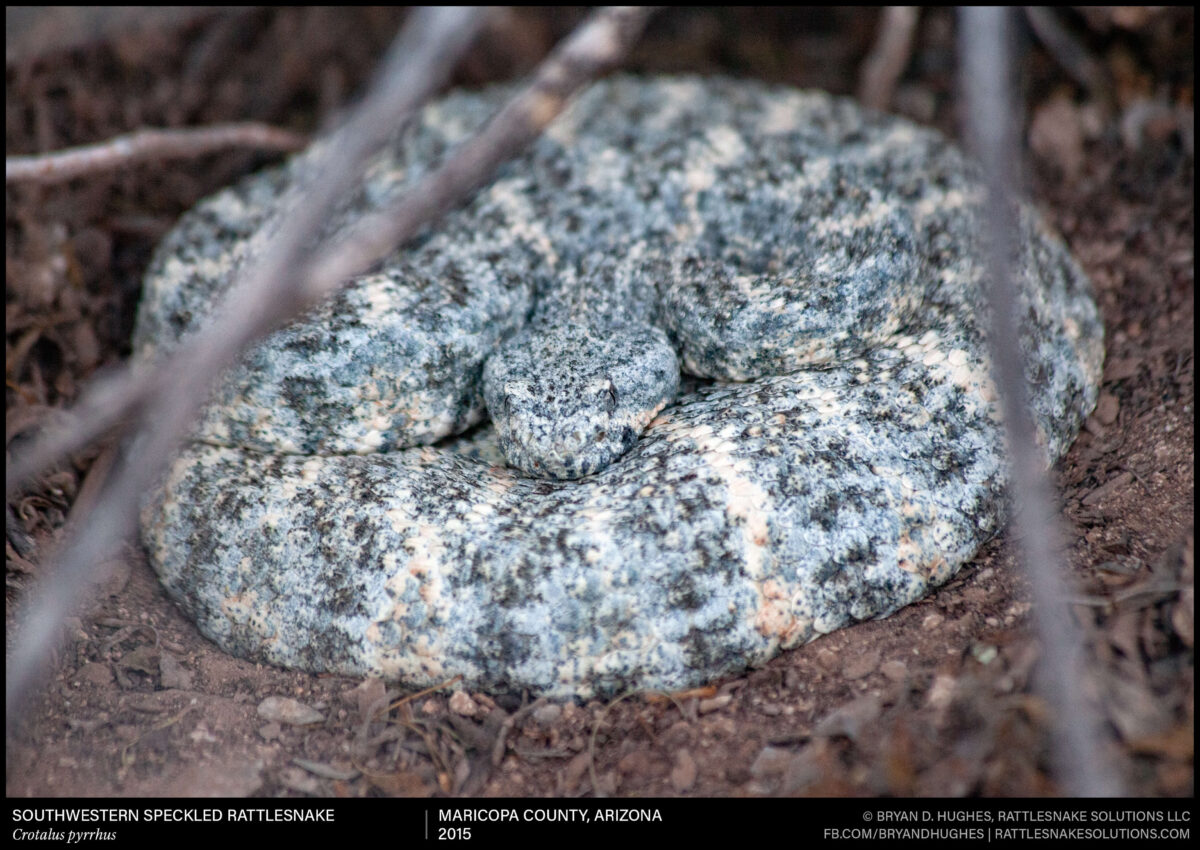
A Southwestern Speckled Rattlesnake waiting for an unlucky animal to come along in Phoenix. These locations are carefully selected, often after tracking a scent trail for some distance to find an ideal ambush situation.