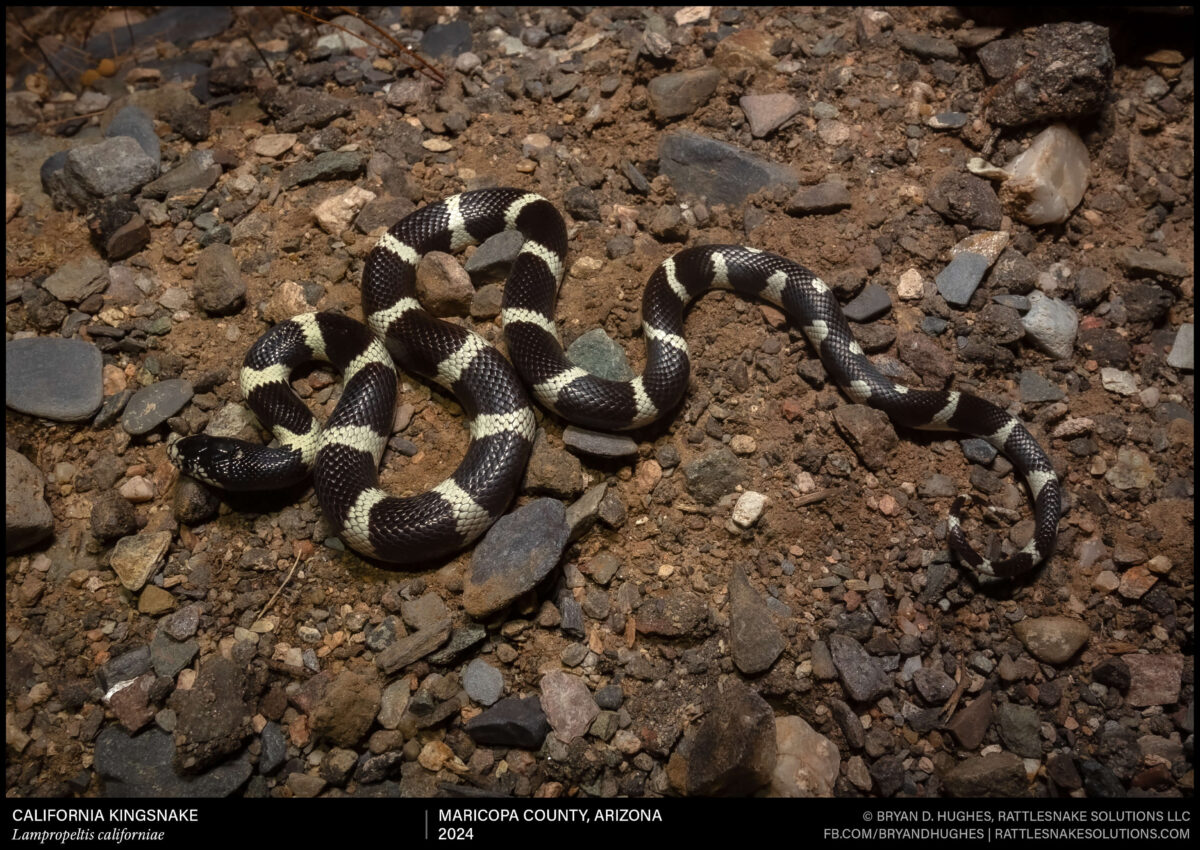
A California Kingsnake I saw crossing a road near my house. I was out looking for baby Western Diamondback Rattlesnakes to move off the roadway, which were out in force that night. I think this kingsnake and I were doing the same thing, though hoping for different outcomes. I moved it to the side of the road and wished it luck.
In the southeastern corner of Arizona, kingsnakes look different than the black and white banded pets many people are familiar with. This Desert Kingsnake, as an example, of a more speckled, chain-link pattern and somewhat more colorful base color. This is, with much variation, similar to how they’ll look throughout the Chihuahuan desert, and much of the subtropical Sonoran.
To another small snake, this is a terrifying sight. A venomous snake-eating specialist that will take prey almost as large as it is by clamping down tight and flipping over, using its atypically long body as an anchor. After releasing, it follows the mortally wounded snake, face to face, watching it until it either dies or needs another round of venom.
But to humans – totally harmless, not that it would bite anyway.
We found this Regal Ring-necked Snake crossing a roadway after dark in southeastern Arizona. Most that I’ve seen are in the day time … in fact, this is the only one I can find in my memory or notes that I’ve found at night. In this photo, it’s showing its characteristic defensive display, with a brightly colored underbelly and twisted tail.
Sonoran Lyresnake from the southwestern corner of Arizona. These snakes are common in the right habitat, but most lifelong Arizona residents will never see one. The large eyes indicate one of the reasons: they’re primarily nocturnal, often moving late at night long after temperatures have cooled enough to have stopped most other snake activity.
Crossing a metal bridge on a trail through the Costa Rican rainforest, we were stopped by the sight of a Blunt-headed Tree Snake in the latter stages of eating a small lizard. The lizard was still trying to escape, but the snake was not going to lose this one. These tree snakes, with their huge eyes and comically thin bodies, seem kind of goofy, so it was cool to see one doing what they do, and know that for as silly as they seem to be, to a sleeping anole it is a pretty terrifying animal.
It’s not a great photo, but this is how these snakes are often seen. It’s a Striped Whipsnake; one of several seen cruising around a multi-species rattlesnake den in the spring. Personally, I’ve been clued into a good number of rattlesnakes hidden deep within crevices because of these much more observable snakes, and their preference for similar hibernacula.
A Great Basin Gophersnake cruising around the rocks that it shares the winter with dozens of Great Basin Rattlesnakes. These important areas where hibernation and subsequent hunting and drinking are better than the surrounding rock piles can be home to multiple species of snakes.
One of the small, fossorial snakes of the southeast – a Midwestern Worm Snake. These tiny guys specialize in earthworms, but may take other soft-bodied invertebrates as well.