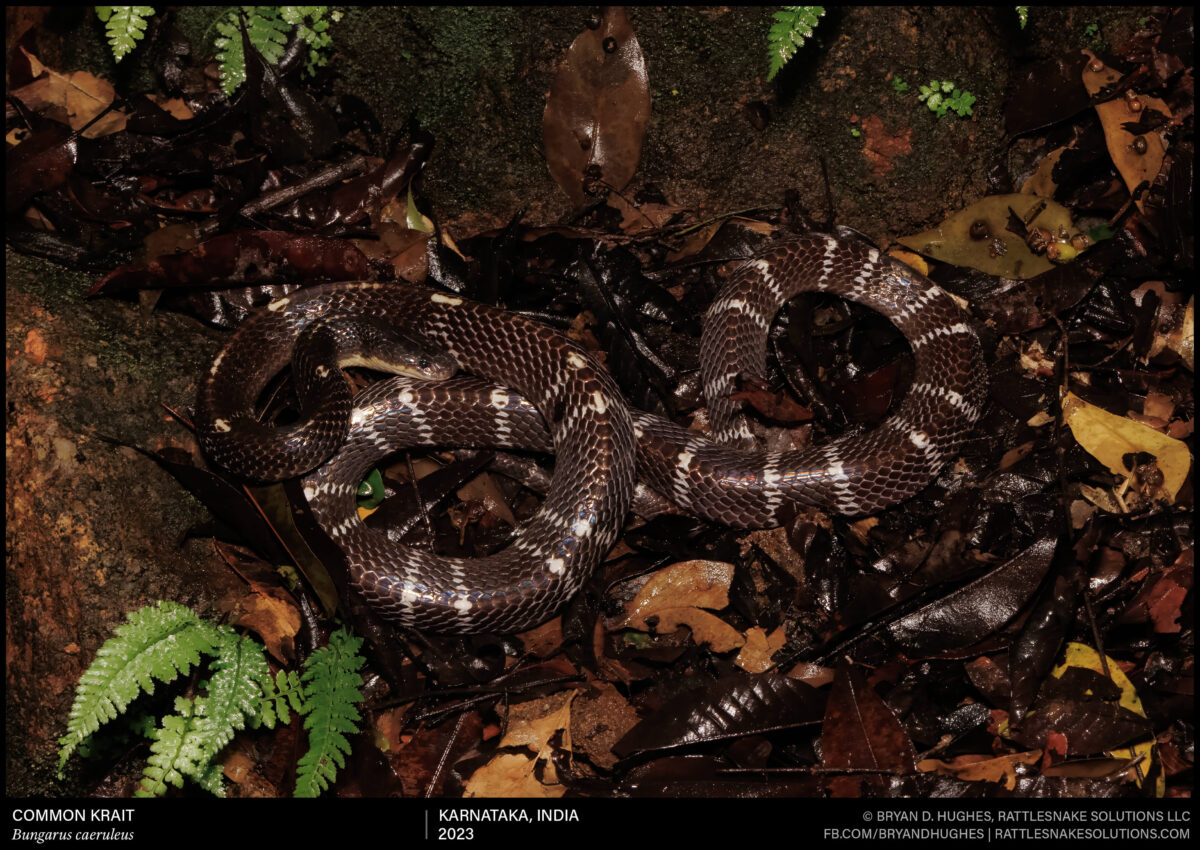
This is a large Common Krait (Bungarus caeruleus) that we found in the Western Ghats of India a few years ago. The photo isn’t great, but we weren’t taking any chances with this animal.

This is a large Common Krait (Bungarus caeruleus) that we found in the Western Ghats of India a few years ago. The photo isn’t great, but we weren’t taking any chances with this animal.

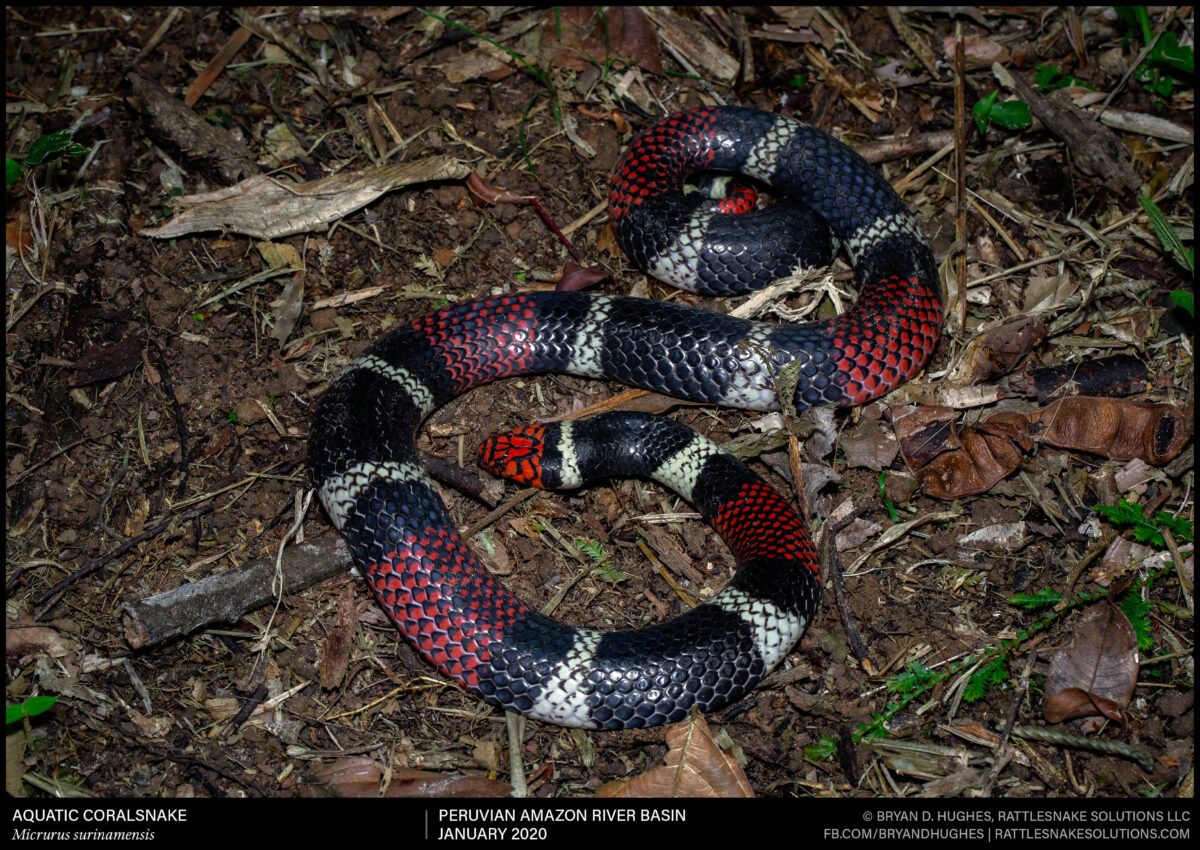
A relatively large Aquatic Coralsnake (Micrurus surinamensis) found near camp in Peru. These snakes are relatively common, found in the swale alongside the river and smaller drainages, where they’re on the hunt for eels and other fish, and the occasional other snake. Compared to other coralsnakes, they are heavy-bodied, with a wide head and short tail.

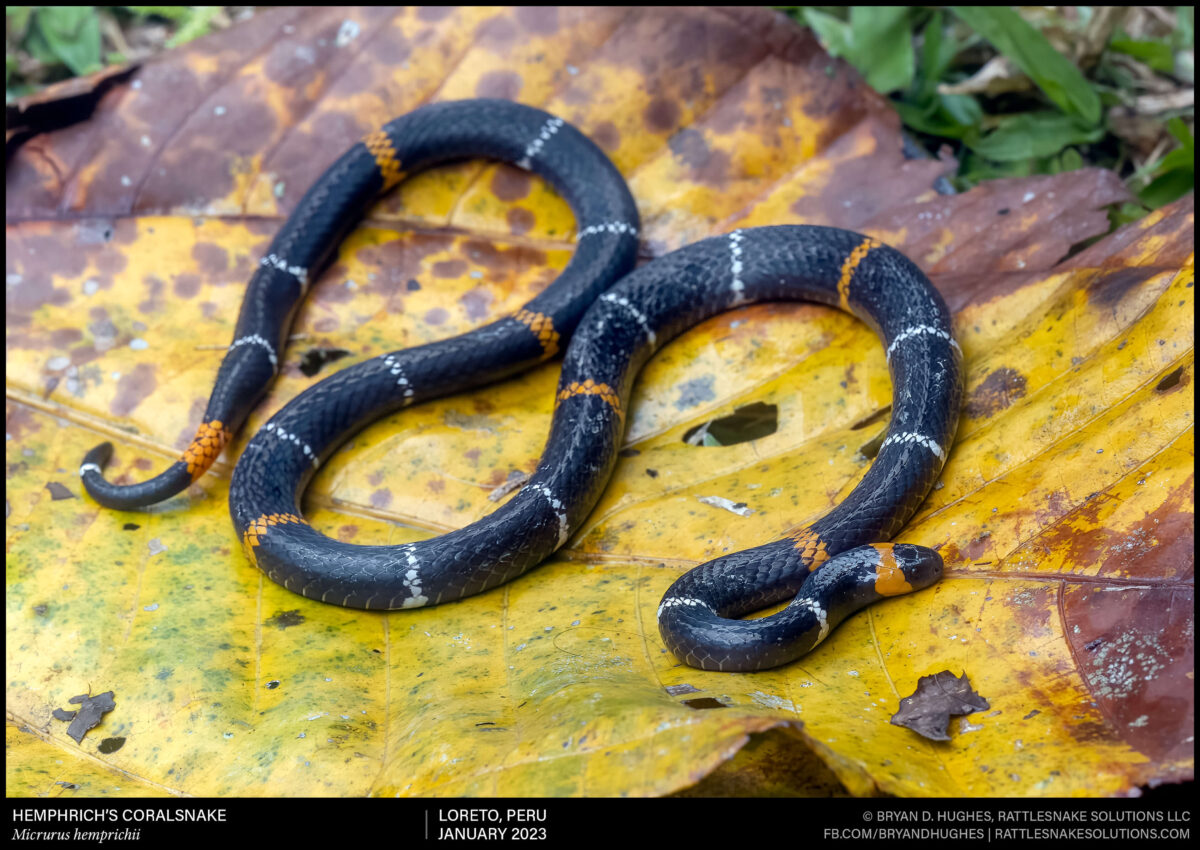
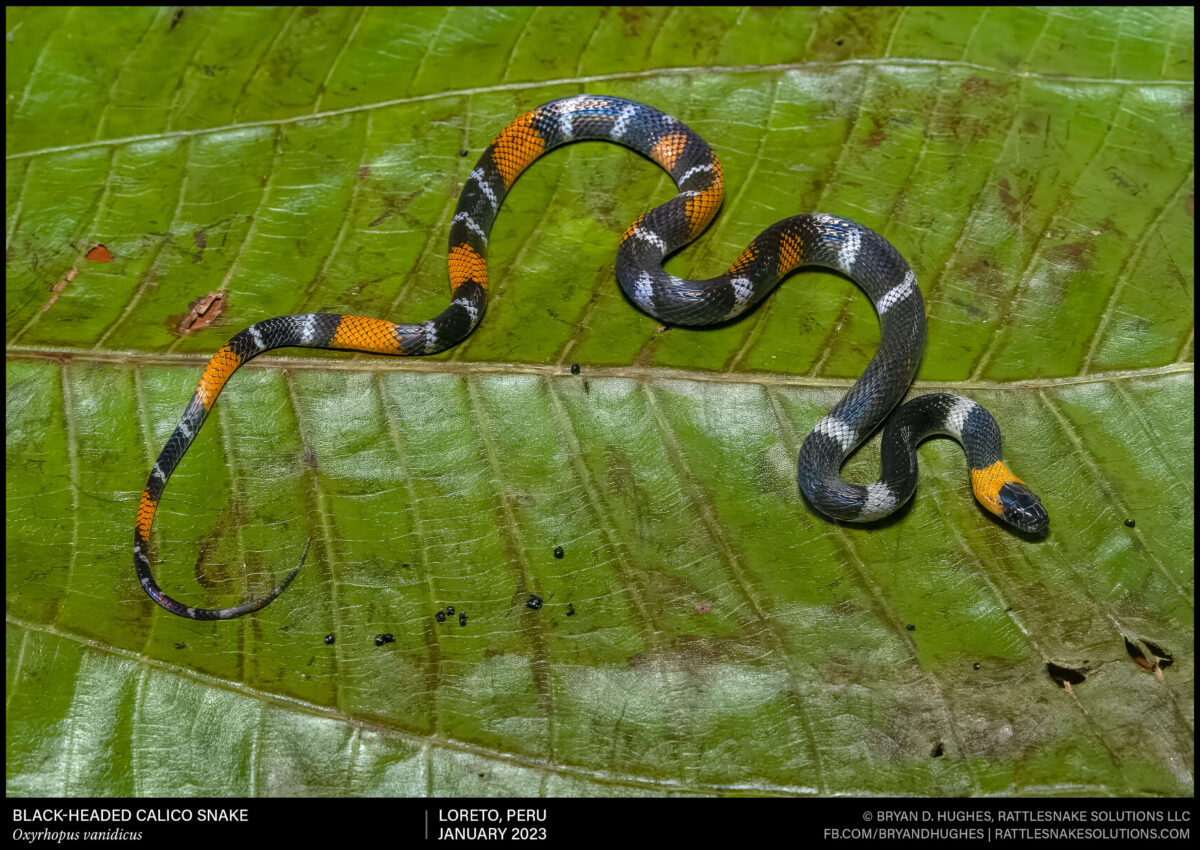
One of the many species of coralsnakes that can be found in the matrix of materials that make up the floor of the Amazon rainforest. This is a Hemprich’s Coralsnake. Also, its mimic, a harmless Black-headed Calico Snake. The body and head shape, as well as details of the pattern, are pretty different in a lot of ways, but it’s more than enough to make you think twice about reaching for one on a late night jungle hike when you see a black and orange flash in the leaves.


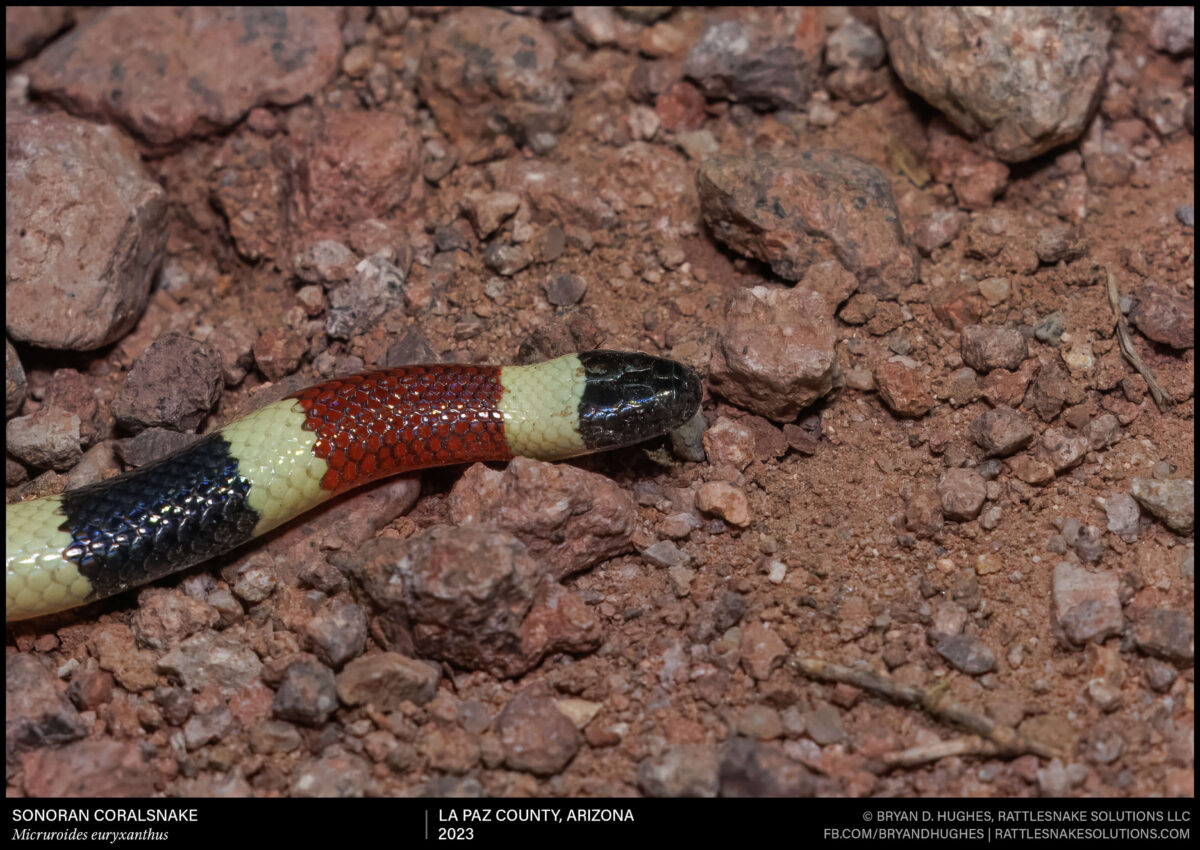
The tiny face of a Sonoran Coralsnake. These tiny snakes are highly venomous, but reluctant to bite. Avoiding this is simple: don’t make the stupid decision to pick one up. If you can do that, there is no danger from these little snakes.

The most common coralsnake I’ve seen in Peru is the Aquatic Coralsnake. They’re big, twitchy, and relatively common in the slopes along tributaries of the Amazon River.

A good-sized Costa Rican Coralsnake we saw in the grass on a family vacation. These are very different than the coralsnakes we have back in Arizona. It’s much larger and willing to strike, which it did repeatedly. These snakes are a handful to get photos of, but we managed and let it disappear back into the forest.

A baby Indian Cobra we found along a canal in Bangalore, India. This little one was so small you could see its heard beating through its belly. Turned away, it’s doing its best to tell us to get lost. After a few photos, we did.

A large Western Ghats King Cobra resting in foliage at the edge of a field in Karnataka, India.